
Quick Answer
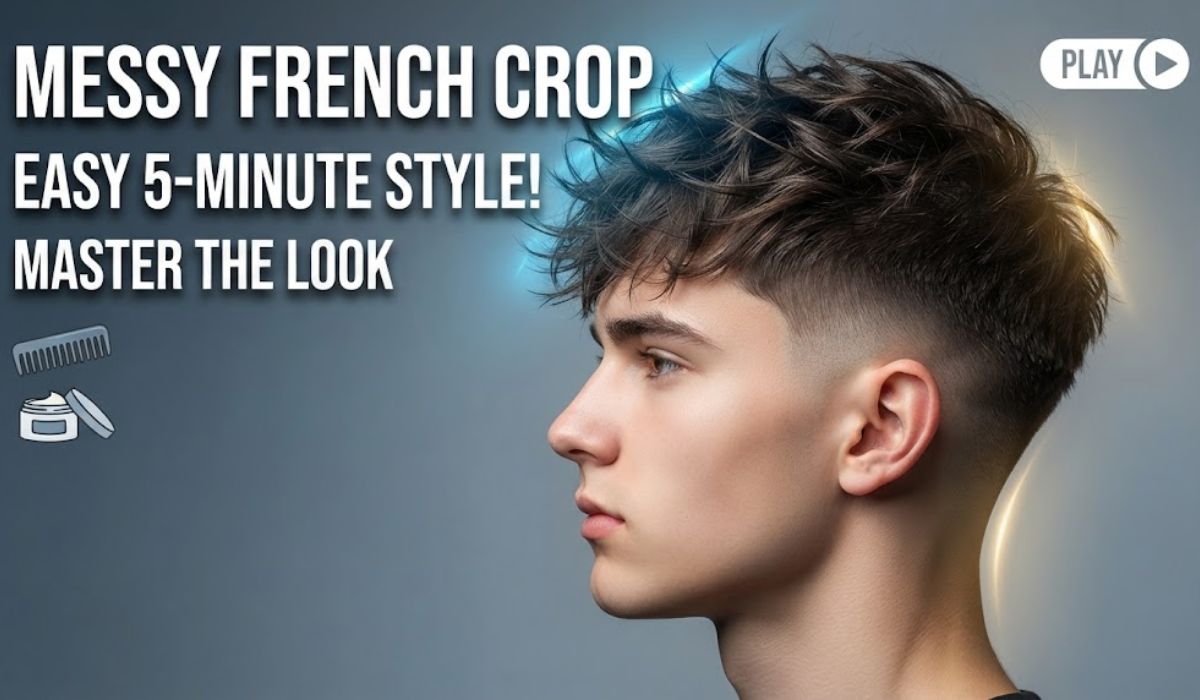
A messy French crop is a French crop with a deliberately textured and tousled top, a forward fringe, and shorter sides that are usually faded or tapered. The messy effect comes from controlled separation and movement rather than an unkempt haircut. The exact top length, fringe shape and side treatment should be adjusted to your hair texture, density and preferred level of contrast.
TL;DR
- The defining feature is controlled texture: the top should look separated and naturally tousled, not randomly untidy.
- The fringe points forward: this forward fringe helps distinguish the style from many other textured short cuts.
- The sides are flexible: a low fade, mid fade, skin fade or taper can change the overall contrast.
- Top length should not be treated as one fixed measurement: hair density, texture, curl pattern and desired movement all affect the right length.
- Show your barber a useful reference photo: ideally choose one with a similar hair texture, density, fringe and side treatment.
- Styling is simple when the cut is right: direct the hair forward, create separation with your fingers and finish with a small amount of matte product.
If you are choosing this haircut for the first time, the most useful way to think about it is through four variables: side treatment, top length, fringe shape and texture. Getting those four details right is more useful than simply telling a barber that you want your hair to look messy.
What Is a Messy French Crop?
A messy French crop is a variation of the French crop that combines a textured top, forward fringe and shorter sides with a deliberately undone finish. The top is usually cut to create separation and movement, while the fringe remains an important part of the recognizable French crop shape.
The word messy describes the finish rather than poor haircut quality. A good messy French crop still has a controlled outline, intentional fringe and balanced sides. The top simply avoids looking overly smooth, flat or perfectly arranged.
The four defining features
- Textured top: The hair has visible separation instead of forming one smooth block.
- Forward fringe: The front moves toward the forehead and helps establish the crop shape.
- Shorter sides: The sides and back are usually tapered or faded to create contrast with the top.
- Controlled messy finish: Individual pieces can move naturally while the overall silhouette remains intentional.
That distinction matters because simply making the top uneven does not automatically create a messy French crop. The haircut needs the underlying French crop structure as well.
What Does a Messy French Crop Look Like?
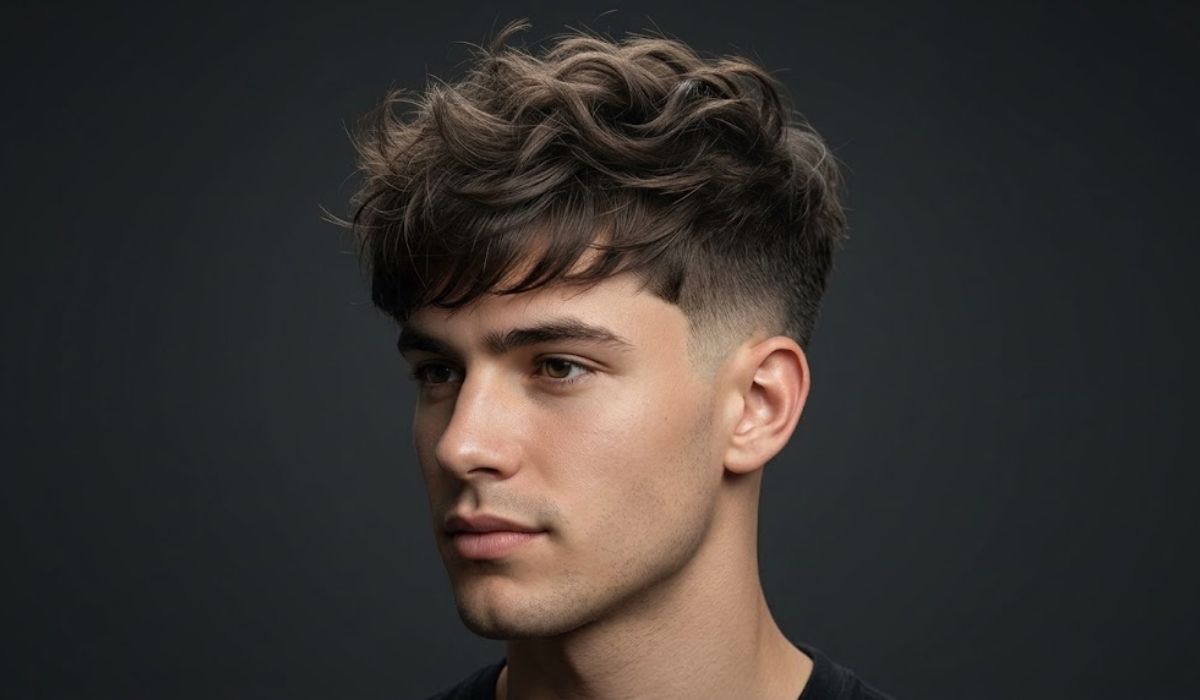
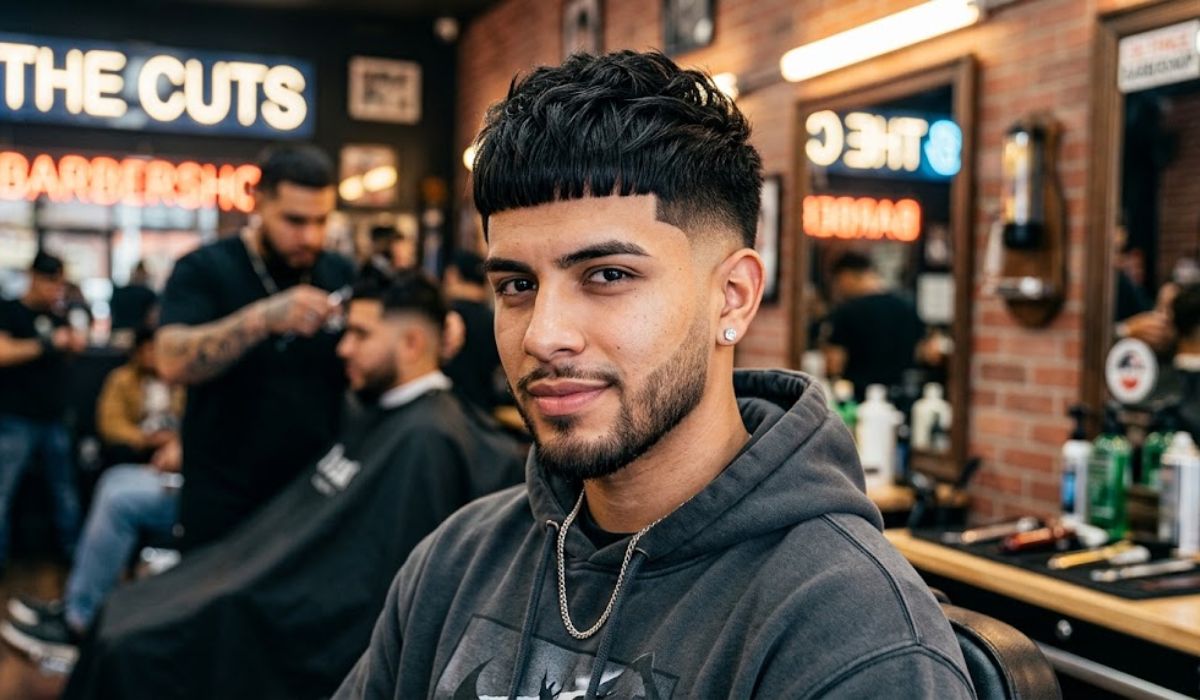
From the front, the most recognizable feature is the fringe. Instead of being swept backward or parted, the front generally moves forward. The fringe can look broken, choppy or slightly irregular depending on how much texture the haircut has.
From the side, the shorter sides create contrast with the longer textured top. The amount of contrast depends heavily on whether you choose a taper, low fade, mid fade or skin fade.
From above, the texture becomes more obvious. The hair should have enough separation to show individual pieces without looking excessively stiff or overloaded with product.
What the texture should look like
A useful target is organized disorder. The hair should not appear perfectly combed into place, but it should still have a recognizable direction and shape.
If every strand is standing in a different direction, the result can look unkempt rather than intentionally messy. If the top is completely flat and uniform, the haircut may look more like a traditional crop.
Why reference photos matter
Haircut terminology is not completely standardized. A barber may interpret “messy French crop” differently from another barber, particularly when the requested top length, fringe shape and fade are not specified.
A useful reference photo should show a hairstyle with hair characteristics close to your own. Look for similarities in hair texture, density, fringe length and side treatment, rather than choosing a photograph only because you like the person’s face or overall appearance.
How to Ask Your Barber for a Messy French Crop
Do not rely on the word messy by itself. Tell your barber what you want on the sides, how much length you want on top, how the fringe should sit and how much texture you want.
The four details to specify
- Side treatment: Choose a taper, low fade, mid fade or stronger skin fade depending on the contrast you want.
- Top length: Explain whether you want a short, medium or longer textured top.
- Fringe: Say that you want the front directed forward and explain whether you prefer a softer or more broken fringe.
- Texture: Ask for enough separation and movement to create a messy finish without removing too much useful density.
A practical barber script
You can say:
“I want a messy French crop with a textured top and a forward fringe. Keep enough length on top for movement, give me the side treatment shown in this reference photo, and keep the texture controlled rather than overly neat.”
Then show the barber your reference photograph. If your hair texture or density differs significantly from the photo, let the barber adjust the length and texturizing approach rather than insisting on an identical measurement.
How Long Should the Top Be?
There is no single top length that works for every messy French crop. Current haircut sources give different measurements, and that variation makes sense because hair density, natural movement, curl pattern and styling preference all affect how much length is useful.
Instead of treating one measurement as a rule, think in terms of short, medium and longer versions.
| Top length approach | Typical result | Best consideration |
|---|---|---|
| Short | Compact texture with less movement | Useful when you want a cleaner, easier finish |
| Medium | Visible separation with natural movement | A versatile starting point for many hair types |
| Longer | More movement and a stronger tousled effect | Useful when your hair can support the extra length |
Fine hair may need enough length to create visible movement without being aggressively thinned. Thick hair may require more careful texturizing so the top does not become excessively heavy. Curly hair needs its natural shrinkage and curl pattern considered before choosing a final length.
The most useful instruction is therefore not simply “leave exactly this much on top.” Tell your barber the finish you want and use a reference photo to establish the visual target.
Is a Messy French Crop Good for Your Hair Type?
The style can be adapted to several hair types, but the same cutting and styling approach should not be used for every head of hair.
Straight hair
Straight hair can make the crop structure very clear, but it may need texturizing or styling to create the broken appearance associated with a messy finish. A lightweight matte product can help create separation without making straight hair look overly rigid.
Wavy hair
Wavy hair can naturally contribute movement to the top. The haircut can use that existing texture instead of trying to force every section into a uniform shape.
Curly hair
Curly hair can support a textured crop, but the barber needs to account for curl behavior and shrinkage. The finished length can appear considerably shorter once the curls return to their natural position.
Thick hair
Thick hair often provides plenty of volume for a messy finish. The main challenge is controlling bulk without removing so much density that the top loses its shape.
Fine hair
Fine hair can work with the style, but excessive thinning can make the top appear weaker. The better approach is to preserve useful density and use texture strategically so the hair gains visible separation without looking sparse.
| Hair type | Main consideration | Useful styling direction |
|---|---|---|
| Straight | Create visible separation | Forward drying and light matte texture |
| Wavy | Work with natural movement | Finger styling with controlled product |
| Curly | Account for shrinkage and curl pattern | Preserve natural curl movement |
| Thick | Control excess bulk | Use texture without removing excessive density |
| Fine | Preserve useful density | Use lightweight texture and avoid excessive product |
Which Fade or Taper Should You Choose?
The side treatment changes the personality of the haircut more than many beginners expect. The same textured French crop can look softer with a taper or low fade and much more contrasting with a stronger skin fade.
| Side treatment | Visual effect | Useful when you want |
|---|---|---|
| Taper | More gradual and restrained | A softer transition with less dramatic side contrast |
| Low fade | Subtle contrast around the lower sides | A balanced crop that keeps more visual weight on the sides |
| Mid fade | More noticeable side contrast | A stronger modern silhouette |
| Skin fade | Very close sides with stronger contrast | A sharper and more exposed side profile |
There is no universally correct fade for a messy French crop. Your choice should depend on how much contrast you want between the textured top and the sides.
Low fade
A low fade keeps the transition lower on the head, allowing more side weight to remain visible. It can make the overall haircut feel less aggressive while keeping the textured crop structure.
Mid fade
A mid fade moves the transition higher and creates stronger separation between the top and sides. It is useful when you want the crop to have a more pronounced modern contrast.
Skin fade
A skin fade takes the sides very close to the skin and therefore creates the strongest contrast of these options. The top can appear more prominent because the sides provide less visual weight.
Taper
A taper provides a more gradual change around the edges. It can be a useful choice when you want the messy texture to remain the main visual feature rather than making the side contrast dominant.
How to Style a Messy French Crop
The styling goal is not to make every strand look chaotic. The goal is to create forward direction, separation and controlled movement.
A simple daily routine
- Start with damp hair. Remove excess water with a towel without completely flattening the natural texture.
- Direct the top forward. Use your fingers or a dryer to establish the basic direction of the crop and fringe.
- Create separation. Work through the top with your fingers rather than combing everything into one smooth surface.
- Add a small amount of matte product. Clay, paste or another lightweight matte styling product can help create definition.
- Finish with your fingers. Separate a few pieces and allow the rest of the hair to retain a natural shape.
How much product should you use?
Start with less than you think you need. Adding more product is easier than trying to remove excess product after the hair becomes heavy or greasy.
The finished hair should retain movement. If the top becomes stiff, shiny or clumped together, the product has probably overwhelmed the texture you were trying to create.
Do you need a blow dryer?
No. A blow dryer can make the process faster and can help establish forward direction, but finger styling can also work when the haircut already has the right shape and texture.
Which Face Shapes Can Wear a Messy French Crop?
Face shape can influence how the haircut is balanced, but it should not be treated as a strict yes or no test. Current hairstyle sources give different recommendations for specific face shapes, so the more reliable approach is to adjust the proportions of the top, fringe and sides.
For example, changing the amount of side contrast can alter the apparent width of the head, while changing the fringe length can alter the visual proportions of the forehead and upper face.
The barber should therefore consider your actual hair characteristics and profile rather than applying a universal “best face shape” rule.
Messy French Crop vs Similar Haircuts
Messy French Crop vs Textured Crop
| Feature | Messy French crop | Textured crop |
|---|---|---|
| Fringe | Forward fringe is a defining feature | Can be more flexible in shape and direction |
| Top | Textured and deliberately tousled | Textured with a broader range of finishes |
| Side treatment | Often faded or tapered | Can use several side treatments |
| Overall identity | Built around the French crop structure | Broader category of textured short cuts |
The key distinction is the French crop structure. A textured crop can have similar texture without following the same forward fringe and crop shape.
Messy French Crop vs Caesar
| Feature | Messy French crop | Caesar |
|---|---|---|
| Top | Usually more textured and flexible | Typically more compact and controlled |
| Fringe | Can be broken or irregular | Usually shorter and more defined |
| Finish | Tousled and separated | More structured |
| Styling | Movement and texture are emphasized | Compact shape is emphasized |
There is some terminology overlap between these cuts, which is why a reference photograph is often more useful than relying on the haircut name alone.
Messy French Crop Maintenance
The haircut does not require a complicated daily routine, but the shorter sides can make growth more noticeable. A fade will generally lose its sharp visual transition as the hair grows, while a taper can retain a softer appearance for longer.
There is no universal trim interval. Your schedule depends on how sharply you want the sides maintained and how quickly your hair grows.
What usually needs attention first?
- The sides: A close fade can show growth quickly.
- The neckline: Extra growth can make the outline look less defined.
- The fringe: Small changes in length can alter the crop’s visual balance.
- The top: The top can often be left longer when you want additional texture and movement.
Common Messy French Crop Mistakes
Asking only for a messy haircut
“Messy” does not tell a barber where to put the fade, how long to leave the top or how the fringe should look. Give the barber the four variables instead.
Choosing a reference photo with completely different hair
A photograph of thick, wavy hair may not translate directly to fine, straight hair. Choose references that resemble your own density and texture whenever possible.
Taking too much length from the top
Texture requires enough hair to create separation and movement. Cutting the top excessively short can remove the flexibility that makes the messy finish possible.
Over thinning thick hair
Removing excessive density can change the shape and make the top harder to control. Texture should support the haircut rather than destroy its useful volume.
Using too much styling product
A heavy layer of product can turn separated texture into stiff clumps. Start small and build only where definition is actually needed.
Making the fringe too uniform
A perfectly even front can make the haircut look more formal and less textured. The exact fringe depends on personal preference, but some controlled variation can reinforce the intended finish.
Questions People Commonly Ask
What makes a French crop messy?
The messy effect comes from controlled texture, separation and movement on the top. The haircut should still have an intentional fringe and clean underlying structure.
Can you get a messy French crop without a fade?
Yes. A taper or another shorter side treatment can preserve the French crop shape without creating the stronger contrast of a close fade.
Can a messy French crop work with a receding hairline?
The forward fringe can make the haircut worth discussing with a barber when the goal is to manage the appearance of the front hairline. Suitability depends on the individual hairline, density and desired result, so it should not be presented as a guaranteed solution.
Can you wear a messy French crop with a beard?
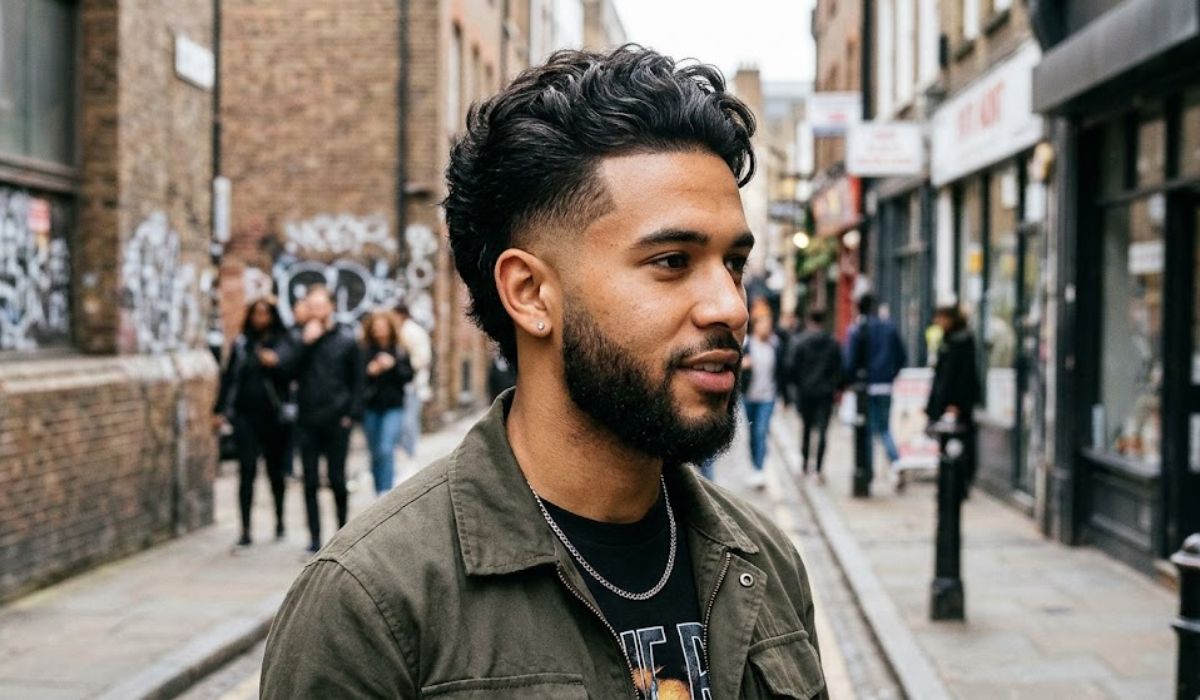
Yes. The haircut can be paired with facial hair, with the side treatment and beard shape adjusted to maintain a balanced overall silhouette.
FAQ
What is a messy French crop?
A messy French crop combines a textured top, forward fringe and shorter sides with a deliberately tousled finish. The texture should look controlled rather than unkempt.
How do you ask a barber for a messy French crop?
Tell the barber the side treatment you want, the approximate top length, the preferred fringe shape and the amount of texture you want. A reference photo with similar hair texture and density can make the request clearer.
How do you style a messy French crop?
Direct damp hair forward, create separation with your fingers, then use a small amount of matte styling product to define selected pieces. The goal is movement rather than stiffness.
What hair type works best for a messy French crop?
The style can be adapted to straight, wavy, curly, thick and fine hair. The cutting and styling approach should change according to natural texture, density and movement.
How long should the top be?
There is no single correct length. Short, medium and longer versions can work, with the appropriate choice depending on hair texture, density and the amount of movement desired.
What fade goes with a messy French crop?
A low fade, mid fade, skin fade or taper can work. The choice mainly changes how much contrast you create between the textured top and the sides.
What is the difference between a messy French crop and a textured crop?
A messy French crop follows the French crop structure, particularly the forward fringe, while a textured crop is a broader category that can use different fringe shapes and proportions.
What is the difference between a messy French crop and a Caesar?
A messy French crop generally emphasizes more visible texture and a flexible forward fringe, while a Caesar is usually more compact and structured. The names can overlap in practice, so the actual shape is more useful than the label alone.
Can you get a messy French crop with curly hair?
Yes. Curly hair can work well with the textured concept, but the barber should account for natural curl pattern and shrinkage when deciding the top and fringe length.
Is a messy French crop good for fine hair?
Fine hair can work with the style when useful density is preserved. Excessive thinning can make the top appear weaker, so texture should be created carefully.
Key Takeaways
- A messy French crop is built around a textured top, forward fringe and shorter sides.
- “Messy” should mean controlled texture and separation, not an unkempt haircut.
- The most useful barber instructions cover side treatment, top length, fringe shape and texture.
- Low fades, mid fades, skin fades and tapers create different levels of side contrast.
- Straight, wavy, curly, thick and fine hair can all be adapted to the style, but the cutting approach should change with the hair.
- There is no universal top length or universally best face shape. Hair characteristics and the desired finish should guide those decisions.
- A strong reference photo should resemble your own hair texture and density as well as the style you want.
- As of September 27, 2026, current hairstyle results continue to emphasize visual examples, texture, fade variations, hair type guidance and practical styling advice for this haircut.

Hi, I’m Tomy Parker, a tattoo enthusiast and content writer at Tattosyle.com. I love exploring tattoo styles, meanings, placement ideas, aftercare tips, and the latest trends in body art. My goal is to create easy-to-understand, helpful, and accurate guides that inspire both first-time tattoo lovers and experienced collectors. Through Tattosyle, I aim to help you make informed decisions and discover tattoo designs that reflect your unique personality and story.
Leave a Reply