
Last verified: October 24, 2026
Quick Answer
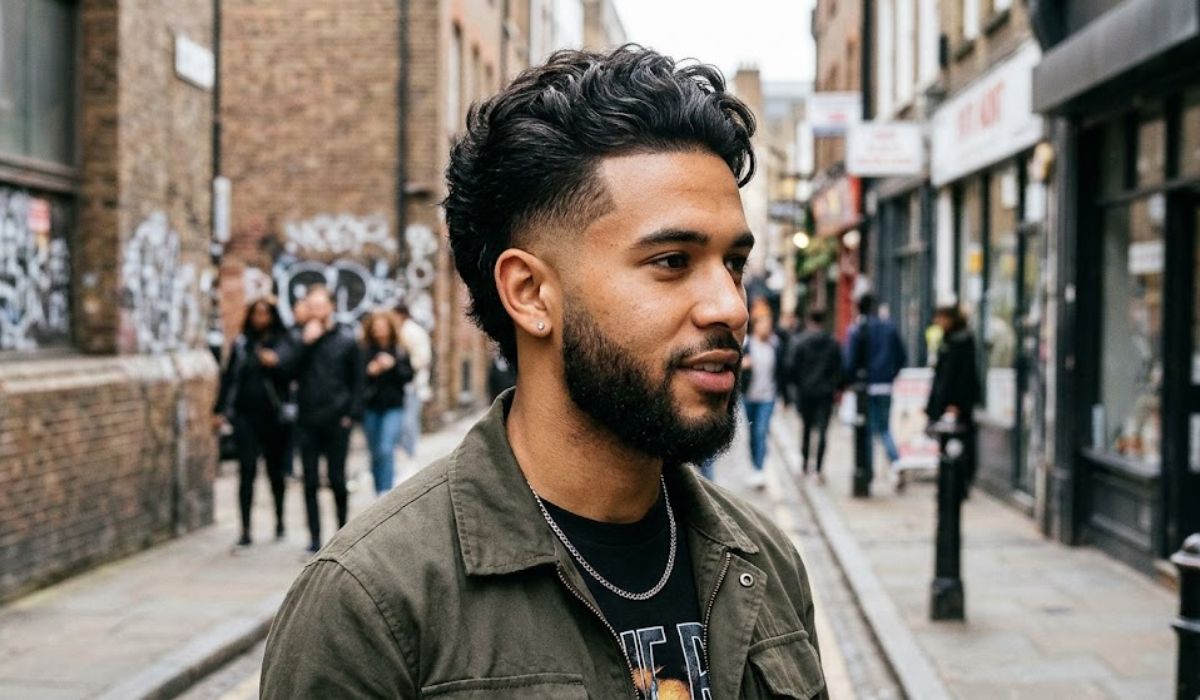
A burst fade undercut combines a rounded fade around the ear with an undercut that creates a noticeable contrast between the shorter sides and longer hair on top. The curved fade defines the shape around the ear, while the undercut creates a more separated appearance between the upper hair and the sides. You can customize the combination with curly hair, a textured top, a fringe, a mohawk, or a mullet.
TL;DR
- The burst fade curves around the ear instead of following a uniform fade across the entire side.
- The undercut creates a stronger difference between the shorter sides and longer hair above.
- You can choose a low, mid, or high burst fade and decide whether you want a skin finish or a softer blend.
- Curly, wavy, straight, and coily hair can all work with this haircut when the shape suits the hair’s texture and length.
- Show your barber reference photos from the side and back to communicate the desired shape and nape length.
- Maintenance depends on how sharp you want the fade to remain, how quickly your hair grows, and how much contrast the cut creates.
What Is a Burst Fade Undercut?
A burst fade undercut is a haircut that combines two distinct features: a curved fade around the ear and a noticeable separation between the shorter sides and the longer hair on top. The result can look sharp and structured without requiring one specific hairstyle on top.
The name describes the cutting technique rather than a single finished look. Two people can have burst fade undercuts that look quite different because their fade heights, top lengths, textures, and back treatments may vary.
Understanding the burst fade
A burst fade follows a rounded path around the ear. The hair becomes progressively shorter toward the lower section, creating a curved shape rather than a uniform fade across the entire side of the head.
The curve is the defining feature. The fade can sit relatively low or extend higher, depending on the desired result and the barber’s approach.
Understanding the undercut
An undercut creates a noticeable difference in length between the upper hair and the sides. Depending on the design, the transition may look strongly disconnected rather than gradually blended into the top.
Combining the undercut with a burst fade creates contrast around the ear while allowing the longer top to remain prominent. The exact amount of separation depends on how the barber shapes the upper section.
Best Burst Fade Undercut Styles
The best variation depends on the shape you want on top, your natural hair texture, and how much length you want to retain at the back. Instead of choosing a haircut by name alone, compare the silhouette and the amount of contrast each style creates.
1. Classic Burst Fade Undercut
The classic version keeps the attention on the curved fade and the contrast between the sides and top. A medium length top gives you room to add texture, sweep the hair backward, or create a more natural finish.
Choose this version if you want the defining shape without committing to a pronounced mohawk or mullet. Ask your barber to keep the upper section separate enough to preserve the undercut effect.
2. Low Burst Fade Undercut
A low burst fade undercut keeps the curved fade closer to the ear and lower side of the head. This placement can create a more understated appearance while preserving the contrast between the upper hair and the shorter section.
It is a useful option if you prefer a less dramatic fade. The result still depends on the amount of separation, so explain whether you want a soft transition or a more defined undercut.
3. Mid Burst Fade Undercut
A mid burst fade undercut places the curved fade higher than a low version while keeping the shape centered around the ear. It provides a more noticeable contrast without necessarily creating the most dramatic finish.
This option can work with a textured crop, curls, or a swept top. The important decision is how far the fade should extend upward and how clearly the upper hair should remain separated.
4. High Burst Fade Undercut
A high burst fade undercut creates a stronger visual contrast by extending the short area higher around the sides. It can make the upper hair appear more prominent, especially when the top has substantial volume or texture.
Choose this variation if you want a more dramatic silhouette. Show your barber how high you want the curve to reach because a high fade can change the overall balance of the haircut.
5. Curly Burst Fade Undercut
Natural curls add volume and movement to the top while the burst fade keeps the area around the ear more defined. The undercut can create a strong contrast between the curls and the shorter sides.
Ask your barber to account for your natural curl pattern and how much the hair contracts when dry. Keeping the top too short may change the silhouette, while excessive removal of side bulk can create a different result than the reference photo.
6. Straight Hair Burst Fade Undercut
Straight hair can create a clean outline and make the separation between the top and sides easy to see. A textured top, fringe, or swept style can add movement without changing the defining curved fade.
If your hair naturally lies flat, discuss the top length and styling direction with your barber. The haircut should work with your hair’s natural behavior rather than relying on a style that requires constant effort.
7. Wavy Burst Fade Undercut
Wavy hair introduces natural movement and texture above the curved fade. Leaving enough length on top helps preserve the wave pattern and gives you more styling flexibility.
Discuss how the waves fall when your hair dries. Your barber can adjust the top length and shaping to avoid removing too much volume or creating an uneven silhouette.
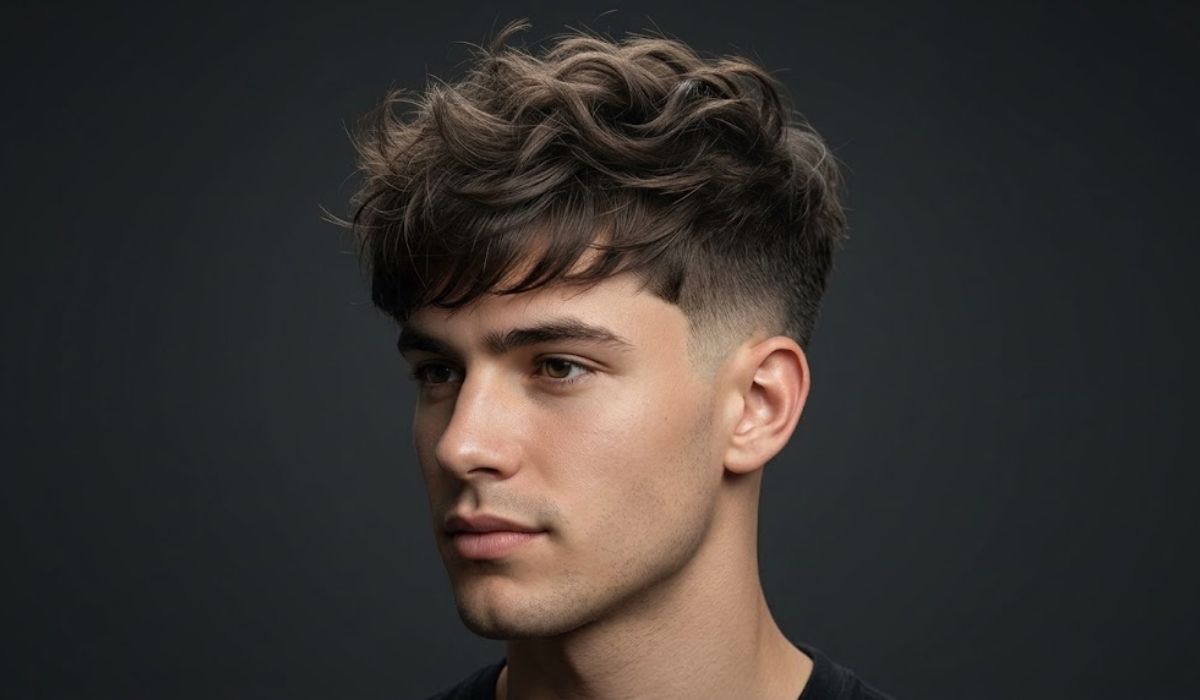
8. Textured Crop Burst Fade Undercut
A textured crop keeps the upper hair relatively short while adding movement through the surface. It offers a different look from longer styles because the top does not dominate the haircut as much.
This option suits people who prefer a shorter top but still want the curved fade and undercut contrast. Ask your barber to preserve enough length and texture for the crop to remain distinct from the sides.
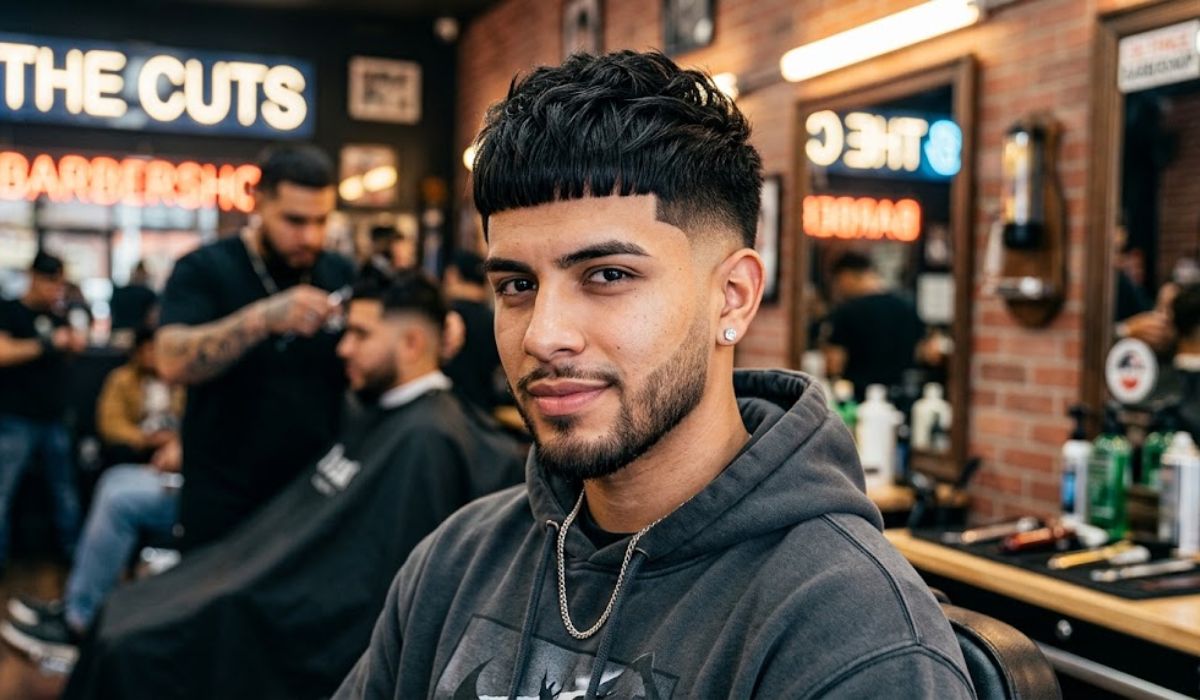
9. Burst Fade Undercut With a Fringe
A fringe directs the front of the hair toward the forehead rather than sweeping it backward. The combination creates a different silhouette while retaining the rounded fade around the ear.
Consider how the fringe sits naturally and whether you want a short, textured finish or a longer front section. Your barber should shape the fringe around your preferred styling direction.
10. Burst Fade Undercut With a Mohawk or Faux Hawk
A mohawk or faux hawk keeps more visual emphasis along the center of the head. The burst fade creates a curved short area around the ears, while the central top provides the defining shape.
A traditional mohawk and a faux hawk are not identical. A mohawk typically has a more pronounced central strip, whereas a faux hawk can create a similar direction with a less extreme silhouette.
Tell your barber how much height you want and whether the sides should look strongly disconnected from the central section.
11. Burst Fade Undercut With a Mullet
A mullet keeps additional length at the back while the sides are cut shorter. Pairing it with a burst fade creates a curved outline around the ear and allows the longer nape to remain a prominent part of the hairstyle.
The rear view is especially important for this variation. Decide whether you want a clearly extended back or a more restrained length before your barber begins cutting.
Burst Fade Undercut vs. a Regular Burst Fade
The main difference is the degree of separation between the upper hair and the sides. A burst fade describes the curved fading pattern around the ear, while an undercut describes a stronger difference in length between the top and shorter sides.
| Feature | Burst Fade | Burst Fade Undercut |
|---|---|---|
| Defining feature | Curved fade around the ear | Curved fade combined with a more pronounced undercut effect |
| Upper hair | Can blend into the sides depending on the cut | Usually retains a more noticeable separation from the sides |
| Visual effect | Depends on fade height and the top style | Often creates stronger contrast between the upper hair and sides |
| Back treatment | Can be tapered, blended, or left longer | Can also be tapered, blended, or left longer |
| Styling options | Curly tops, crops, mohawks, and other shapes | The same options, with a stronger undercut effect |
The two terms are related rather than mutually exclusive. A burst fade can be part of an undercut, and the haircut name alone does not determine how high the fade sits or how much hair remains at the back.
Burst fade vs. drop fade
A burst fade curves around the ear, while a drop fade generally follows a downward arc toward the back of the head. Both can create a rounded appearance, but the path of the fade differs.
If you are choosing between them, compare photographs from the side and back. Focus on where the short section travels rather than relying only on the haircut’s name.
Burst fade undercut vs. regular undercut
A regular undercut emphasizes the difference between the longer top and shorter sides. It does not automatically require a burst shaped fade around the ear.
A burst fade undercut adds that specific curved fading pattern to the overall design. If you want the area around the ear to have a rounded shape, make that request explicit.
How to Choose the Right Burst Fade Undercut
The haircut works best when the fade shape, top length, and back treatment are chosen together. A photograph can help you identify the look, but a few specific decisions will make it easier for your barber to reproduce it.
Choose the fade height
- Low burst fade: Keeps the curved fade closer to the ear for a more restrained appearance.
- Mid burst fade: Creates a more noticeable contrast without necessarily extending the short area as high as a high fade.
- High burst fade: Makes the short area more prominent and can emphasize the upper hair.
These labels describe general placement rather than exact measurements. Barbers may interpret them somewhat differently, so show a reference image if the position matters to you.
Decide how short the sides should be
A burst fade undercut does not automatically require the shortest possible finish. You can request a skin finish, a very short finish, or a softer blend, depending on the look you want and your barber’s technique.
A skin finish creates a stronger contrast as the hair transitions from bare skin to longer hair. A softer finish leaves more visible hair near the bottom. Explain the result you prefer rather than assuming the word undercut specifies the finish.
Choose the top length and texture
The top determines much of the finished hairstyle. A short crop creates a compact silhouette, curls add volume, a fringe directs attention forward, and a longer top gives you more room to sweep or shape the hair.
Consider how much time you want to spend styling it. A cut that looks good in a reference photo may require more length, texture, or daily styling than you prefer.
Decide what should happen at the back
The nape can be tapered, blended, or left longer to create a mullet inspired silhouette. These choices can change the overall look substantially even when the sides use the same burst fade.
Bring a rear view of the hairstyle you want. If keeping the back long matters to you, say so before the barber begins cutting.
What to Tell Your Barber
The phrase burst fade undercut gives your barber a starting point, but it leaves several details open to interpretation. A clear request should describe the curved fade, the degree of separation, the top length, and the shape of the back.
You can use this example and adjust it to match your preferred reference photo:
“I want a burst fade around the ears with a noticeable undercut effect. Keep the top at the length shown in this photo, use the fade height and finish shown here, and keep the back shaped like the rear reference. Please check the separation and overall shape before finishing.”
Bring the right reference photos
- Side view: Shows the curved fade and how it connects to the upper hair.
- Rear view: Shows whether the nape is tapered or left longer.
- Top or front view: Helps communicate the fringe, curls, texture, or styling direction.
Choose photographs that show the features you actually want. If one picture has the perfect fade but another has the right top length, explain which details you want from each rather than expecting the barber to guess.
Confirm these details before the cut
- How high the burst fade should sit.
- Whether the shortest section should reach the skin.
- How strongly the top should remain separated from the sides.
- How much length should remain on top.
- Whether the back should be tapered, blended, or left long.
This brief is more useful than asking for a trendy haircut by name alone because it makes the important visual decisions explicit.
Styling and Maintaining a Burst Fade Undercut
The maintenance routine depends on your hair texture, the length of the top, and how sharply you want the fade to remain defined. The sides may need attention before the longer upper section does.
How to style the top
- Curly hair: Work with your natural curl pattern and choose a suitable styling product if needed. Avoid flattening the volume if the reference look depends on it.
- Wavy hair: Preserve the natural movement and use a light styling approach if you want the waves to remain visible.
- Straight hair: Shape the top with a suitable product when you want additional texture, lift, or direction.
- Textured crop: Keep the styling simple and emphasize the intended direction and surface texture.
Start with a small amount of product and add more only if necessary. The right product depends on your hair and desired finish, so an extensive product collection is not required to maintain the cut.
How often should you get a touch up?
A practical starting point is to consider a barber visit every two to four weeks if you want the fade to remain clearly defined. A skin finish or very sharp separation may need attention sooner, while a softer finish can be more forgiving as the hair grows.
This is a general guideline, not a fixed rule. Hair growth, personal preference, the chosen finish, and the overall haircut shape all influence the ideal schedule.
How to keep the haircut looking balanced
- Follow the barber’s advice about when to return for a trim.
- Keep the top at a length that supports your preferred style.
- Do not remove length at the back if you want to preserve a mullet inspired shape.
- Use a clear reference photo if you need the same fade placement repeated at your next appointment.
Common Burst Fade Undercut Mistakes
Confusing the fade with the entire haircut
The burst fade describes the curved fading pattern around the ear, not the whole hairstyle. The top and back can take different forms, so identify the shape you want rather than assuming the fade determines everything.
Assuming every version needs a skin finish
A burst fade undercut can use different finishes. If you prefer a softer appearance, tell your barber instead of assuming that a skin finish is compulsory.
Ignoring the rear view
A side photograph may not reveal the full shape of the nape. If you want a longer back or a particular neckline, include a rear view in your references.
Choosing a top style without considering your hair
The same cut can look different depending on curl pattern, density, length, and natural movement. Choose a reference that resembles your own hair closely enough to communicate a realistic target.
Asking for a haircut without explaining the details
Barbers may interpret a haircut name differently. Specify the fade height, finish, separation, top length, and back shape to reduce the chance of getting a different result than expected.
Frequently Asked Questions
Is a burst fade undercut the same as a disconnected undercut?
Not necessarily. A disconnected undercut describes a strong separation between the top and sides, while a burst fade describes the curved fade around the ear. A burst fade undercut can have a disconnected appearance, depending on how the barber cuts the upper section.
Can you get a burst fade undercut with short hair?
Yes. A shorter top can work with the curved fade and undercut effect, although the amount of visible separation depends on the remaining length and the chosen style.
Can you get a burst fade undercut without a skin fade?
Yes. The haircut does not inherently require a skin finish. Ask for a softer or less closely shaved finish if that better matches your preferred look.
Can you combine a burst fade undercut with a beard?
Yes. The sideburn area can be shaped to complement the beard, depending on the desired outline. Show your barber how you want the sideburns and beard to connect.
Can you style a burst fade undercut into a faux hawk?
Yes. A faux hawk can be paired with a burst fade undercut by shaping the top toward the center. The result depends on the available length, natural texture, and the amount of height you want.
What photos should you show your barber?
Bring a side view to show the curved fade, a rear view to explain the nape, and a front or top view to communicate the upper hairstyle. Use images that closely match the features you want reproduced.
Does a burst fade undercut suit every hair texture?
The combination can be adapted to curly, coily, wavy, and straight hair, but the ideal top length and styling approach will vary. Discuss your natural hair behavior with your barber before choosing a specific variation.
Key Takeaways
- A burst fade undercut combines a curved fade around the ear with a noticeable difference between the shorter sides and longer top.
- The fade height, shortest finish, top length, and nape treatment determine much of the final appearance.
- Curly, wavy, straight, and coily hair can be styled with this combination when the cut is adapted to the hair’s natural characteristics.
- Reference photographs from the side and back make it easier to communicate the desired shape to a barber.
- Choose the variation that matches your preferred silhouette and maintenance routine rather than selecting a haircut based on its name alone.

Hi, I’m Tomy Parker, a tattoo enthusiast and content writer at Tattosyle.com. I love exploring tattoo styles, meanings, placement ideas, aftercare tips, and the latest trends in body art. My goal is to create easy-to-understand, helpful, and accurate guides that inspire both first-time tattoo lovers and experienced collectors. Through Tattosyle, I aim to help you make informed decisions and discover tattoo designs that reflect your unique personality and story.
Leave a Reply