
Quick Answer
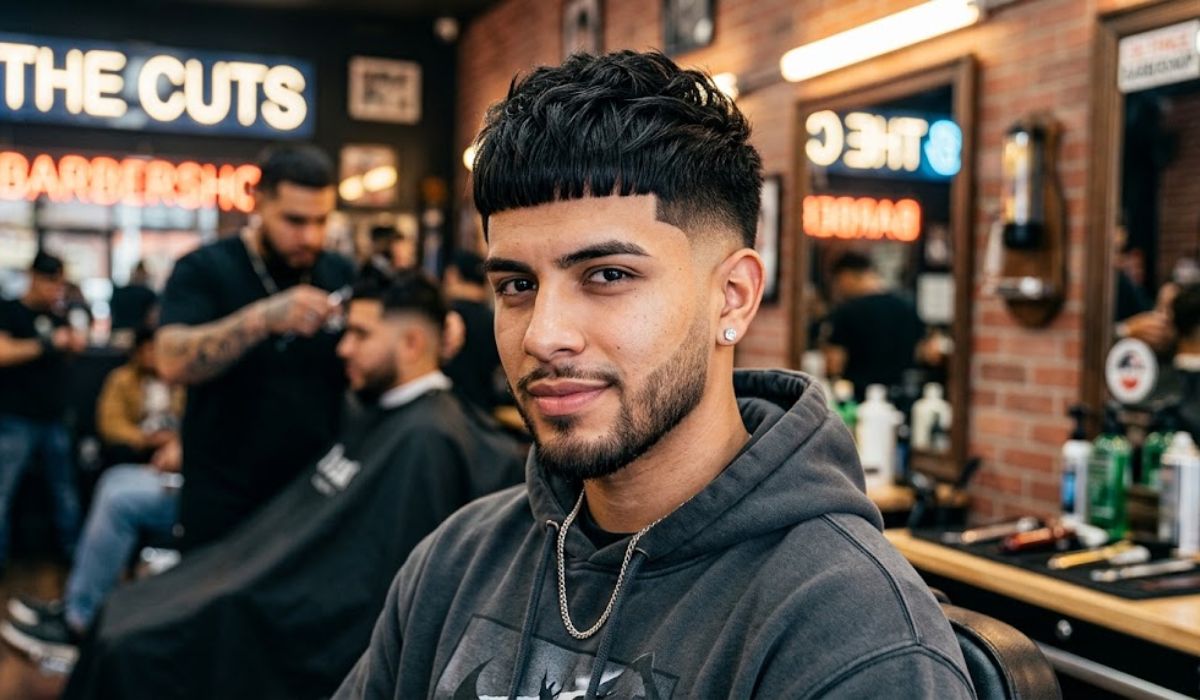
A burst fade Edgar haircut combines the Edgar haircut’s forward facing top and defined fringe with a curved fade that wraps around the ear. The result has a sharp front and a distinctive rounded side profile. You can customize the look with a low or high fade, a blunt or textured fringe, a curly top, or extra length at the back.
TL;DR
- The Edgar fringe creates the haircut’s recognizable front, while the burst fade creates the rounded transition around the ear.
- A low burst fade gives a more restrained appearance, while a high burst fade creates stronger contrast.
- Curly, wavy, straight, and textured tops can all be adapted to the style, depending on the desired finish.
- Keeping more length at the back creates a mullet inspired silhouette.
- Show your barber front, side, and back reference photos to communicate the exact shape you want.
- Choose your fringe, fade height, and rear length before deciding on styling products or maintenance routines.
What Is a Burst Fade Edgar Haircut?
A burst fade Edgar is a modern haircut that combines a clearly defined fringe with a fade that curves around the ear. Instead of following a straight line across the sides, the faded area spreads in a rounded shape around the ear, creating a distinctive side profile.
The Edgar element gives the haircut its forward directed top and recognizable front edge. The burst fade controls how the sides transition from very short hair to the longer hair above. Together, these features create a structured appearance that can look bold, textured, or relatively understated depending on the chosen variation.
What Makes It Different From a Regular Edgar?
The main difference is the shape of the fade. An Edgar haircut can use several different side treatments, including a taper, a conventional fade, or a burst fade. The fringe and forward directed top identify the Edgar style, while the side treatment determines the overall silhouette.
A burst fade Edgar places the rounded transition around the ear. A conventional fade generally follows a more continuous transition across the sides, while a taper concentrates the shortening around selected areas such as the temples and neckline.
What Makes the Fade a Burst Fade?
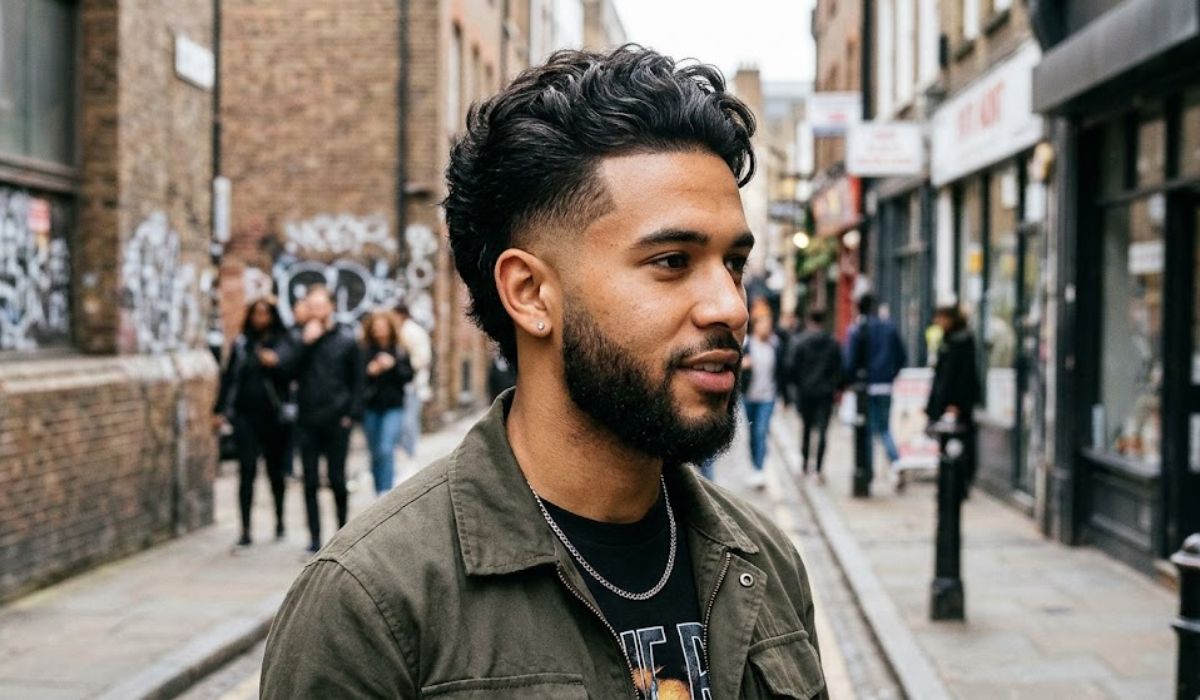
The defining feature is the curved transition around the ear. Hair becomes progressively shorter toward the lower faded area, while the hair above and behind it can retain more length.
The curve, fade height, and amount of contrast can vary between barbers and individual cuts. A reference photo is more reliable than the name alone when you want a particular shape.
Best Burst Fade Edgar Haircut Styles
The best version depends on how much contrast you want, how you prefer your fringe to look, and whether you want a compact back or a longer silhouette. These variations offer different starting points for choosing your haircut.
1. Classic Burst Fade Edgar
The classic burst fade Edgar combines a defined front fringe, a relatively structured top, and a rounded fade around the ear. The back stays comparatively compact, keeping attention on the front and sides.
This is a useful reference if you want the recognizable Edgar shape without adding a prominent mullet or elaborate design. Ask your barber to match the fringe and fade proportions in your reference photo rather than assuming that every classic version has the same length.
2. Low Burst Fade Edgar
A low burst fade Edgar keeps the curved transition closer to the ear. The shorter area occupies less of the upper side, creating a more restrained contrast than a higher fade.
Choose this variation if you prefer a less dramatic side profile while keeping the defined Edgar fringe. Your barber can adjust how tightly the fade is cut and how much length remains above the ear.
3. High Burst Fade Edgar
A high burst fade Edgar moves the transition farther up the sides, exposing more of the shorter area. The contrast between the top and sides becomes more noticeable, giving the haircut a stronger visual outline.
This variation works as a reference for anyone who wants the fade to stand out. Before the cut begins, confirm the height with your barber because a fade that rises too far may change the proportions of the look you originally wanted.
4. Textured Burst Fade Edgar
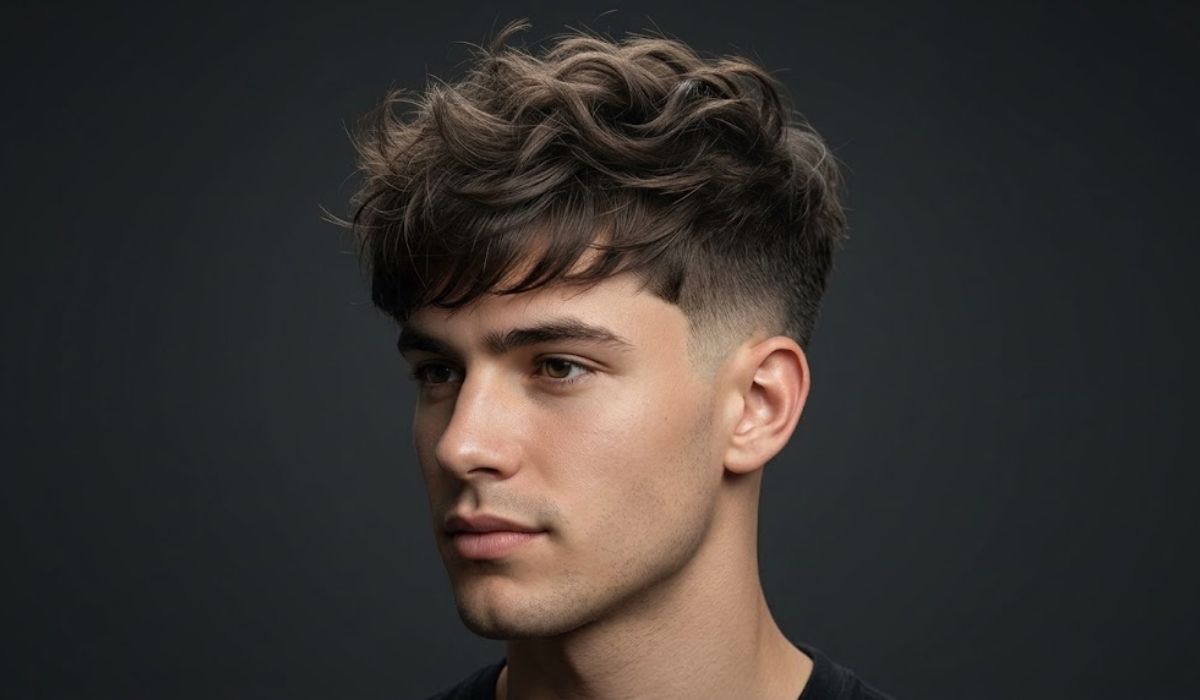
A textured burst fade Edgar softens the uniform appearance of the top by separating the hair into visible pieces. The fringe can remain defined without forming one perfectly solid line across the forehead.
This version is worth considering if you prefer movement and a less rigid finish. Ask your barber to create texture through the top while keeping the front shape consistent with your chosen reference.
5. Curly Burst Fade Edgar
A curly burst fade Edgar retains the natural curl pattern on top while the sides are shaped into the rounded fade. The curls add volume and texture, so the finished fringe may look softer or more irregular than a straight, blunt version.
Bring a photo of the haircut with a similar curl pattern to yours. Your barber should consider how the curls sit when dry, how much the hair contracts as it dries, and how the front edge will look with your natural texture.
6. Fluffy Burst Fade Edgar
A fluffy burst fade Edgar keeps more visible volume and softness through the top instead of pressing the hair into a completely flat shape. The fringe can still provide a recognizable front outline, but the hair above it has a lighter, fuller appearance.
This option is best understood as a styling variation rather than a completely different fade. The final result depends on your hair’s natural density, texture, length, and the way the top is cut.
7. Burst Fade Edgar With a Mullet
This variation combines the defined Edgar fringe and rounded side fade with extra length at the back. The longer rear section creates a mullet inspired silhouette, making the haircut look different from a compact Edgar with a closely shaped neckline.
Be specific about how much length you want to retain. A small amount of extra length creates a different result from a pronounced mullet, so your barber should see the rear reference photo before cutting.
8. Burst Fade Edgar With a Textured Fringe
A textured fringe uses separated sections rather than one continuous, sharply defined edge. Combined with a burst fade, it creates a structured haircut with a slightly softer front appearance.
This is a useful alternative if you like the Edgar shape but do not want an extremely blunt line. The amount of texture should be chosen carefully because excessive separation can change the appearance of the fringe.
9. Burst Fade Edgar With a Hair Design
A shaved line or small design can add a custom detail to the side of a burst fade Edgar. The design is optional and does not define the haircut itself.
Keep the design simple if you want the fringe and curved fade to remain the main features. Show your barber the exact placement you prefer because a design changes how the side profile looks as the hair grows out.
How to Choose the Right Burst Fade Edgar
Choose the haircut by deciding on four elements: fade height, fringe shape, top texture, and rear length. These details affect the finished appearance more directly than choosing a style name alone.
Choose the Fade Height
- Low burst fade: Keeps the curved transition closer to the ear for a more restrained look.
- Mid burst fade: Places the curve between a low and high position, offering a middle ground in contrast.
- High burst fade: Extends the shorter area farther up the side for a more noticeable transition.
These labels are practical descriptions, not measurements that every barber uses identically. If you are unsure, show a photo and point out exactly where you want the shorter area to stop.
Decide Between a Blunt and Textured Fringe
A blunt fringe creates a more solid, clearly defined front edge. A textured fringe breaks that edge into smaller sections, making the front look less uniform.
Consider how much definition you want around the forehead. Your natural growth direction and hair texture also influence how the fringe sits, so the best reference is one with a similar hair pattern.
Consider Your Natural Hair Texture
Straight hair can create a crisp front line, while wavy or curly hair introduces more movement and natural variation. A textured top can also create separation without requiring a major change to the fade itself.
Hair density, growth direction, and the way your hair sits after washing all affect the result. Choose an example that resembles your own hair rather than expecting your haircut to look identical to a photograph with a different texture.
Decide How Much Length to Keep at the Back
The rear section changes the silhouette considerably. A compact back creates a more conventional Edgar outline, while additional length produces a mullet inspired appearance.
Do not rely on a front photo alone if the rear shape matters to you. A back view gives your barber a clearer idea of the length and outline you want to preserve.
Burst Fade Edgar vs. Taper Edgar vs. Drop Fade Edgar
These terms describe different ways to shape the sides and back. Understanding the distinction helps you avoid asking for one haircut while showing a photo of another.
| Haircut type | Side treatment | Overall effect | What to check in a photo |
|---|---|---|---|
| Burst fade Edgar | Curved fade around the ear | Rounded side profile with a defined Edgar fringe | The curve around the ear and the height of the fade |
| Taper Edgar | Gradual shortening around selected areas, often the temples and neckline | A more localized transition that can leave more length on the sides | Where the hair is shortened and how much length remains above it |
| Drop fade Edgar | The fade line descends as it moves behind the ear | A side and rear outline shaped by the lowered transition | How the fade travels from the temple toward the back of the head |
The three styles can all be combined with an Edgar fringe, but the side and rear outlines differ. A burst fade curves around the ear, a taper focuses on selected transition areas, and a drop fade follows a descending line toward the back.
If the distinction still feels unclear, choose the reference image that most closely matches your desired side profile. The barber can then explain which fade technique will reproduce that shape.
How to Ask Your Barber for a Burst Fade Edgar
The clearest way to request a burst fade Edgar is to combine the haircut name with reference photos and specific instructions about the fade, fringe, and back. This avoids relying on terminology that different barbers may interpret slightly differently.
Bring Front, Side, and Back Reference Photos
- Front view: Shows the fringe, front edge, and amount of hair on top.
- Side view: Shows the curved fade, its height, and the transition into the longer hair.
- Back view: Shows the neckline and how much length remains behind the ear.
Use photos of the same haircut whenever possible. Mixing a front photo of a blunt Edgar with a side photo of a high burst fade and a rear photo of a long mullet may produce a combination you did not intend.
A Simple Barber Request
You can use this example and adjust it to match your chosen photos:
“I want an Edgar haircut with a burst fade that curves around the ear. Keep the fringe [blunt or textured], make the fade [low, mid, or high], and leave the back [short or longer]. Please use these front, side, and back photos as references.”
Replace the bracketed choices with your preferences before the appointment. If you are unsure about the exact fade height, ask the barber to discuss the options before removing too much length.
Also explain whether you want the shortest part of the fade to reach bare skin. A burst fade does not have to be a skin fade, and the amount of contrast can be adjusted.
How to Style and Maintain a Burst Fade Edgar
The styling routine depends on the texture of the top and how sharply you want the fringe defined. The goal is to maintain the intended shape without making the hair feel unnecessarily stiff or heavy.
Styling the Fringe and Top
- Start with clean hair. Remove excess water after washing so you can control the direction of the top.
- Direct the hair forward. Use your fingers or a comb to guide the top toward the forehead, following the intended Edgar shape.
- Shape the texture. Use a small amount of a suitable styling product if you need additional definition or hold. The amount depends on your hair type and the finish you want.
- Check the fringe. Make sure the front edge sits as intended without forcing the hair into an unnatural position.
For curly hair, work with the natural curl pattern rather than brushing the top into a shape it will not hold. A softer finish may suit curls better than a perfectly flat, rigid fringe.
Keeping the Fade Looking Sharp
The fade usually becomes less defined as the hair grows. How quickly the change becomes noticeable depends on your growth rate, how short the fade was cut, and how much contrast you prefer.
Schedule a touch up when the transition no longer looks the way you want. There is no single maintenance interval that suits everyone, so use the appearance of the fade rather than a fixed calendar rule.
If you have a shaved design, remember that its lines may also become less distinct as the hair grows. A simpler design generally requires less attention than an intricate one.
Common Mistakes to Avoid
- Choosing a front photo only: The front may look right while the fade or rear length differs from what you wanted.
- Confusing a burst fade with a taper: Both can be paired with an Edgar fringe, but the transition around the sides is different.
- Requesting a high fade without confirming the height: The result may expose more of the side than you intended.
- Ignoring natural texture: A reference with straight hair may not produce the same fringe shape on tightly curled hair.
- Leaving the rear length unclear: The barber may create a compact back when you wanted a mullet inspired shape, or retain more length than you expected.
- Using too much styling product: Excessive product can weigh down the top or make a textured fringe appear stiff.
The simplest way to avoid these mistakes is to choose a complete reference set, identify the features you want to keep, and discuss the fade height and rear length before the haircut begins.
Frequently Asked Questions
Can you get a burst fade Edgar without a skin fade?
Yes. The shortest part of the fade can retain some hair rather than going down to bare skin. Show your barber the level of contrast you prefer.
Does a burst fade Edgar work with straight or wavy hair?
Both can be adapted to the haircut. Straight hair may create a more defined front edge, while wavy hair adds movement and a softer texture.
Should an Edgar fringe be blunt or textured?
A blunt fringe creates a solid front line, while a textured fringe separates the hair into smaller sections. Choose the finish that matches your preferred appearance and natural hair pattern.
Can you combine a burst fade Edgar with a mullet?
Yes. Retaining extra length at the back creates a mullet inspired version while the fringe and curved fade preserve the main Edgar and burst fade features.
How often should you maintain a burst fade Edgar?
The timing depends on hair growth, the closeness of the fade, and how sharp you want the outline to remain. Arrange a touch up when the fade and fringe begin to lose their intended shape.
Can you add a shaved design to a burst fade Edgar?
Yes. A simple line or other small design can be added to the faded area. The design is an optional detail rather than a defining feature of the haircut.
What photos should I show my barber?
Bring a front photo for the fringe, a side photo for the curved fade, and a back photo for the neckline and rear length. Using views of the same haircut helps communicate a consistent result.
How do you maintain a burst fade Edgar as it grows out?
Keep the top and fringe styled in the intended direction, and arrange a trim when the fade becomes less distinct. If you want to grow out the back, explain which length you want to preserve before your next cut.
Key Takeaways
A burst fade Edgar combines a defined, forward facing fringe with a curved fade around the ear. The haircut can look subtle or dramatic depending on the fade height, fringe shape, top texture, and amount of hair retained at the back.
For the best result, choose a variation that matches your hair texture and preferred silhouette. Show your barber clear front, side, and rear photos, specify the fade height and fringe, and explain how much length you want to keep at the back. Those details provide a clearer starting point than the haircut name alone.

Hi, I’m Tomy Parker, a tattoo enthusiast and content writer at Tattosyle.com. I love exploring tattoo styles, meanings, placement ideas, aftercare tips, and the latest trends in body art. My goal is to create easy-to-understand, helpful, and accurate guides that inspire both first-time tattoo lovers and experienced collectors. Through Tattosyle, I aim to help you make informed decisions and discover tattoo designs that reflect your unique personality and story.
Leave a Reply