
Quick Answer
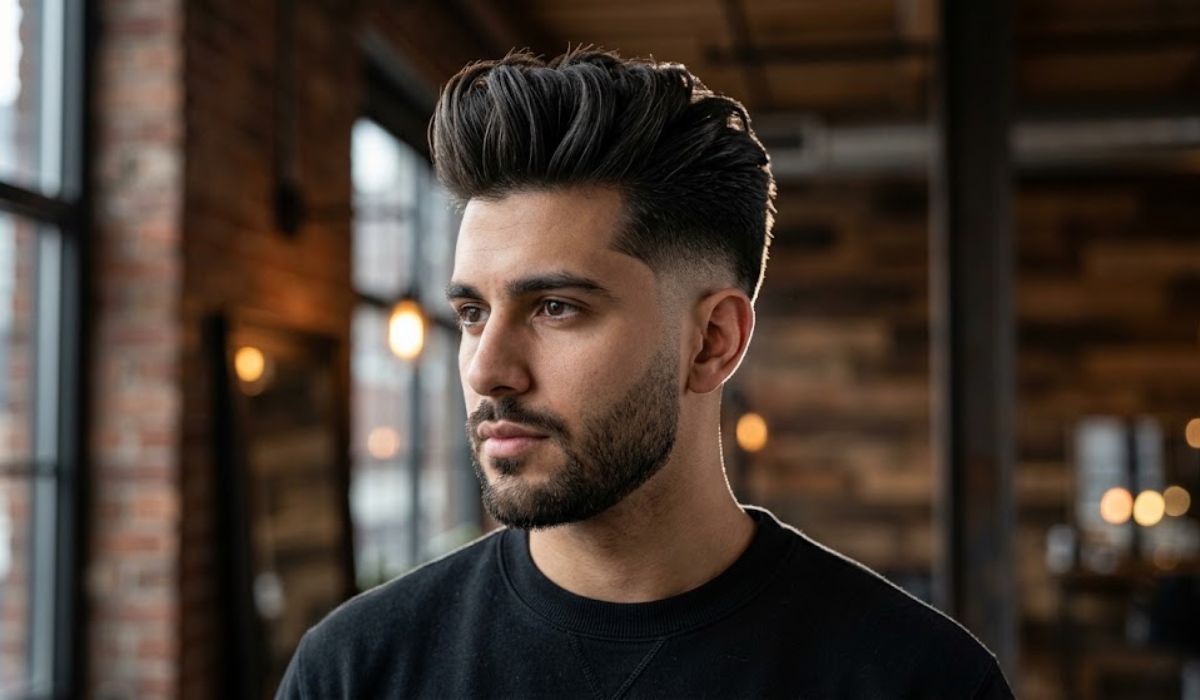
A burst fade pompadour combines a curved fade around the ears with a voluminous top swept upward and backward. The burst fade creates a clean, rounded shape on the sides, while the pompadour provides height and definition. You can customize the look with a short top, textured finish, classic sweep, or more dramatic volume depending on your hair and styling preferences.
TL;DR
- Best classic look: Choose a smooth pompadour with a neatly curved burst fade for a structured appearance.
- Best relaxed option: A textured pompadour creates a less polished finish with visible separation between strands.
- Best for shorter hair: Keep the top compact while maintaining enough length to create a noticeable lift at the front.
- Best barber tip: Bring a reference photograph and specify the fade shape, top length, height, and desired finish.
- Best styling approach: Use a blow dryer to build root volume, then apply a suitable finishing product without weighing the hair down.
What Is a Burst Fade Pompadour?
A burst fade pompadour is a men’s haircut that combines two distinct elements: a burst fade around the ears and a pompadour on top. The fade curves around the ear, while the longer hair on top is lifted and swept backward to create volume.
The combination gives the haircut its distinctive profile. The sides look closely tapered around the ears, while the top remains long enough to create a raised, swept shape. The final result can look polished, textured, compact, or dramatic depending on the length and styling technique.
How the Burst Fade Shapes the Sides
A burst fade gradually shortens the hair in a curved pattern around the ear. The fade generally follows the rounded area behind and above the ear instead of creating a uniform horizontal line across the side of the head.
The amount of contrast depends on how short the barber cuts the hair near the ear and how the transition blends into the surrounding hair. A tighter fade creates a sharper contrast, while a softer transition produces a more understated appearance.
How the Pompadour Creates Volume
The pompadour is defined by volume at the front and a shape that sweeps upward and backward. The top can be smooth and controlled or separated into textured strands for a more relaxed finish.
Top length matters because the hair needs enough usable length to create the desired lift. The exact amount varies with natural hair behavior, density, styling technique, and the height you want to achieve.
8 Burst Fade Pompadour Haircuts for Men
These eight variations provide different ways to wear the same basic combination. The main differences are the height of the top, the texture of the finish, and the degree of definition in the sides.
1. Classic Burst Fade Pompadour
The classic burst fade pompadour features a smooth top with a controlled sweep from the front toward the back. The curved fade keeps the sides tidy while allowing the pompadour to remain the main visual feature.
This variation suits men who prefer a structured finish rather than deliberately messy texture. A brush and blow dryer help create the shape, while a finishing product provides the desired hold and sheen.
- Top: Smooth and lifted.
- Sides: Clean, curved fade around the ears.
- Finish: Polished and defined.
- Styling effort: Moderate, depending on the desired height.
2. Textured Burst Fade Pompadour
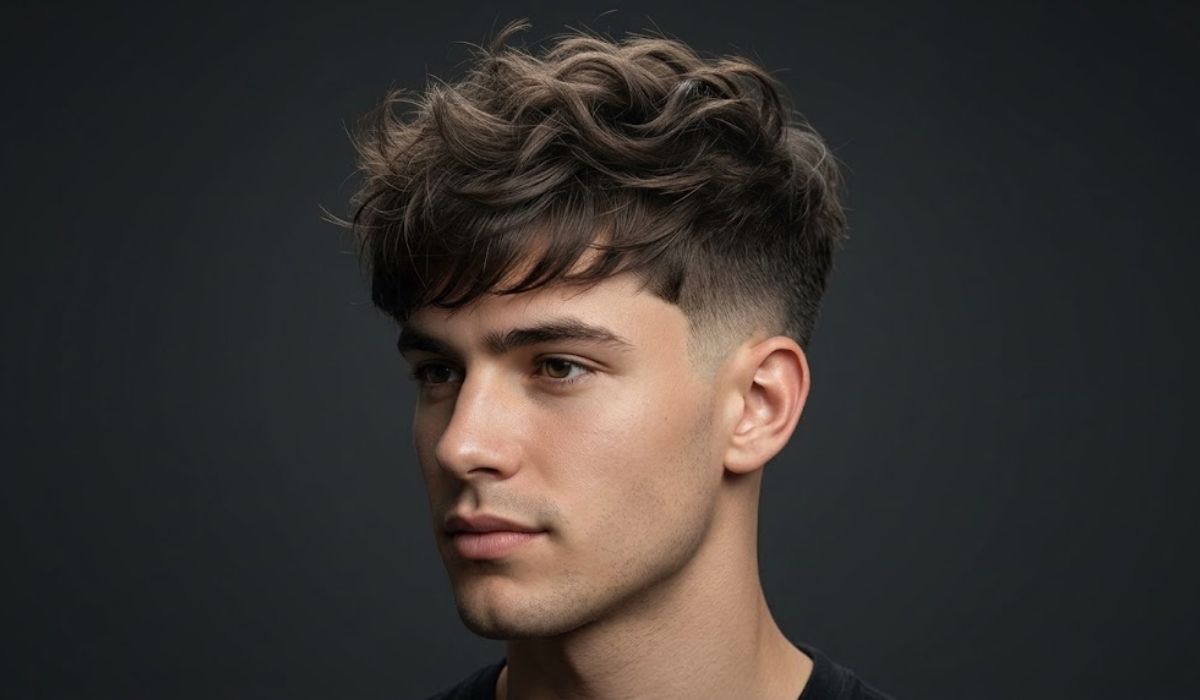
A textured burst fade pompadour replaces the smooth surface of a classic pompadour with visible separation between strands. The front still rises and sweeps backward, but the finish looks less rigid.
This version works well for men who prefer a natural looking hairstyle. A lightweight matte clay or styling paste can help define the texture, although the best product depends on hair density and the amount of hold required.
- Top: Separated strands with visible movement.
- Sides: Curved burst fade.
- Finish: Natural or matte.
- Styling tip: Shape the hair with your fingers after creating root lift.
3. Short Burst Fade Pompadour
The short burst fade pompadour keeps the top more compact while preserving the raised front that defines a pompadour. It offers a less dramatic silhouette than a high volume version.
This is a practical option for men who prefer a controlled shape without committing to a long top. The barber should leave enough length at the front to create the intended lift rather than cutting the top so short that it becomes a different hairstyle.
- Top: Shorter and compact.
- Sides: Neatly curved around the ears.
- Finish: Clean and controlled.
- Styling tip: Concentrate on lifting the front before directing the hair backward.
4. High Volume Burst Fade Pompadour
A high volume burst fade pompadour emphasizes height at the front and a pronounced sweep toward the back. The contrast between the elevated top and closely faded sides gives this variation a more dramatic profile.
This shape generally requires enough top length to support the desired height and a styling routine that creates lift at the roots. A blow dryer and brush can help establish the shape before a finishing product adds control.
- Top: Tall with pronounced volume.
- Sides: Closely faded around the ears.
- Finish: Bold and structured.
- Styling tip: Build volume gradually instead of relying on a heavy layer of product.
5. Messy Burst Fade Pompadour
The messy burst fade pompadour uses an intentionally relaxed top rather than a perfectly uniform sweep. Loose strands and slight irregularities create movement, while the curved fade keeps the sides defined.
The goal is controlled texture, not an unstyled appearance. Dry the hair upward and backward, then use your fingers to separate the strands. Apply a small amount of a suitable product and adjust the shape without pressing down the volume.
- Top: Loose and textured.
- Sides: Defined burst fade.
- Finish: Casual and relaxed.
- Styling tip: Avoid using more product than necessary to maintain separation.
6. Side Part Burst Fade Pompadour
A side part burst fade pompadour introduces a visible parting that helps organize the top. The hair retains its raised, swept back shape, while the part adds definition and direction.
This variation can look more structured than a messy pompadour. The barber should position the part according to the way your hair naturally separates and blend the surrounding hair into the burst fade.
- Top: Lifted with a defined part.
- Sides: Curved fade with a neat transition.
- Finish: Structured and directional.
- Styling tip: Establish the part while the hair is damp, then shape the top with a brush.
7. Longer Swept Back Burst Fade Pompadour
The longer swept back burst fade pompadour uses additional top length to create a more extended silhouette. Rather than concentrating all the height at the front, the hair flows farther toward the back of the head.
This version needs enough length to control the direction of the hair and maintain the intended sweep. Men with hair that naturally falls forward may need more time with a blow dryer and brush to establish the shape.
- Top: Longer and swept backward.
- Sides: Curved burst fade.
- Finish: Flowing and voluminous.
- Styling tip: Direct the hair backward while drying rather than trying to force the entire shape into place with product afterward.
8. Burst Fade Pompadour With a Beard
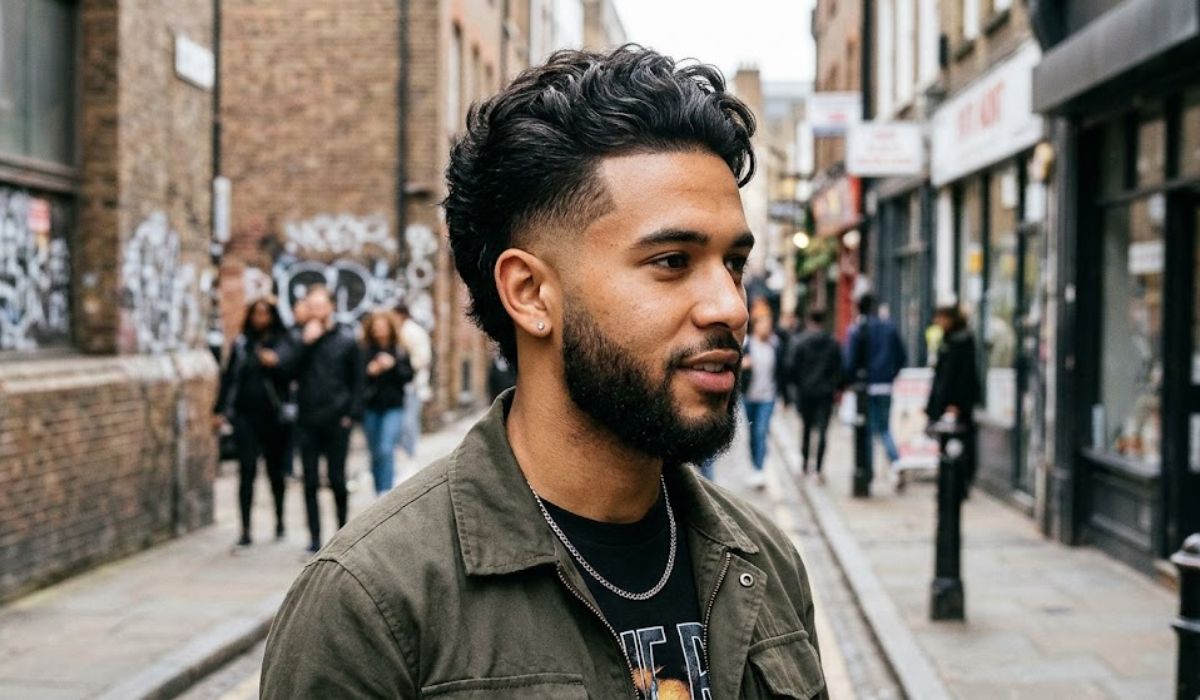
A beard can complement a burst fade pompadour by adding definition to the lower half of the face. The key is to coordinate the sideburn transition with the fade so that the haircut and facial hair look intentional together.
The beard can be short, medium length, or fuller depending on personal preference. There is no single beard length that works for everyone, so consider the overall balance of the hairstyle and facial hair when discussing the finished look with your barber.
- Top: Classic or textured pompadour.
- Sides: Curved burst fade.
- Facial hair: Beard shaped to complement the sideburn transition.
- Styling tip: Ask the barber to check the haircut and beard together rather than treating them as unrelated details.
How to Choose the Right Burst Fade Pompadour
The best variation is the one that matches your preferred appearance, natural hair behavior, and willingness to style it. A photograph can show the look you want, but the barber may need to adjust the top length and shape to suit your hair.
Choose the Right Top Length
A compact pompadour requires less top length than a dramatic, high volume version. Longer hair gives you more room to create a pronounced sweep, but it can also require more styling control.
Do not rely on a fixed minimum length for every pompadour. The amount of hair needed depends on the finished height, hair texture, density, and the direction in which the hair naturally grows.
Choose Between a Smooth and Textured Finish
| Feature | Classic pompadour | Textured pompadour |
|---|---|---|
| Appearance | Smooth and structured | Separated and relaxed |
| Styling method | Brush and blow dryer | Blow dryer and finger styling |
| Product finish | Can be polished or natural | Often matte or low sheen |
| Best selection criterion | A defined, controlled sweep | Visible texture and movement |
Neither finish is automatically better. Choose the classic version if you want a more uniform shape, or the textured version if you prefer visible separation and a less rigid appearance.
Consider Your Natural Hair Texture
- Straight hair: Focus on creating root lift and directing the hair backward. A suitable styling product can help maintain the shape.
- Wavy hair: Work with the natural movement if you want a textured finish, or use a brush to create a smoother sweep.
- Thick hair: Ask the barber to shape the top so it remains manageable without removing the volume needed for the pompadour.
These are starting points rather than strict rules. Hair density, growth direction, length, and the desired finish can matter as much as the broad hair type.
Consider Your Daily Styling Routine
A high volume pompadour generally needs more attention than a compact version because the top must retain a more pronounced shape. A textured finish may allow a less uniform appearance, but it still needs appropriate shaping.
If you prefer a quick morning routine, tell your barber before choosing the cut. The haircut can then be adjusted to create the closest practical match to your preferred look.
Burst Fade Pompadour vs. Quiff
A pompadour and a quiff can both feature volume at the front, but they are not identical hairstyles. The pompadour generally emphasizes a fuller shape swept upward and backward, while a quiff often features a more forward focused lift with a looser overall structure.
| Feature | Pompadour | Quiff |
|---|---|---|
| Main shape | Full, raised shape swept backward | Lifted front with more flexible direction |
| Overall finish | Can be smooth or textured | Often more relaxed, but can be structured |
| Styling focus | Build height and maintain the backward sweep | Lift the front and shape its direction |
| With a burst fade | Creates a curved fade with a prominent swept top | Creates a curved fade with a more forward focused top |
The fade does not determine whether the top is a pompadour or a quiff. The top shape and direction are the distinguishing features. If you prefer the fuller swept back silhouette, choose a pompadour reference photo when speaking with your barber.
How to Ask Your Barber for a Burst Fade Pompadour
The haircut name is a useful starting point, but it does not communicate every detail. A reference photo and a few specific instructions help your barber understand the exact shape you want.
- Specify the burst fade: Explain that you want the fade to curve around the ears rather than follow a straight line across the sides.
- Describe the top length: Show whether you prefer a short, compact pompadour or a longer top with more volume.
- Explain the desired finish: Choose between a smooth, structured sweep and a textured, relaxed appearance.
- Discuss the height: Point out how high you want the front to rise in your reference photograph.
- Show the side profile: A side view helps communicate the fade shape, the transition behind the ear, and the direction of the top.
- Ask for adjustments: Let the barber assess your natural growth pattern and recommend changes needed to achieve the closest practical result.
Example barber request: “I want a burst fade that curves around my ears, with enough length on top for a pompadour swept upward and backward. Keep the top textured rather than perfectly slick, and adjust the length to suit my hair.”
Adapt the request to the reference photograph you choose. If you want a high volume classic pompadour, specify that instead of asking for a textured finish.
How to Style a Burst Fade Pompadour
Styling a burst fade pompadour involves building lift at the roots, directing the hair into the desired shape, and applying enough product to maintain control. The process can be adapted for a smooth classic finish or a more natural textured look.
- Start with damp hair: Towel dry your hair so it is damp rather than dripping wet.
- Apply a suitable styling product: If you use a pre styling product, distribute a small amount evenly before drying.
- Lift the roots: Use a blow dryer to direct airflow toward the roots at the front of the head.
- Sweep the hair backward: Use a brush to create a smooth shape or your fingers to encourage a more textured finish.
- Build the desired height: Work gradually, lifting the front and shaping the transition into the rest of the top.
- Finish with appropriate hold: Apply a small amount of pomade, clay, or paste according to the finish you want.
Choosing a Styling Product
| Product type | Potential benefit | What to consider |
|---|---|---|
| Pomade | Can provide control and a smoother finish | Shine and hold vary by formula. |
| Matte clay | Can add texture and a less glossy appearance | Some formulas may feel heavy in fine hair. |
| Styling paste | Can provide flexible shaping and separation | Hold varies by product and hair type. |
Start with a small amount and add more only if needed. Heavy application can weigh down the front and reduce the volume you worked to create.
How to Keep the Pompadour From Falling Flat
- Build lift at the roots during blow drying instead of relying entirely on finishing product.
- Use a brush to guide the hair into the desired direction while drying.
- Choose a product with enough hold without making the hair unnecessarily heavy.
- Ask your barber whether your current top length supports the height you want.
If the hairstyle repeatedly loses its shape, review the drying technique, product amount, and haircut length before buying additional products. A different styling method may be more useful than adding more product.
Maintenance Tips for a Burst Fade Pompadour
The fade and the top have different maintenance needs. The curved fade may lose its definition as the hair grows, while the top may need occasional trimming to preserve its shape and manageability.
- Refresh the sides: Arrange a touch up when the curved fade no longer looks as defined as you prefer.
- Maintain the top: Trim the hair when the length makes it difficult to create the intended sweep or control the volume.
- Keep the styling routine consistent: Use a repeatable drying direction and an appropriate amount of product.
- Adjust for your growth rate: The ideal interval between appointments depends on how quickly your hair grows and how sharp you want the fade to look.
There is no single maintenance schedule that suits every person. A tightly defined fade may need attention sooner than a softer, more grown out version. Ask your barber for an interval that fits your haircut and preferred appearance.
Frequently Asked Questions
Can you get a burst fade pompadour with short hair?
Yes, a shorter version is possible if the top retains enough length to create a raised front. The finished shape will generally be more compact than a longer, high volume pompadour.
Does a burst fade pompadour work with wavy hair?
Yes. Wavy hair can be shaped into a pompadour with a smooth or textured finish. The styling method and product should suit the natural movement of the hair.
Is a burst fade pompadour suitable for formal occasions?
A smooth, controlled pompadour can create a more polished appearance, while a textured version offers a more relaxed finish. The choice depends on the level of structure you prefer.
Can you combine a burst fade pompadour with a beard?
Yes. A beard can complement the haircut when the sideburn transition and beard shape are blended thoughtfully. The appropriate beard length depends on your preferred overall appearance.
How much top length is needed for a pompadour?
The required length depends on the desired height, hair texture, growth direction, and styling technique. A barber can assess your hair and recommend a practical length for your chosen reference photo.
What is the best product for a burst fade pompadour?
The best choice depends on the finish and hold you want. Pomade can help create a controlled look, while matte clay or styling paste can help produce texture and a less glossy finish.
How often should a burst fade pompadour be trimmed?
The timing depends on your growth rate, fade tightness, and preferred appearance. Arrange a touch up when the sides lose their definition or the top becomes difficult to shape.
Can a burst fade pompadour include a side part?
Yes. A side part can add direction and structure to the top while preserving the curved fade around the ears. The barber should position the part to work with your natural hair growth.
Key Takeaways
Burst fade pompadour haircuts for men combine a curved fade around the ears with a top that rises and sweeps backward. The eight variations offer different finishes, from compact and controlled to textured and high volume.
- Choose a style based on the top shape, texture, and amount of volume you want.
- Consider your natural hair behavior and daily styling routine before deciding on a longer or shorter version.
- Use a clear reference photo and tell your barber how you want the fade, top length, height, and finish to look.
- Build volume with a blow dryer and use a suitable finishing product to maintain control.
- Maintain the sides and top according to your growth rate and preferred appearance.
The best choice is the version you can realistically maintain and clearly communicate to your barber. Start with a reference photo that matches your preferred silhouette, then adjust the cut to suit your hair.

Hi, I’m Tomy Parker, a tattoo enthusiast and content writer at Tattosyle.com. I love exploring tattoo styles, meanings, placement ideas, aftercare tips, and the latest trends in body art. My goal is to create easy-to-understand, helpful, and accurate guides that inspire both first-time tattoo lovers and experienced collectors. Through Tattosyle, I aim to help you make informed decisions and discover tattoo designs that reflect your unique personality and story.
Leave a Reply