
Quick Answer
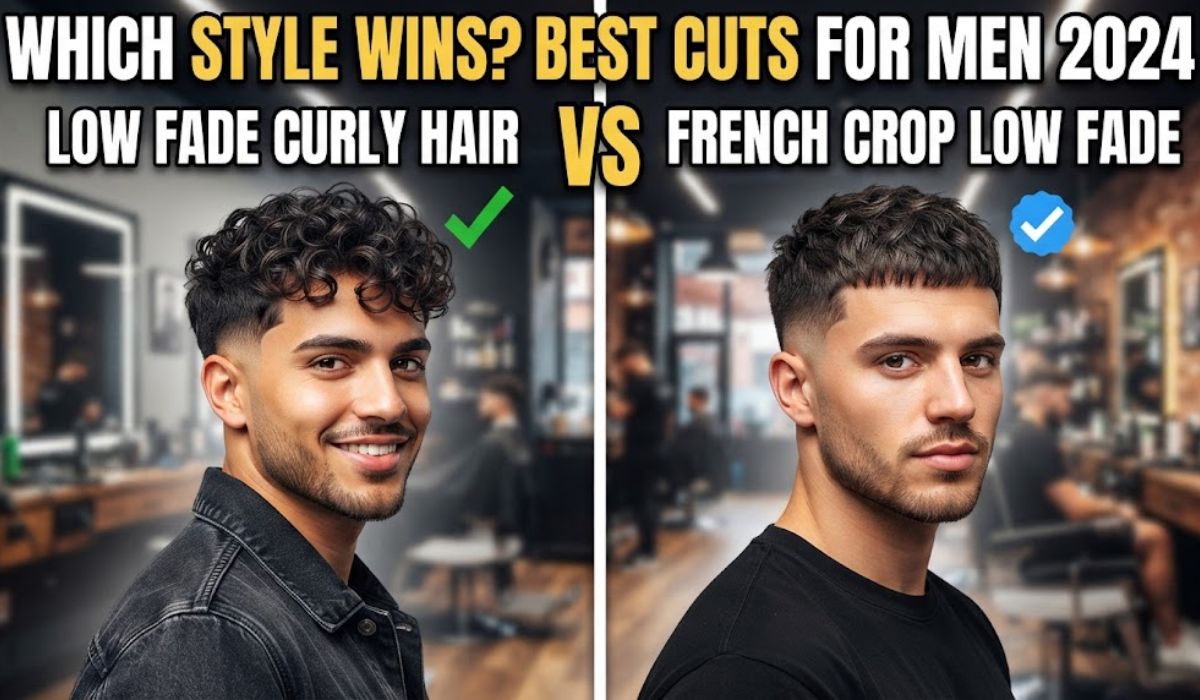
The main difference between a low fade curly haircut and a French crop low fade is the hair on top, not simply the fade. A low fade curly haircut emphasizes natural curls and their volume, while a French crop low fade emphasizes a short textured top with a forward fringe. Curly hair can also be shaped into a French crop, so the two styles can overlap.
TL;DR
- Low fade curly haircut: keeps natural curls as the main feature while the sides and neckline receive a low fade.
- French crop low fade: combines a low fade with a short textured top and a forward fringe.
- The biggest difference: the top shape and fringe matter more than the fade itself.
- Curly hair can work with a French crop: the fringe and top simply need to be shaped around the natural curl pattern.
- Choose based on the top you want: choose a curl focused shape for visible natural volume, or a crop focused shape for a shorter forward fringe.
Low Fade Curly Haircut vs French Crop Low Fade at a Glance
| Feature | Low Fade Curly Haircut | French Crop Low Fade |
|---|---|---|
| Main focus | Natural curls and texture | Cropped top and forward fringe |
| Top shape | Can remain fuller and more rounded | Usually shorter and more structured |
| Fringe | Optional | A defining part of the French crop structure |
| Fade | Low fade | Low fade |
| Texture | Natural curl pattern is emphasized | Texture is shaped into a cropped form |
| Curly hair | Naturally suited to the style | Can be adapted successfully to curls |
| Overall effect | More emphasis on curl movement and volume | More emphasis on a compact top and fringe |
The table shows why these styles should not be treated as completely separate categories. Both can use the same basic low fade. What changes is the structure and styling of the hair above that fade.
What Is a Low Fade Curly Haircut?
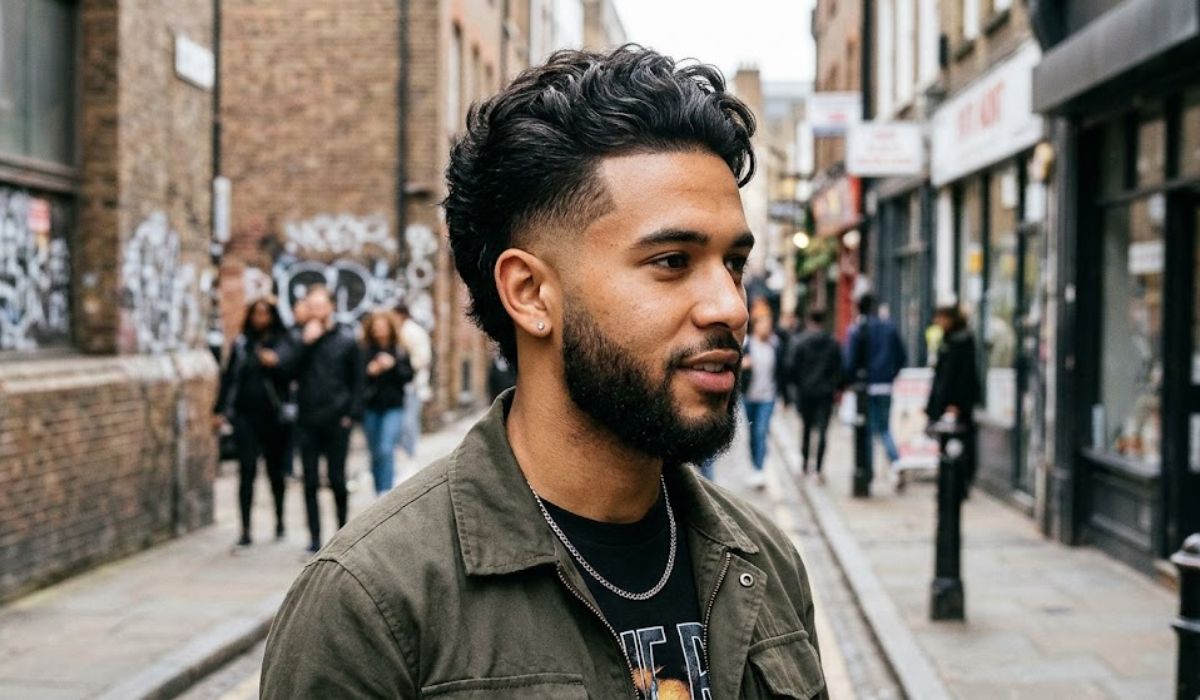
A low fade curly haircut combines a low fade around the lower sides and neckline with curly hair left on top. The goal is usually to create a clean transition around the lower part of the head while allowing the natural curl pattern to remain visible above it.
The top does not have to follow one exact shape. It can be rounded, fuller, shorter, textured, or lightly fringed. What makes this style recognizable is the combination of the low fade with natural curls rather than a specific cropped fringe.
How the Low Fade Works With Natural Curls
A low fade starts relatively low on the sides, which leaves more hair above the fade area than a higher fade would. That can help maintain a stronger visual connection between the curly top and the shorter sides.
For someone who wants their curls to remain the main visual feature, this structure can be useful because the top retains its natural texture while the lower sides look cleaner.
How Much Curl Volume Should Stay on Top?
There is no single correct amount of length for every curly low fade. The right amount depends on curl pattern, density, shrinkage, and the shape the wearer wants.
If the goal is to make the curls the star of the haircut, keeping enough length for the curls to form clearly is more important than copying a particular reference photo exactly.
What Is a French Crop Low Fade?
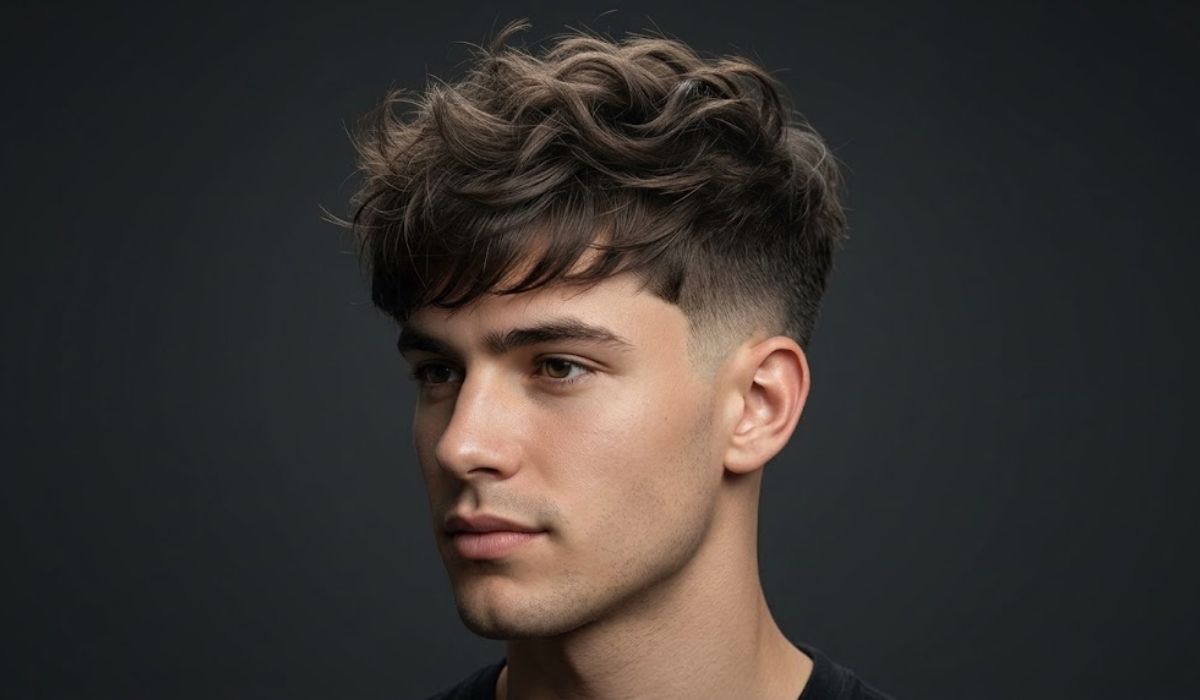
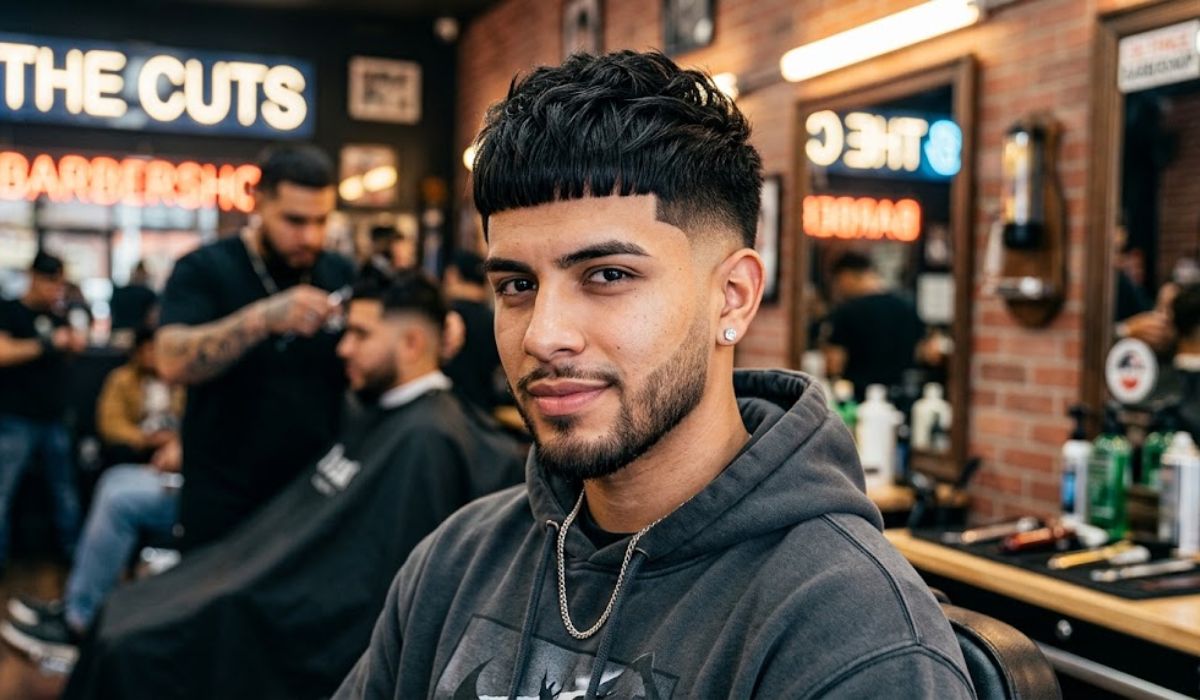
A French crop low fade combines a low fade with a short textured top and a forward fringe. The fringe is one of the most recognizable parts of the French crop structure. The top is generally more deliberately cropped than the fuller top of a natural curly haircut.
The French crop can appear neat, textured, or messy depending on how the top is cut and styled. Current haircut guides commonly describe the French crop through its short top and forward fringe rather than defining it solely by the fade.
The Forward Fringe
The fringe helps distinguish a French crop from a generic short textured haircut. Instead of simply allowing curls or texture to sit naturally on top, the front is shaped to move toward the forehead.
On curly hair, the fringe may appear shorter or more compact because curls contract as they dry. That means a reference designed for straight hair should not be copied by length alone.
Textured and Messy French Crop Variations
A textured French crop low fade keeps visible separation and movement in the top rather than making the hair look completely flat. A messy version allows a more irregular finish while keeping the cropped structure and forward direction.
These variations are useful when someone wants the French crop shape without making the hairstyle look overly rigid.
The Biggest Difference Is the Top, Not the Fade
This is the easiest way to understand the comparison.
A low fade is a side and neckline treatment. It does not by itself determine whether the haircut is a French crop. Both a curly haircut and a French crop can use a low fade.
The top determines much of the difference. A natural curly low fade allows the curls to remain the dominant feature. A French crop creates a more deliberate cropped shape with the front directed toward the forehead.
That distinction matters because someone can ask for a low fade and still end up with very different results depending on what they request for the top.
Natural Curl Focus
If the goal is to show the natural curl pattern, the top can remain fuller and less restricted. The shape can follow the natural movement of the curls rather than forcing the front into a compact fringe.
Cropped Fringe Focus
If the goal is a French crop, the barber needs to shape the top and front into the recognizable cropped structure. Curly texture can remain visible, but the front should still read as a deliberate crop.
Can You Combine a Curly Haircut With a French Crop?
Yes. A curly French crop low fade is a legitimate combination of these ideas. The hair can retain its natural curl texture while the top and front are shaped into the cropped French crop structure.
This is one of the most useful points to understand before choosing between the two styles. You do not necessarily have to choose between “curly” and “French crop.” Curly describes the hair texture, while French crop describes the haircut structure.
What a Curly French Crop Looks Like
A curly French crop keeps enough texture for the curls to remain visible, but the front is shaped into a shorter forward fringe. The sides can then be finished with a low fade.
The result sits between a completely natural curly top and a very controlled straight hair crop. The exact appearance depends heavily on curl tightness, density, top length, and how the fringe is shaped.
Why Curl Pattern Matters
Curly hair does not always sit at the same length it appears to have when wet or stretched. As curls dry, they can contract and create a shorter visual result.
For that reason, a barber should consider the natural curl pattern when deciding the top length. A photo can communicate the desired shape, but the final length may need to be adjusted for the individual’s curls.
Which Hair Type Works With Each Style?
Curly Hair
Curly hair is a natural match for a low fade curly haircut because the texture is already central to the style. Curly hair can also work with a French crop, provided the top and fringe are shaped around the curl pattern.
Wavy Hair
Wavy hair can create a softer version of the French crop because the texture provides movement without the tighter curl formation seen in curly hair. A low fade can keep the sides clean while the top retains its wave.
Straight Hair
Straight hair can make the forward fringe of a French crop more visually obvious because the hair does not contract into curls. The French crop structure can therefore look more sharply defined at the front.
Thick Hair
Thick hair can provide useful volume for a textured crop, but the top may need careful shaping so it does not become unnecessarily bulky. The desired result should guide how much weight remains on top.
Styling and Maintenance Comparison
| Consideration | Low Fade Curly Haircut | French Crop Low Fade |
|---|---|---|
| Top styling | Usually works with the natural curl pattern | Usually directs the top and fringe forward |
| Texture | Natural curl texture is central | Texture is intentionally shaped into a crop |
| Fringe | Optional | Central to the crop structure |
| Daily appearance | Can look more naturally varied | Can look more structured |
| Fade upkeep | Needs regular refreshing if a sharp fade is desired | Needs regular refreshing if a sharp fade is desired |
Maintenance depends on how quickly the hair grows and how precise the wearer wants the fade to remain. A recommendation of a fixed number of days should not be treated as universal.
Styling a Natural Curly Low Fade
The simplest approach is to work with the natural curl pattern instead of fighting it. The top should retain enough length for the curls to form, while the sides provide a cleaner contrast.
Styling a French Crop Low Fade
The key is maintaining the forward direction of the top and fringe. With curly hair, the styling should enhance the natural texture while keeping the front visibly cropped.
What to Tell Your Barber
A haircut name alone may not communicate the exact result you want. The most useful barber request describes the fade, top shape, and fringe separately.
For a Natural Curly Low Fade
A clear request would be:
“I want a low fade on the sides and neckline, but I want to keep my natural curls on top. Please keep enough length and shape the curls without turning the top into a short crop.”
Then show a reference photo that matches your curl pattern and the amount of volume you want.
For a Curly French Crop Low Fade
A more specific request would be:
“I want a low fade with a short textured top and a forward fringe. My hair is curly, so please shape the fringe around my natural curl pattern and avoid making the top shorter than it will look after the curls contract.”
The exact wording can be adjusted to match your preferred length. The key is to communicate the low fade, cropped top, forward fringe, and natural curl texture separately.
Common Mistakes When Choosing Between the Two
- Focusing only on the fade. Both styles can use a low fade, so the fade alone does not identify the haircut.
- Ignoring the top shape. The top and fringe create much of the visual difference.
- Copying a straight hair reference exactly. Curly hair can contract and change the apparent length and shape.
- Assuming curly hair cannot have a French crop. Curly texture can be incorporated into a French crop structure.
- Using only a haircut name. Describing the desired fringe, top length, texture, and fade gives the barber more useful information.
- Choosing based only on a front photo. The sides and transition are also important, so side views can help communicate the desired result.
Which One Should You Choose?
The answer depends on what you want the top of the haircut to do.
- Want your natural curls to be the main feature? A low fade curly haircut gives you that structure.
- Want a short forward fringe and cropped top? A French crop low fade provides that structure.
- Want both natural curls and a cropped fringe? A curly French crop low fade combines the two concepts.
- Want more freedom in how the curls sit? A less structured curly top may be preferable.
- Want a more deliberate front shape? The French crop structure gives the fringe a clearer role.
There is no universal winner. The useful decision is to identify whether you prefer natural curl movement, a cropped forward fringe, or a combination of both.
Frequently Asked Questions
What is the difference between a low fade curly haircut and a French crop low fade?
A low fade curly haircut emphasizes natural curls on top, while a French crop low fade emphasizes a short textured top and forward fringe. Both can use the same low fade on the sides.
Can you get a French crop with curly hair?
Yes. Curly hair can be shaped into a French crop by creating a cropped top and forward fringe while working with the natural curl pattern.
Can a French crop have a low fade?
Yes. A low fade can be paired with a French crop, creating the French crop low fade combination.
What makes a haircut a French crop?
The defining structure is a short top with a forward fringe. Texture and fade style can vary, but the cropped front remains an important identifying feature.
Does a low fade preserve natural curl volume?
A low fade leaves more hair above the lower fade area than a higher fade, which can allow more of the natural curl volume to remain visible on top.
Is a French crop good for thick curly hair?
It can work with thick curly hair when the top is shaped around the natural density and curl pattern. The exact length should be adjusted to the desired shape and the way the curls contract.
Does a French crop work with straight hair?
Yes. Straight hair can create a clearly defined forward fringe and textured cropped top.
How should a curly French crop be styled?
The styling should preserve the natural curl texture while directing the front into the characteristic cropped fringe. The amount of styling depends on the curl pattern and desired finish.
What should I tell my barber for a curly French crop?
Specify a low fade, a short textured top, and a forward fringe, then explain that the top needs to be shaped around your natural curls. A reference photo is also useful.
How often should a French crop low fade be trimmed?
The timing varies with hair growth and how sharp you want the fade to look. Refresh the cut when the lower fade loses the appearance you want rather than following one fixed schedule.
Key Takeaways
- A low fade curly haircut centers on natural curls combined with a low fade.
- A French crop low fade centers on a cropped top and forward fringe combined with a low fade.
- The low fade itself is not the main distinction because both hairstyles can use it.
- The most important difference is the top structure and front fringe.
- Curly hair can absolutely be shaped into a French crop.
- A curly French crop low fade combines natural curl texture, a cropped forward fringe, and a low fade.
- The best barber instruction describes the fade, top length, texture, and fringe instead of relying only on a haircut name.

Hi, I’m Tomy Parker, a tattoo enthusiast and content writer at Tattosyle.com. I love exploring tattoo styles, meanings, placement ideas, aftercare tips, and the latest trends in body art. My goal is to create easy-to-understand, helpful, and accurate guides that inspire both first-time tattoo lovers and experienced collectors. Through Tattosyle, I aim to help you make informed decisions and discover tattoo designs that reflect your unique personality and story.
Leave a Reply