
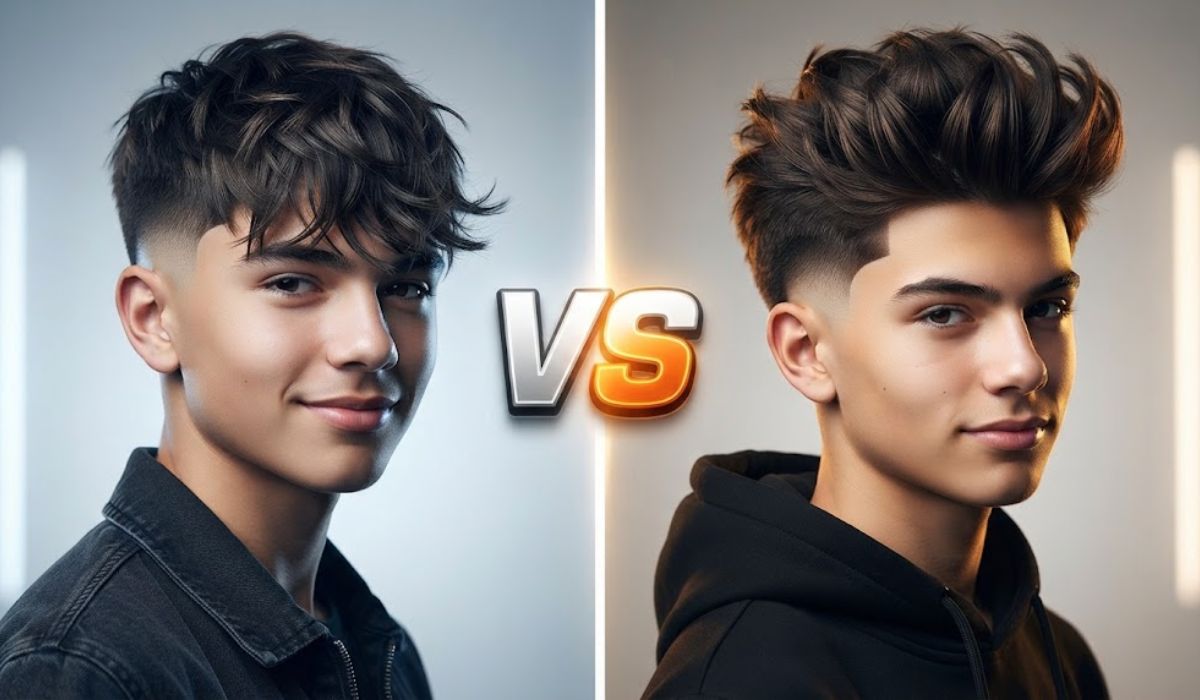
Quick Answer
A low taper fade with a textured fringe is the better starting point for teenage boys who want a clean, understated haircut with textured hair falling toward the forehead. A burst fade is a stronger option for boys who prefer a more noticeable shape around the ears, with the fade following a curved pattern around each ear. The right choice depends on hair texture, preferred appearance, daily styling effort, and how often you want to visit the barber.
TL;DR
- Choose a low taper textured fringe for a subtle fade, a forward fringe, and a versatile everyday appearance.
- Choose a burst fade for a curved fade around the ears and a more defined side profile.
- Straight hair: A textured fringe can benefit from layering and styling products that create separation.
- Wavy hair: Both cuts can work with natural movement and texture.
- Curly hair: A burst fade can emphasize curls, while a low taper keeps the sides more understated.
- Before visiting the barber: Bring a reference photo showing the sides, top, and back, and explain how much daily styling you are comfortable doing.
Low Taper Fade Textured Fringe vs Burst Fade: What’s the Difference?
The biggest difference is the placement and shape of the fade. A low taper gradually shortens the hair around the temples and neckline, while a burst fade curves around the ears. The textured fringe describes the hair on top and at the front, so it can be paired with different side and back styles.
| Feature | Low Taper Fade With Textured Fringe | Burst Fade |
|---|---|---|
| Fade placement | Concentrated around the temples and neckline | Curves around the ears |
| Top style | Usually features a textured fringe directed toward the forehead | Can be paired with curls, waves, a fringe, or other top styles |
| Overall appearance | Subtle, clean, and versatile | More distinctive around the sides |
| Best suited to | Boys who prefer a restrained fade and textured front | Boys who want a noticeable curved fade |
| Daily styling | Depends on fringe length and natural hair texture | Depends on the top style and natural hair texture |
| Maintenance | Requires occasional taper cleanup and fringe shaping | Requires occasional cleanup to preserve the curved fade |
| Styling flexibility | Works with different fringe lengths and textures | Works with several top styles and lengths |
Neither haircut is automatically better for every teenager. The low taper with textured fringe emphasizes the front of the hairstyle, while the burst fade emphasizes the curved shape around the ears. Decide which feature you want to stand out before choosing.
Low Taper Fade Textured Fringe for Teenage Boys
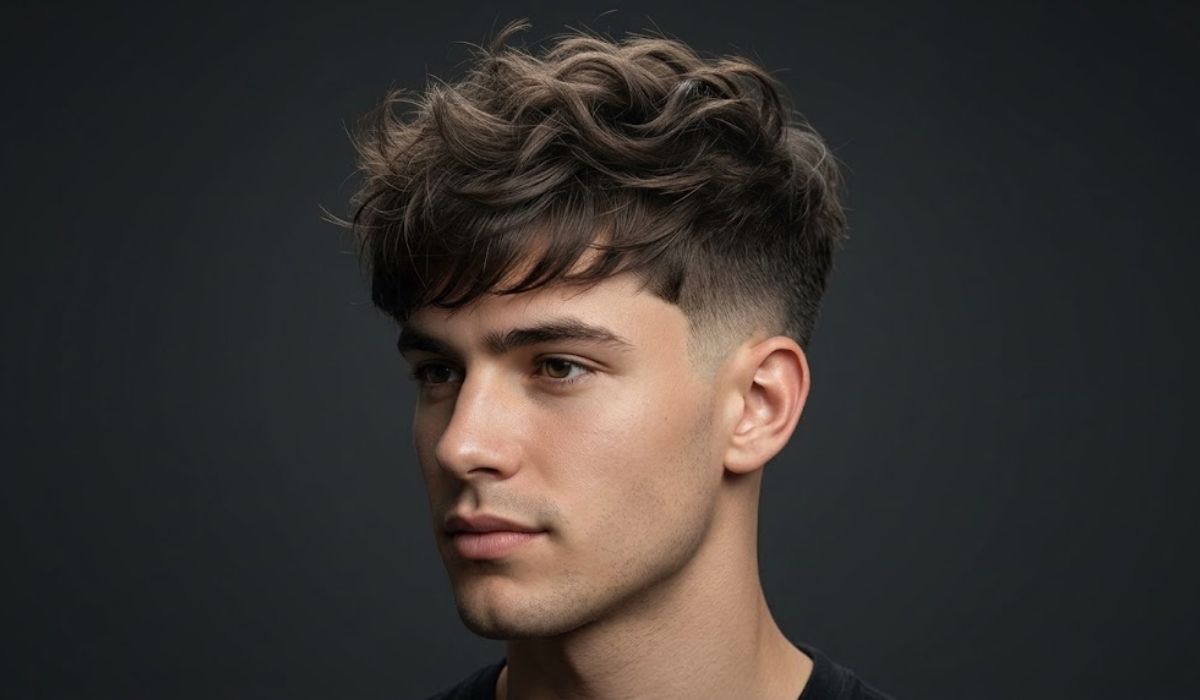
A low taper fade with a textured fringe combines short, gradually tapered sides with longer hair at the front and top. The fringe usually falls toward the forehead, while uneven layers create separation and movement instead of a flat, solid shape.
This haircut is a practical option for teenage boys who want a modern style without making the fade the main feature. It can look neat when the fringe is lightly styled or more relaxed when the top is left slightly messy.
Why Teenage Boys May Prefer This Haircut
- Understated sides: The taper keeps the sides tidy without requiring a high, dramatic fade.
- Textured top: Layers help create movement and a less uniform appearance.
- Flexible finish: The fringe can be worn forward, slightly separated, or with a loose, messy texture.
- Adaptable length: A barber can adjust the top and fringe to suit the hair’s natural movement.
- Everyday versatility: The haircut can be styled neatly or casually, depending on the occasion.
What Does a Textured Fringe Look Like?
A textured fringe has visible separation between sections of hair at the front. Instead of forming one straight, heavy line across the forehead, the ends appear broken up and layered. The amount of texture depends on the cutting technique, hair density, length, and styling method.
For a softer appearance, ask for a natural fringe with moderate texture. For a more defined finish, ask the barber to create additional separation while keeping enough length for the hair to sit comfortably.
Popular Low Taper Textured Fringe Variations
- Short textured fringe: A shorter front with visible texture and a clean taper. It is a useful option for boys who want less hair falling onto the forehead.
- Messy textured fringe: The top is styled with loose separation rather than a perfectly arranged finish.
- Wavy textured fringe: Natural waves provide movement, reducing the need to create all the texture with a product.
- Curly textured fringe: The front is shaped to preserve natural curls while the sides remain tapered.
- Thick textured fringe: Strategic layering can help reduce a bulky appearance and improve separation.
These are styling variations, not rigid haircut categories. A good barber should adapt the fringe to the hair rather than trying to reproduce the same shape on every teenager.
Burst Fade Haircuts for Teenage Boys
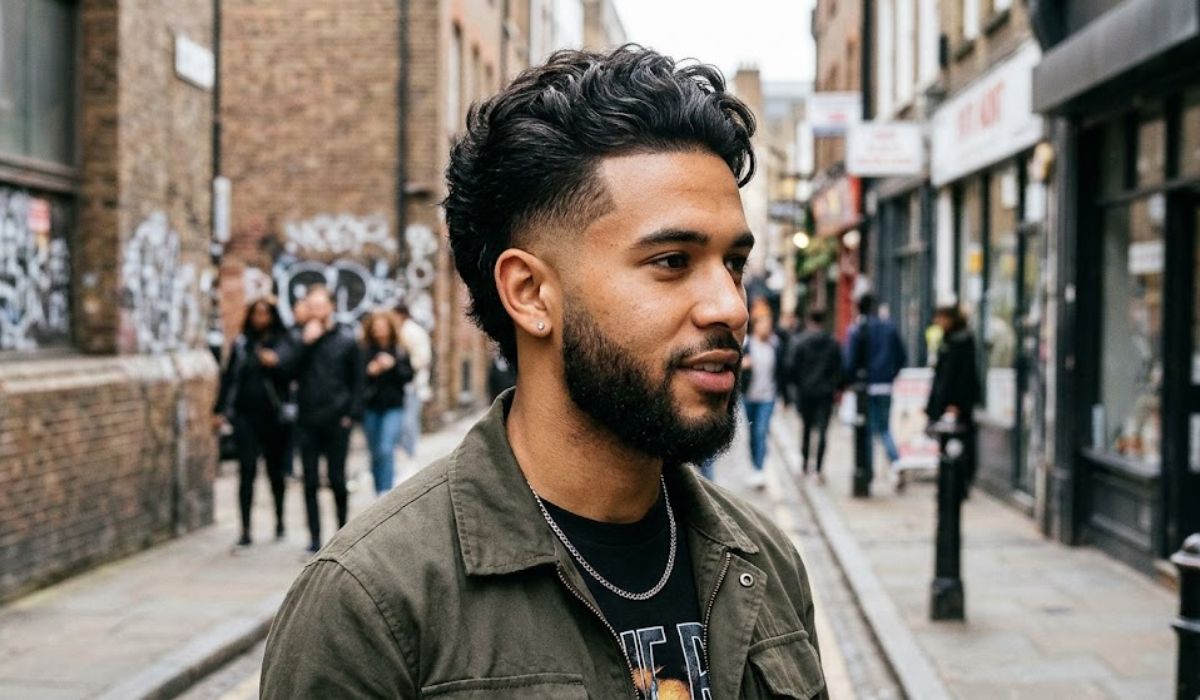
A burst fade is a haircut in which the fade curves around the ear, creating a rounded transition between shorter sides and the longer hair above or behind the ear. The exact appearance changes with the fade height, the length on top, and the amount of contrast the barber creates.
Unlike a low taper textured fringe, a burst fade does not specify one particular fringe or top style. It describes the fade pattern, so it can be combined with curly hair, waves, textured tops, and other looks.
Why Choose a Burst Fade?
- Distinctive side profile: The curved fade gives the haircut a recognizable outline around the ears.
- Flexible top styling: The hair on top can remain curly, wavy, textured, or longer, depending on the chosen design.
- Visible contrast: The difference between the shorter sides and longer top can make the shape more pronounced.
- Customizable appearance: A barber can adjust the curve and fade height to match the requested look.
Popular Burst Fade Variations
- Low burst fade: A lower, more restrained version of the curved fade.
- Mid burst fade: A more noticeable curved transition around the ear.
- Burst fade with curls: Natural curls remain longer on top while the sides are shaped around the ears.
- Burst fade with a textured fringe: A curved fade is combined with textured hair directed toward the forehead.
- Short burst fade: A shorter top creates a compact style with the curved fade remaining a key feature.
These variations are not interchangeable in appearance. If you want a subtle result, show your barber a reference with a lower fade and limited contrast. If you prefer a bolder outline, choose a reference with a more visible curved transition.
Which Haircut Works Best for Straight, Wavy, and Curly Hair?
Hair texture affects how a haircut sits, how much volume it creates, and how much styling it needs. Both the low taper textured fringe and the burst fade can work with different hair types, but the barber should adapt the top length and cutting technique to the natural texture.
Straight Hair
A low taper fade with a textured fringe is a useful starting point for straight hair if you want movement at the front. Straight hair can sometimes sit flat when it is cut to one uniform length, so layers and appropriate styling can help create separation.
A burst fade is also an option for straight hair, particularly if you want the curved shape around the ears to be more noticeable. The main difference is the silhouette you prefer, not whether straight hair can support the style.
What to tell your barber: Ask for a low taper with a textured front and enough length to create movement. If you prefer a burst fade, specifically request the curved shape around the ears and show a reference photo.
Wavy Hair
Wavy hair naturally creates movement, making it suitable for either haircut. A low taper textured fringe can let the waves fall forward in a relaxed shape, while a burst fade can create a stronger outline around the ears.
Keep enough length on top to allow the waves to form naturally. Cutting the hair too short may change how clearly the wave pattern appears, while excessive styling product can make the hair look heavy instead of separated.
What to tell your barber: Explain whether you want your waves to fall forward or sit higher on top. The direction of the top hair will affect the final result more than the haircut name alone.
Curly Hair
Curly hair can work with both styles, although the finished shape depends on curl size, density, shrinkage, and top length. A low taper keeps the sides relatively subtle and allows curls at the front to remain the focus.
A burst fade can be especially appealing if you want to emphasize the rounded outline around the ears while keeping curls longer on top. The barber should consider how much the curls shrink when dry rather than judging the final length only when the hair is wet.
What to tell your barber: Ask the barber to preserve the natural curl pattern and explain how much length you want to retain on top. Bring a photo of curls with a similar size and density to yours.
Thick Hair and Short Hair
Thick hair can work with a textured fringe when the top is layered appropriately. The goal is to create shape and separation without removing so much weight that the fringe becomes difficult to control.
Short hair can also work with either fade, but a very short top leaves less length for a pronounced textured fringe. If the front texture matters most to you, make sure the barber leaves enough hair at the front before cutting the sides.
Which Haircut Is Easier to Maintain?
Neither haircut is automatically easier to maintain. The amount of effort depends on the length of the top, how sharply defined you want the fade to remain, and how your hair behaves between washes.
| Maintenance factor | Low Taper Textured Fringe | Burst Fade |
|---|---|---|
| Daily styling | May need the fringe shaped or separated | Depends mainly on the top style |
| Fade upkeep | Requires cleanup around the temples and neckline | Requires cleanup to maintain the curved shape |
| Growing out | The fringe may need reshaping as it gets longer | The curved outline can become less distinct as the hair grows |
| Product needs | A lightweight styling product may help define texture | Depends on whether the top is curly, wavy, or straight |
| Best maintenance approach | Keep the fringe at a comfortable length and tidy the taper | Refresh the curved fade when you want to preserve its definition |
There is no universal trimming schedule that suits every teenager. Hair growth, the fade height, and personal preferences all affect how quickly a cut loses its shape. Ask your barber how long your particular version is likely to look the way you want before booking the next appointment.
How to Make Either Haircut Easier to Manage
- Choose a top length that works with your natural hair texture.
- Ask for a style that does not require complicated daily styling.
- Use a small amount of product and add more only when needed.
- Show the barber how you normally wear your hair instead of choosing a cut based only on a photograph.
- Keep a reference photo so the fade placement and top shape remain consistent at future appointments.
How to Style a Low Taper Fade Textured Fringe
The aim is to create texture without making the fringe look stiff or overloaded with product. The exact method depends on whether your hair is straight, wavy, or curly.
- Start with clean, damp hair. Gently towel dry it so the hair is not dripping wet.
- Set the direction. Use your fingers or a comb to guide the front toward the forehead or slightly to one side.
- Dry with control. Use a hair dryer on a comfortable setting if needed, directing the airflow to create the shape you want. Curly hair may need a gentler approach to preserve its pattern.
- Add a small amount of product. A lightweight matte product can help create separation in straight or wavy hair. Curly hair may need a product suited to curl definition instead.
- Separate the fringe. Use your fingers to create natural sections rather than pressing all the hair into one flat shape.
- Check the final outline. Make sure the fringe sits comfortably and the sides still look balanced from the front and side.
Start with less product than you think you need. Too much can weigh down fine hair, make the fringe look greasy, or reduce the natural movement that gives the cut its texture.
What Should You Tell Your Barber?
The haircut name alone may not communicate the exact result you want. Explain the fade placement, the top length, the direction of the fringe, and how much contrast you prefer.
Barber Request for a Low Taper Fade With Textured Fringe
You can say:
“I want a low taper around the temples and neckline, with a textured fringe on top that falls naturally toward my forehead. Please keep enough length at the front for texture, and make the sides clean without taking the fade too high.”
If you want a shorter fringe, say so before the barber starts cutting. If you prefer a messy finish, explain that you want natural separation rather than a perfectly straight front edge.
Barber Request for a Burst Fade
You can say:
“I want a burst fade that curves around the ears, with the top left at a length that suits my hair texture. Please show me the fade placement before taking the sides too short.”
If you want a burst fade with a textured fringe, mention both features explicitly. The burst fade describes the sides, while the textured fringe describes the top and front.
Why Reference Photos Matter
Bring a photo that shows the side profile clearly. A front view alone may not show whether the fade is low, whether it curves around the ear, or how much length remains at the back.
Ideally, bring front, side, and back views of the same haircut. If your hair texture differs from the model’s, tell the barber that you want the overall shape adapted to your own hair rather than copied exactly.
Common Mistakes to Avoid When Choosing a Teen Haircut
- Choosing only by the front view: The side and back can look very different from the front, especially with a burst fade.
- Confusing the fade with the top style: A burst fade does not automatically mean the hair must be curly, and a textured fringe does not require only one fade type.
- Requesting a fringe that is too short: Very short hair at the front may not create the texture you want.
- Ignoring natural hair texture: A haircut that looks full and defined on wavy hair may sit differently on straight hair.
- Using too much styling product: Excess product can make the hair look heavy and reduce separation.
- Expecting a fade to stay sharp indefinitely: Hair grows, so the original outline will gradually change.
- Asking for a haircut without explaining the details: Terms such as “low taper” and “burst fade” describe different shapes, so be specific about the result.
Which Haircut Should a Teenage Boy Choose?
The easiest way to decide is to focus on the feature you want people to notice first. If you want textured hair at the front with a quieter fade, start with a low taper fade textured fringe. If you want the sides to have a more distinctive curved shape, start with a burst fade.
| Your preference | Better starting option | Why |
|---|---|---|
| A clean, understated appearance | Low taper textured fringe | The taper stays focused around the temples and neckline. |
| A more noticeable side profile | Burst fade | The curved fade creates a distinct outline around the ears. |
| Hair that falls naturally toward the forehead | Low taper textured fringe | The fringe is a defining feature of the style. |
| Curls that stand out on top | Burst fade or low taper | Either can work; the choice depends on the desired side shape. |
| A haircut with minimal daily styling | Whichever can be cut to suit your natural texture | Top length and hair behavior matter more than the fade name. |
For school or everyday wear, consider any relevant dress code alongside your own preferences. Neither haircut is automatically more appropriate for every school or setting.
If you are still unsure, choose two reference photos and compare their side profiles. That will help you identify whether you prefer the low taper’s understated outline or the burst fade’s curved shape before committing to the cut.
Frequently Asked Questions
1. What is the main difference between a low taper fade and a burst fade?
A low taper focuses on gradually shortening the hair around the temples and neckline. A burst fade follows a curved pattern around the ears, creating a more distinctive side shape.
2. Is a low taper fade textured fringe good for teenage boys?
Yes. It can be a good choice for teenage boys who want textured hair at the front and a relatively understated fade. The top length and texture should be adapted to the hair’s natural behavior.
3. Can you combine a burst fade with a textured fringe?
Yes. The burst fade describes the sides, while the textured fringe describes the front and top. A barber can combine them if the desired top length and overall shape work with your hair.
4. Is a low taper textured fringe suitable for straight hair?
Yes. Layers and suitable styling can help straight hair develop more separation and movement. The barber should leave enough length at the front to create the desired fringe.
5. Which haircut works better for curly hair?
Both can work. A low taper gives curly hair a more understated outline, while a burst fade emphasizes the curved shape around the ears.
6. Which haircut requires less styling?
It depends on the top length and your natural texture. A low taper textured fringe may need daily shaping at the front, while a burst fade with curls may need attention to curl definition rather than fringe placement.
7. How often should a teenage boy get a fade trimmed?
There is no single schedule for everyone. The best interval depends on how quickly your hair grows and how sharp you want the taper or curved fade to look.
8. Can a burst fade work with straight hair?
Yes. A burst fade is defined by the curved fade around the ears, not by a specific hair texture. The top can remain straight, textured, or styled in another suitable way.
9. What should I show my barber before getting either haircut?
Bring reference photos showing the front, sides, and back. Explain the top length you want, where the fade should sit, and whether you prefer a subtle or more noticeable finish.
Key Takeaways
- Low taper fade textured fringe: Best as a starting point for a subtle fade and textured hair directed toward the forehead.
- Burst fade: Best as a starting point for a curved, more distinctive fade around the ears.
- Hair texture matters: Straight, wavy, and curly hair can work with both styles when the cut is adapted appropriately.
- Maintenance depends on the full haircut: Top length, natural texture, styling preferences, and fade definition all influence upkeep.
- The smartest barber instruction: Explain the fade placement and top style separately, then show reference photos from multiple angles.
Final decision principle: Choose a low taper textured fringe if you want the fringe to be the main feature. Choose a burst fade if you want the curved shape around the ears to stand out. If both appeal to you, ask your barber whether a burst fade with a textured fringe suits your hair texture and preferred level of contrast.

Hi, I’m Tomy Parker, a tattoo enthusiast and content writer at Tattosyle.com. I love exploring tattoo styles, meanings, placement ideas, aftercare tips, and the latest trends in body art. My goal is to create easy-to-understand, helpful, and accurate guides that inspire both first-time tattoo lovers and experienced collectors. Through Tattosyle, I aim to help you make informed decisions and discover tattoo designs that reflect your unique personality and story.
Leave a Reply