
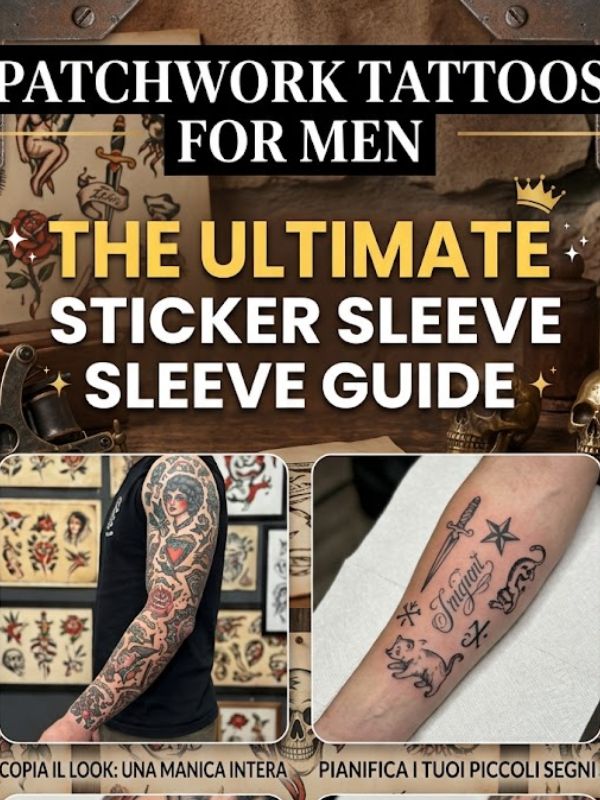
This guide will help you choose patchwork tattoo ideas for men, understand spacing and placement, mix styles without creating visual chaos, and build your sleeve gradually without filling the wrong gaps too soon.
Quick Answer: What Is a Patchwork or Sticker Sleeve?
A patchwork sleeve is a collection of separate tattoos arranged across an arm with visible skin between the designs. A sticker sleeve is a similar concept, usually emphasizing small-to-medium standalone pieces that look like stickers placed across the skin.
The key is intentional negative space. Your tattoos do not have to share one subject or tell one story, but their size, placement, spacing, line weight, color, and visual balance should work together.
Patchwork Tattoo Ideas for Men
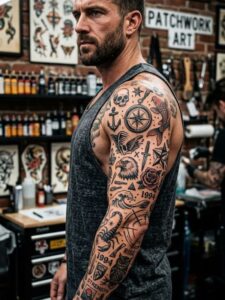
The best patchwork sleeves usually combine different visual weights instead of placing ten equally sized tattoos beside each other. Think in layers: one or two anchor pieces, several medium designs, smaller accents, and only then fillers.
Use the ideas below as starting points rather than a checklist. A sticker sleeve becomes much more personal when the designs connect to your interests, memories, humor, aesthetic, or personality.
1. American Traditional Patchwork
Bold outlines, strong shapes, limited color palettes, and instantly recognizable imagery make American Traditional particularly easy to organize into separate tattoo “stickers.”
- Daggers
- Roses
- Swallows
- Snakes
- Hearts
- Ships
- Skulls
- Panthers
- Stars
- Lucky symbols
2. Blackwork Patchwork
If you want a darker, graphic look, blackwork can create strong contrast between the tattooed areas and the untouched skin around them.
- Geometric shapes
- Dark botanical designs
- Animals
- Abstract symbols
- Black-filled icons
- Ornamental designs
3. Black-and-Grey Patchwork
Black-and-grey gives you room to combine portraits, objects, animals, symbols, and illustrative pieces without introducing multiple competing color palettes.
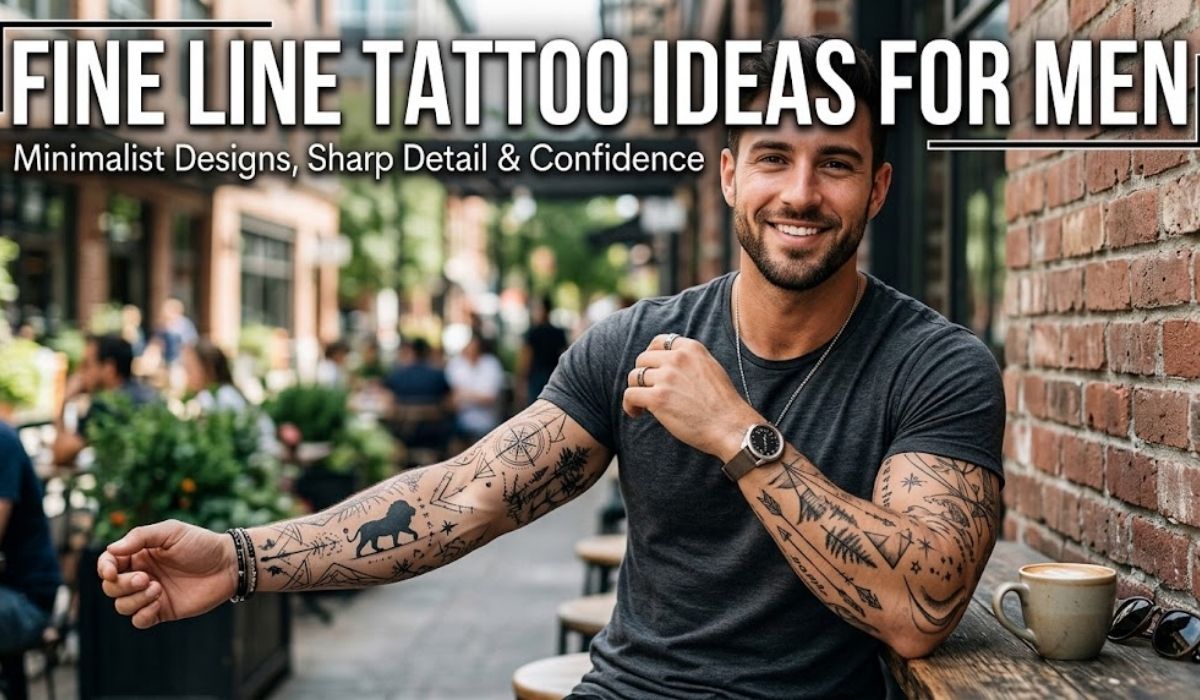
4. Fine-Line Sticker Tattoos
Fine-line pieces can create a lighter, more delicate collection. They work particularly well when you want plenty of visible skin between tattoos.
However, don’t choose a design purely because it looks crisp in a fresh photograph. Tiny details and very fine lines require thoughtful sizing and placement, and healed results matter more than the first-day appearance.
5. Gothic and Dark Patchwork
- Skulls
- Ravens
- Crosses
- Dark roses
- Daggers
- Gargoyles
- Gothic lettering
- Moon imagery
6. Animal Patchwork
Animals are excellent standalone pieces because each design can work independently while still contributing to a recognizable visual collection.
- Snake
- Wolf
- Bear
- Eagle
- Raven
- Spider
- Scorpion
- Tiger
- Dog
- Cat
7. Skull, Dagger and Symbol Tattoos
Small symbolic designs are useful when you want a sleeve that feels masculine without relying on one large theme. Mix meaningful symbols with purely aesthetic pieces so the collection doesn’t become overly literal.
8. Japanese-Inspired Patchwork
Japanese-inspired imagery can work beautifully as individual pieces, but be deliberate about scale, orientation, and visual language. A small isolated motif should not be treated as if it were simply a miniature version of a full traditional composition.
9. Minimalist Sticker Tattoos
For a cleaner sleeve, choose simple symbols, small illustrations, numbers, stars, geometric marks, or objects. The less visual information each tattoo contains, the more important spacing and overall rhythm become.
10. Personal Patchwork Tattoos
Some of the strongest sleeves combine aesthetic pieces with tattoos that have personal significance.
- A meaningful date
- A favorite object
- A location symbol
- A small tribute
- A hobby reference
- A favorite animal
- A phrase or single word
- A symbol connected to a life experience
Patchwork Sleeve vs. Traditional Sleeve
The biggest difference is how the tattoos relate to the skin around them.
| Feature | Patchwork / Sticker Sleeve | Traditional Connected Sleeve |
|---|---|---|
| Structure | Separate tattoo pieces | One connected composition |
| Negative space | Important visual element | Often minimized or integrated into the background |
| Theme | Optional or loose | Often more unified |
| Build process | Can grow gradually | Usually requires more planning from the beginning |
| Style mixing | Generally more flexible | Can be harder to integrate seamlessly |
| Future additions | Easy to leave room for them | Often considered during the original composition |
Important: Patchwork does not mean “random tattoos with no thought.” The strongest sticker sleeves use the empty skin as part of the design.
How to Plan a Patchwork Sleeve Without Making It Look Random
You do not need every tattoo planned before your first appointment. In fact, one advantage of patchwork is that you can build it over time. But you should have enough of a plan to avoid accidentally creating awkward gaps.
Step 1: Collect Your Must-Have Designs
Create a shortlist rather than saving hundreds of unrelated reference images. Separate your ideas into:
- Must have: tattoos you genuinely want.
- Maybe: designs you like but aren’t committed to.
- Fillers: small pieces that can wait.
Step 2: Choose 2–4 Anchor Pieces
Your anchor tattoos carry more visual weight. They might be larger, darker, more detailed, or simply more important to you.
Don’t put every large tattoo in the same section of your arm. Distributing visual weight usually creates a more balanced result.
Step 3: Map Your Existing Tattoos
If you already have tattoos, photograph your arm and identify their approximate size, orientation, color, and visual weight. Your next tattoo should respond to what is already there rather than pretending you have a blank canvas.
Step 4: Plan the Major Zones
Think of the arm as a three-dimensional surface rather than a flat rectangle. A design that looks balanced from the front may feel crowded when your arm turns sideways.
Step 5: Add Medium Pieces
Once your anchor locations are established, add medium-sized designs to create rhythm between the larger tattoos and smaller accents.
Step 6: Leave Future Space
This is one of the most important rules. Do not fill every empty area simply because it is empty. Some of today’s empty skin may become the perfect location for tomorrow’s favorite tattoo.
Step 7: Add Fillers Last
Fillers should solve actual composition problems. They shouldn’t be used automatically whenever you see a patch of skin.
Patchwork Tattoo Spacing: How Much Empty Skin Should You Leave?
There is no universal spacing measurement that works for every arm or every tattoo.
A small, simple symbol can tolerate a different amount of breathing room than a large, detailed piece. Body curvature, tattoo scale, line weight, visual density, and future plans all matter.
Why Negative Space Matters
Negative space gives each tattoo room to be read as its own object. It also prevents your sleeve from becoming one visually heavy mass.
Too Crowded
When pieces are extremely close together, the collection can start looking like an accidental connected sleeve. Small details may also compete with neighboring tattoos.
Balanced
A balanced patchwork sleeve has enough separation for individual tattoos to breathe while still creating a visual relationship between them.
Too Disconnected
Large, inconsistent gaps can sometimes make tattoos feel like isolated stickers that were never intended to coexist. This is where scale, alignment, and repeated visual elements can help.
Best Patchwork Tattoo Placements for Men
Outer Forearm
The outer forearm is highly visible and offers a relatively clear canvas for standalone designs. It can work well for medium-sized anchor pieces.
Inner Forearm
The inner forearm offers a more personal placement and can work particularly well for vertical designs, lettering, symbols, or pieces you want to keep somewhat less prominent.
Upper Arm and Bicep
The upper arm gives you more flexibility if you want a patchwork sleeve that can be concealed by many short-sleeve shirts. Larger pieces can work well here.
Shoulder
The shoulder’s rounded shape should influence the design orientation. Don’t simply place a flat reference image on a curved surface without considering how the tattoo will look as your arm moves.
Elbow Area
The elbow is a difficult zone because of movement, shape, and visual interruption. Discuss the placement carefully with your artist rather than forcing a design into the area.
Wrist
The wrist can visually finish the lower part of a sleeve, but its narrow shape means very detailed designs may require careful sizing.
Hand
Hand tattoos are highly visible and deserve extra consideration. Think about employment, social visibility, long-term commitment, healing, and how the hand will relate to the rest of the arm.
For a first patchwork project, there is rarely a single “correct” starting location. Your existing tattoos, career situation, desired visibility, and long-term sleeve plans should influence the decision.
Patchwork Tattoo Styles That Work Well for Men
American Traditional
Strong outlines and recognizable forms naturally translate into individual sticker-like pieces.
Blackwork
Excellent if you want a bold, graphic sleeve with strong contrast and a limited color system.
Black and Grey
A versatile option for combining different subjects while maintaining a relatively consistent overall palette.
Fine Line
Works well for a lighter collection, but the design should be appropriately sized for the amount of detail and the intended placement.
Neo-Traditional
Useful when you want stronger visual complexity and color while keeping individual pieces distinct.
Mixed Style Patchwork
One of the major advantages of patchwork is the ability to mix styles. The trick is not making every tattoo identical; it’s creating enough shared visual rules that the differences feel intentional.
How to Make Different Tattoos Look Cohesive
Your tattoos don’t have to match. They need to relate.
1. Repeat a Line-Weight Family
Extremely bold pieces next to ultra-delicate pieces can work, but the contrast should feel deliberate rather than accidental.
2. Control Your Color Palette
If you use color, consider whether certain colors repeat throughout the sleeve. A limited palette can make unrelated subjects feel more connected.
3. Vary Size Intentionally
Large, medium, and small tattoos create visual rhythm. Ten tattoos that are all exactly the same size can feel monotonous.
4. Balance Visual Weight
A tiny outline tattoo does not have the same visual weight as a heavily shaded blackwork piece. Treat them differently when planning placement.
5. Repeat Motifs
You can create subtle connections through repeated shapes, colors, symbols, botanical elements, or line styles.
6. Let Negative Space Repeat Too
Consistency isn’t only about ink. Similar breathing room between selected pieces can create a visual rhythm across the arm.
How to Build a Patchwork Sleeve Around Existing Tattoos
You don’t need a blank arm to create a great sticker sleeve.
Start With a Tattoo Map
Take clear photos from the front, side, and back of your arm. Mark approximately where each tattoo sits and note which pieces are visually dominant.
Identify the Strongest Existing Piece
Ask which tattoo already behaves like an anchor. Your future designs can support it rather than compete with it.
Find the Awkward Areas
Look for gaps that genuinely need attention instead of assuming every empty area needs ink.
Build Around, Not Over, Your Existing Work
If your existing tattoo has a distinctive style, color, or line weight, decide whether to repeat that visual language or intentionally create contrast.
Don’t Panic About an Imperfect Start
Patchwork is naturally forgiving. A collection can evolve over time, and future tattoos can change how the overall sleeve reads.
Patchwork Tattoo Filler Ideas
Fillers are useful, but they should be the final step—not the first thing you buy.
Small Stars and Dots
Simple marks can soften small awkward gaps without introducing another major focal point.
Botanical Fillers
Leaves, small flowers, branches, or botanical fragments can help connect larger illustrative pieces.
Geometric Fillers
Small geometric elements can create structure when your main tattoos are visually diverse.
Mini Symbols
Small arrows, moons, crosses, numbers, icons, or other simple symbols can work when they complement the surrounding designs.
When You Shouldn’t Add a Filler
If the sleeve already feels balanced, leaving the skin alone may be the better design decision. Empty space isn’t automatically a problem.
How Much Does a Patchwork Sleeve Cost?
There is no honest universal price for a patchwork sleeve. The final cost depends on your tattoo artist, location, size, complexity, color, session length, and whether the artist charges hourly or per piece.
What Affects the Price?
- Number of tattoos
- Size of each piece
- Level of detail
- Color vs black and grey
- Artist experience
- Studio/location pricing
- Hourly vs flat-rate pricing
- Number of sessions
Why Patchwork Can Feel More Affordable
Instead of paying for an entire sleeve at once, you can build the collection gradually. That makes budgeting easier, but it doesn’t necessarily make the completed sleeve cheaper.
Best approach: Decide on a realistic total budget before you start, then ask your artist how the project could be divided into stages.
How Long Does a Patchwork Sleeve Take?
There is no single timeline because a patchwork sleeve might contain six simple tattoos or twenty highly detailed pieces.
Another advantage is that you don’t necessarily have to finish the entire sleeve in one continuous project. Many people build patchwork collections gradually, allowing each tattoo to heal before adding another.
Think in Sessions, Not One Giant Appointment
Discuss your planned number of pieces, approximate sizes, and desired pace with your artist. The artist can give you a more useful estimate after seeing the actual designs and your skin.
How to Choose the Right Tattoo Artist
The best artist isn’t simply the person with the highest follower count. Look for evidence that they can execute the specific kind of work you want.
Look for Similar Work
If you want fine-line patchwork, look for healed fine-line work. If you want bold Traditional pieces, look for strong Traditional tattoos.
Look at Healed Tattoos
Fresh tattoos are impressive, but healed examples tell you much more about how the work settles over time.
Evaluate Composition Skills
For a sleeve project, you want an artist who understands placement—not merely someone who can reproduce isolated designs.
Ask These Questions
- How would you start my patchwork sleeve?
- Would you recommend anchor pieces first?
- How much future space would you leave?
- Can we mix these styles?
- What size would you recommend for this design?
- Can I see healed examples?
- How would you work around my existing tattoos?
- Would you recommend doing the wrist or hand now, or later?
Patchwork Tattoo Mistakes to Avoid
1. Filling Every Gap Immediately
This is probably the easiest mistake to avoid and one of the hardest to fix later.
2. Putting Every Large Tattoo Together
Several visually heavy pieces in one area can make the opposite side of your arm feel empty.
3. Ignoring Body Flow
Your arm moves and rotates. Evaluate the sleeve from multiple angles.
4. Mixing Everything Without a Visual Rule
Patchwork gives you freedom, but unlimited freedom can create chaos. Choose a few elements that repeat.
5. Choosing Every Tattoo Because It Is Trending
A sleeve assembled entirely from trends may age poorly from a personal perspective even if the tattoos remain technically attractive.
6. Starting With the Most Visible Area Without Thinking
Hands, fingers, and other highly visible areas are permanent choices with greater social and professional visibility.
7. Judging Only Fresh Tattoos
Ask to see healed work whenever possible, especially if you are considering detailed or delicate tattoos.
8. Treating Pinterest or Instagram as a Blueprint
Reference images are useful for communicating an aesthetic, but your artist needs to adapt the design to your body rather than copying someone else’s sleeve placement blindly.
Beginner Patchwork Sleeve Checklist
- ☐ Decide whether you want a loose theme or completely open collection.
- ☐ Save only the designs you genuinely like.
- ☐ Identify 2–4 potential anchor pieces.
- ☐ Photograph and map existing tattoos.
- ☐ Decide how visible you want the sleeve to be.
- ☐ Think about future tattoos before filling gaps.
- ☐ Choose a visual rule for line weight, color, or style.
- ☐ Research artists who specialize in your preferred style.
- ☐ Check healed work.
- ☐ Discuss placement and long-term composition with the artist.
- ☐ Set a realistic budget.
- ☐ Add fillers only when they actually improve the composition.
Quick Decision Guide: What Kind of Patchwork Sleeve Fits You?
| If You Want… | Consider… |
|---|---|
| A bold masculine look | Traditional, blackwork, or black-and-grey |
| A lighter appearance | Fine-line or minimalist pieces with generous negative space |
| Maximum creative freedom | Mixed-style patchwork with a controlled color or line system |
| Easy long-term expansion | Moderate spacing and reserved future areas |
| A cohesive collection | Repeated visual elements across different designs |
| A highly visible statement | Forearm/hand placement, after considering professional and personal implications |
Patchwork Tattoo Aftercare: What to Remember
Your tattoo artist’s aftercare instructions should take priority because dressing and healing recommendations can differ depending on the technique and products used.
During healing, general principles include keeping the area appropriately clean, avoiding picking or scratching, and following the artist’s instructions about bathing, swimming, exercise, and products. If you notice concerning signs of infection or another complication, seek appropriate medical advice rather than trying to diagnose it from an article.
Also remember that tattoo inks can occasionally be associated with infections or other adverse reactions, so choosing a reputable professional and following proper hygiene practices matters.
Frequently Asked Questions About Patchwork Tattoos for Men
What is a patchwork tattoo?
A patchwork tattoo is a collection of separate tattoo designs placed across the skin with intentional negative space between them. The pieces can share a theme or style, but they do not need to form one continuous image.
What is a sticker sleeve?
A sticker sleeve is a collection of standalone tattoos arranged across an arm so they resemble individual stickers placed on the skin. The term is often used similarly to patchwork sleeve.
Do patchwork tattoos need a theme?
No. A theme can help create cohesion, but it isn’t required. Repeated line styles, colors, scale, spacing, or visual motifs can connect otherwise unrelated designs.
Can you mix different tattoo styles in a patchwork sleeve?
Yes. Mixing styles is one of the advantages of patchwork tattoos. The result usually works best when a few visual elements—such as color, line weight, scale, or spacing—remain consistent.
How do you start a patchwork sleeve?
Start by collecting your must-have designs, choosing a few anchor pieces, mapping existing tattoos, planning major zones, and leaving room for future pieces. Add small fillers after the main composition is established.
How much space should you leave between patchwork tattoos?
There is no universal measurement. Spacing should reflect the size, detail, visual weight, body location, and future plans for the sleeve.
What tattoo should you get first for a patchwork sleeve?
There is no universal first tattoo. Many people benefit from starting with an important anchor piece in a placement that gives them flexibility for future additions.
Can existing tattoos become part of a patchwork sleeve?
Absolutely. Existing tattoos can become anchors or visual reference points. A good artist can plan new pieces around their size, style, color, and position.
What are good filler ideas for patchwork tattoos?
Common options include small stars, dots, botanical elements, geometric marks, and simple symbols. The best filler is the one that solves a specific spacing or composition problem.
Can you use different tattoo artists for one patchwork sleeve?
Yes, especially when your goal is to deliberately mix styles. However, using multiple artists can make visual consistency harder, so think carefully about line weight, color, scale, and composition.
How much does a patchwork sleeve cost?
The total depends on the artist, location, number and size of tattoos, complexity, color, and pricing method. Because patchwork is usually built in stages, you can discuss a budget and timeline with your artist before committing.
How long does a patchwork sleeve take?
It depends entirely on the number, size, and complexity of the tattoos. A patchwork sleeve can be built across multiple sessions and may naturally develop over months or longer.
Do patchwork tattoos age well?
Individual results depend on design, size, placement, technique, skin, sun exposure, and aftercare. Very small details need particular consideration because readability can change as tattoos heal and age.
Should you start a patchwork sleeve with your hand or wrist?
Not necessarily. Highly visible areas deserve careful consideration because they are harder to conceal and represent a significant long-term commitment. Your artist can help you choose a starting point based on your overall plan.
Is a patchwork sleeve better than a traditional sleeve?
Neither is universally better. Patchwork suits people who prefer individual designs, negative space, gradual building, and greater flexibility, while a traditional sleeve may suit someone who wants one highly unified composition.
Final Takeaway: Build the Sleeve, Don’t Just Fill the Arm
The biggest advantage of patchwork tattoos for men is freedom. You can collect meaningful pieces, experiment with styles, work with different artists, and build your sleeve gradually.
But freedom works best with a little structure.
Choose your anchor pieces. Respect negative space. Balance visual weight. Think about body flow. Mix styles intentionally. Protect room for future ideas. And treat fillers as finishing tools—not requirements.
If you follow those principles, your sticker sleeve can feel spontaneous without looking accidental.
Before Your Next Tattoo Appointment
Take your favorite 5–10 ideas, photograph your existing tattoos, identify your preferred style, and ask your artist to help you decide which pieces should become anchors and where future tattoos should go. That short planning step can save you from making permanent decisions you later wish you had handled differently.
“`

Hi, I’m Tomy Parker, a tattoo enthusiast and content writer at Tattosyle.com. I love exploring tattoo styles, meanings, placement ideas, aftercare tips, and the latest trends in body art. My goal is to create easy-to-understand, helpful, and accurate guides that inspire both first-time tattoo lovers and experienced collectors. Through Tattosyle, I aim to help you make informed decisions and discover tattoo designs that reflect your unique personality and story.
Leave a Reply