
Last verified: September 6, 2026
Quick Answer
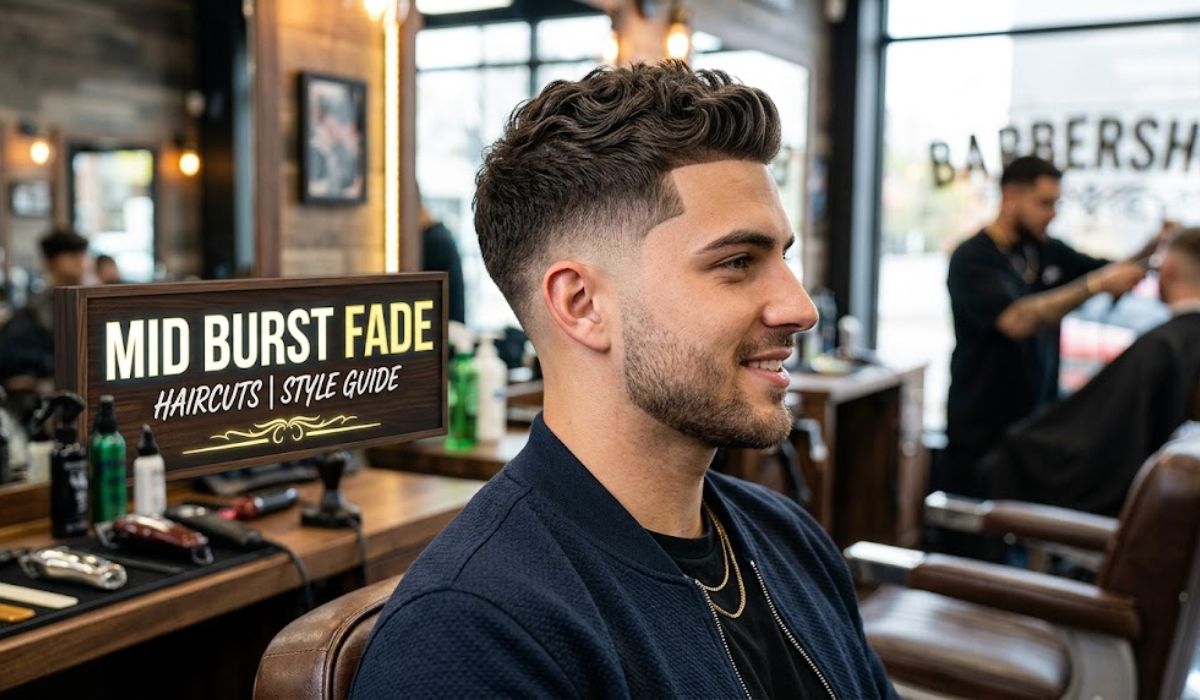
A mid burst fade is a fade that curves around the ear in a rounded or semicircular shape, with the fade positioned at a medium height on the side of the head. The top and back are separate styling choices, so the same mid burst can be paired with curls, waves, a textured crop, mullet, mohawk, fringe, or a shorter cut. Current hairstyle guides consistently describe the curved area around the ear as the defining feature of the burst fade. :contentReference[oaicite:0]{index=0}
TL;DR
- A mid burst fade curves around the ear instead of following a mostly straight fade path around the head.
- The word mid refers to the relative height of the fade. It sits between a low burst and a high burst.
- The fade can be combined with curly, coily, wavy, straight, or textured hair on top.
- Mullet and mohawk combinations create a stronger silhouette because the back is left longer.
- When talking to your barber, specify the fade height, shortest length, top length, back length, neckline, and finish.
- There is no single universal measurement for where a mid burst must sit, so a reference photo is especially useful.
If you are searching for mid burst fade haircuts because you want a style you can actually take to the barbershop, the most useful approach is to choose the fade shape and height first, then decide what you want on top and at the back. That prevents a common problem where someone asks for a mid burst but leaves the barber guessing about the rest of the haircut.
What Is a Mid Burst Fade?
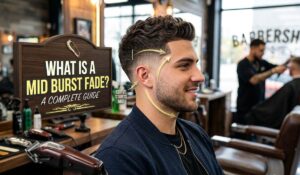
A mid burst fade is a haircut where the faded section forms a curved arc around the ear. Instead of continuing around the side of the head in a relatively even path, the fade expands outward from the ear and blends into longer hair above and around it.
The mid part describes the placement of that burst. It is higher than a low burst fade and lower than a high burst fade. The exact placement is not governed by one universal measurement, so the final shape can be adjusted according to the person’s head shape, hair density, desired contrast, and the barber’s technique. Current 2026 hairstyle guides consistently describe the mid burst as the middle option between low and high versions. :contentReference[oaicite:1]{index=1}
One detail is easy to miss: a mid burst fade is not the same thing as the hairstyle on top. The burst describes the fade architecture around the ear. A mullet, mohawk, textured fringe, curls, waves, or short crop can be added separately.
What Makes a Mid Burst Fade Different?
The defining feature is the curved fade around the ear. That curved shape gives the haircut a different silhouette from a conventional mid fade, where the transition generally travels more evenly across the side of the head.
The amount of contrast also depends on the shortest section. A skin finish exposes more scalp and creates stronger contrast, while a shadow finish leaves some hair at the shortest point for a softer appearance. Current hairstyle guides describe both approaches as variations of the mid burst fade. :contentReference[oaicite:2]{index=2}
| Feature | What it controls |
|---|---|
| Fade height | How high the burst sits on the side |
| Shortest length | How strong the contrast looks around the ear |
| Top length | The overall hairstyle and styling options |
| Back length | Whether the haircut looks compact, mullet like, or mohawk like |
| Neckline | How the haircut finishes at the back |
Mid Burst Fade vs Low vs High
The easiest way to understand the three versions is to think about where the burst reaches its highest point. A low burst keeps the fade closer to the ear, a mid burst occupies the middle position, and a high burst reaches farther upward.
| Style | General placement | Visual effect | Best choice when |
|---|---|---|---|
| Low burst fade | Lower around the ear | More subtle | You want less contrast on the side |
| Mid burst fade | Middle area around the ear | Balanced and noticeable | You want visible shape without the highest placement |
| High burst fade | Higher toward the temple and upper side | Stronger and more dramatic | You want the fade to become a major part of the silhouette |
These are relative categories rather than strict measurements. The same named haircut can look different on two people because head shape, hair density, top length, and the barber’s interpretation all affect the finished result.
25 Mid Burst Fade Haircuts to Consider
The best way to browse this haircut is by looking at meaningful differences rather than collecting dozens of almost identical variations. The styles below cover different textures, top lengths, silhouettes, and levels of contrast.
1. Classic Mid Burst Fade
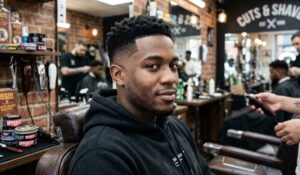
The classic version keeps the burst clearly visible around the ear while maintaining a controlled top and a connected back. It is a useful starting point if you want the defining curved shape without committing to a dramatic mullet or mohawk.
Ask for: A mid burst fade with a moderate top length and a clean, natural finish.
2. Mid Skin Burst Fade
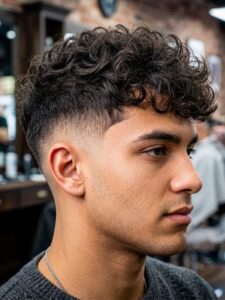
A mid skin burst fade takes the shortest part down to the skin. The exposed area around the ear creates stronger contrast against the hair above it.
This option can look especially sharp when the top has texture or curls, but new growth becomes visually noticeable sooner than with a softer fade.
3. Mid Shadow Burst Fade
A shadow version leaves some visible hair at the shortest point rather than exposing bare skin. It is a useful choice if you like the curved burst shape but prefer a softer transition.
Because the contrast is lower, the haircut can also be more forgiving as it grows out.
4. Mid Burst Fade With a Textured Top
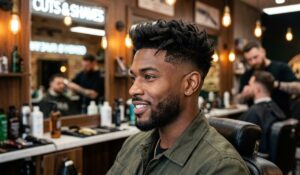
A textured top adds movement above the clean curved fade. The contrast between the controlled sides and irregular texture makes the haircut look more relaxed than a fully polished style.
This works particularly well when you want a modern haircut without turning the back into a mullet or mohawk.
5. Mid Burst Fade With Curly Hair
Curly hair gives the top natural volume and texture while the burst keeps the area around the ear controlled. The combination can work with both shorter curls and more substantial length on top.
Remember that curly hair can shrink considerably when it dries, so your barber should consider the curl pattern rather than relying only on the apparent wet length. Current hairstyle guides specifically feature curly and coily versions of the mid burst fade. :contentReference[oaicite:3]{index=3}
6. Mid Burst Fade With Coily Hair
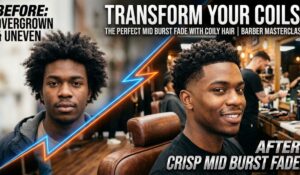
With coily hair, the burst can create a clean boundary around the ear while the natural texture remains prominent on top. Keeping enough density above the fade can make the transition look intentional rather than overly exposed.
7. Mid Burst Fade With Wavy Hair
Wavy hair can provide natural movement without requiring a highly structured style. A medium length on top lets the wave pattern remain visible while the curved fade creates definition around the ear.
8. Mid Burst Fade With Straight Hair
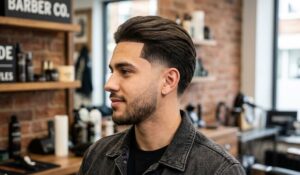
Straight hair makes the shape of the fade especially easy to see. A textured top can add movement, while a slicked or neatly combed top creates a cleaner appearance.
9. Mid Burst Fade Mullet
The mid burst fade and mullet are a natural combination because the fade removes bulk around the ear while allowing significant length to remain at the back.
This is a stronger choice than the classic version because the longer back becomes an obvious part of the silhouette. The exact back length is therefore something you should discuss with your barber rather than assuming that every burst fade mullet has the same shape. Current 2026 hairstyle guides repeatedly feature the mid burst fade with a mullet. :contentReference[oaicite:4]{index=4}
10. Mid Burst Fade Mohawk
A mohawk keeps more length through the central strip of the head while the sides are reduced. The burst shape around the ears can make that central length look more pronounced.
This is a bold option and requires more commitment to the overall silhouette than a classic mid burst.
11. Mid Burst Fade Faux Hawk
A faux hawk gives you some of the central volume of a mohawk without requiring such a dramatic separation between the sides and top. The mid burst provides a curved transition around the ears.
12. Mid Burst Fade With a Fringe
A forward fringe shifts attention toward the front of the face while the burst keeps the sides defined. The fringe can be short and structured or longer and textured depending on the desired finish.
A reference photo is useful because small changes in fringe length can significantly change the overall appearance.
13. Mid Burst Fade French Crop
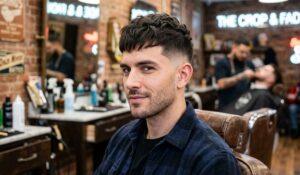
A short crop on top keeps the haircut compact and easy to manage. The burst adds visual interest without requiring a large amount of hair on top.
14. Mid Burst Fade With a Caesar Style Top
A short forward top with a defined front gives the haircut a structured appearance. The curved fade around the ear provides contrast without requiring a long top.
15. Mid Burst Fade Buzz Cut
A buzzed top creates one of the simplest versions of the style. Because there is very little hair to style, the curved fade becomes one of the main visual features of the haircut.
This is a practical choice if you want a defined shape without spending much time styling the top.
16. Mid Burst Fade Edgar
An Edgar style combines the burst with a strongly defined front. The blunt shape of the fringe contrasts with the curved fade around the ear.
The front length should be discussed carefully with the barber because even a small change can alter the appearance of the fringe.
17. Mid Burst Fade With Slicked Back Hair
A slicked back top gives the haircut a more polished appearance. The curved fade adds a modern detail while the longer top provides room for controlled styling.
This is one of the more restrained combinations if you want the burst shape without a highly casual finish.
18. Mid Burst Fade With Waves
Natural waves can create a softer contrast above the fade. Keeping enough length to preserve the wave pattern prevents the top from looking overly flat beside the curved sides.
19. Mid Burst Fade With a Quiff
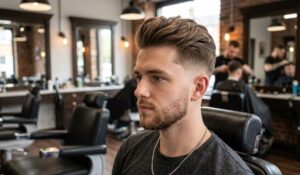
A quiff adds height at the front while the mid burst keeps the sides visually controlled. This combination works best when there is enough length and density at the front to create the desired lift.
20. Mid Burst Fade With a Side Part
A side part gives the haircut a more traditional direction while the burst keeps the side profile distinctive. It can be a useful option if you want a balance between a classic top and a modern fade.
21. Mid Burst Fade With a Long Top
Leaving more length on top gives you greater styling flexibility. You can wear the hair forward, back, up, or with natural texture depending on your hair type.
The longer the top becomes, the more important it is to tell the barber how you intend to style it.
22. Mid Burst Fade With a Beard
A beard can extend the visual structure from the haircut into the lower part of the face. The transition should be planned rather than automatically blended into the beard.
If you want this combination, show the barber a reference that includes both the haircut and beard shape.
23. Mid Burst Fade With a Hair Design
A design behind or near the ear can make the burst more distinctive. The tradeoff is maintenance because sharp designs lose their definition as the hair grows.
Keep the design simple if you do not plan to return to the barber frequently.
24. Mid Burst Fade With a V Shaped Neckline
A V shaped neckline changes the rear silhouette without changing the basic burst around the ear. It can give the haircut a more deliberate finish from the back.
The neckline is a separate choice, so do not assume that a mid burst automatically includes a V shape.
25. Low Maintenance Mid Burst Fade
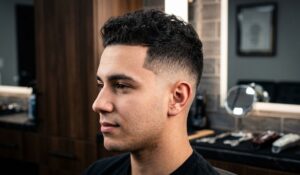
A softer shortest section, moderate top length, and uncomplicated styling make the haircut easier to maintain. This is a better option if you like the burst shape but do not want a highly precise skin finish or elaborate top.
How to Choose the Right Mid Burst Fade
Instead of asking which variation is universally best, start with four decisions: your hair texture, desired contrast, top style, and back length.
| Your preference | A useful direction |
|---|---|
| Curly or coily hair | Keep the natural texture visible above the burst |
| Wavy hair | Use enough top length to preserve the wave pattern |
| Straight hair | Consider texture, fringe, side part, or slicked styling |
| Strong contrast | Consider a skin finish around the shortest section |
| Softer contrast | Consider a shadow finish |
| Longer back | Consider a mullet or mohawk silhouette |
| Shorter overall style | Consider a crop, buzz, or compact textured top |
Face shape can be considered, but it should not be treated as a strict rule. Head shape, hair density, natural growth pattern, top volume, and personal preference can change the result. Current hairstyle pages make different claims about which face shapes are ideal, so there is not a reliable basis for declaring one face shape universally best. :contentReference[oaicite:5]{index=5}
Mid Burst Fade vs Mid Fade
A mid fade and a mid burst fade are not simply two names for the same haircut.
The key difference is the shape of the fade. A regular mid fade generally creates a more continuous transition around the side of the head, while a mid burst concentrates the curved fade around the ear.
Choose a mid burst if the curved ear area is an important part of the look. Choose a regular mid fade if you prefer a more continuous fade around the sides.
Mid Burst Fade vs Drop Fade
These styles can be confused because both can create curved transitions. The easiest distinction is the purpose of the curve.
| Style | Main defining idea |
|---|---|
| Mid burst fade | The fade forms a burst or curved arc concentrated around the ear |
| Drop fade | The fade follows the shape of the head and drops lower toward the back |
| Regular mid fade | The fade creates a more continuous transition around the sides |
If you are unsure which one you want, do not rely on the name alone. Show your barber a side and back reference photo and explain which part of the silhouette you want to preserve.
How to Ask Your Barber for a Mid Burst Fade
Simply saying “mid burst fade” gives your barber the basic fade direction, but it does not answer every important question. The top, back, neckline, shortest section, and styling finish are still open.
Use this checklist before sitting in the chair:
- State the fade: Say that you want a mid burst fade.
- Show a reference photo: Choose an image that resembles your hair texture and desired silhouette.
- Specify the shortest section: Decide whether you want a skin finish or a softer shadow finish.
- Explain the top: Tell the barber whether you want curls, texture, fringe, a crop, slicked back hair, or another top style.
- Explain the back: Say whether you want a short back, natural length, mullet length, or mohawk shape.
- Choose the neckline: Decide whether you want a natural, tapered, rounded, or V shaped finish.
- Discuss the final texture: Tell the barber whether you want a clean, textured, matte, or more polished result.
A useful request could sound like this:
“I want a mid burst fade around the ear. Keep the top at the length shown in this photo, leave the back at this length, and use a softer finish around the shortest part rather than taking it completely to skin.”
The exact wording can change according to your desired style. The important part is that you specify the details the haircut name does not automatically communicate.
How Often Should You Maintain a Mid Burst Fade?
A crisp mid burst fade commonly needs a touch up every two to three weeks, but this is a practical guideline rather than a fixed rule. Some people prefer to maintain a sharp finish more frequently, while others are comfortable allowing the haircut to grow out for longer. Current 2026 hairstyle guides commonly use the two to three week range. :contentReference[oaicite:6]{index=6}
A skin finish generally makes new growth easier to notice because the contrast between exposed skin and hair is stronger. A shadow finish can provide a softer transition as the haircut grows.
Your maintenance schedule should therefore depend on how sharp you want the fade to remain, not on a universal appointment interval.
Common Mid Burst Fade Mistakes
Choosing a photo with completely different hair
A reference photo is useful, but a style designed around thick curls may not translate identically to fine straight hair. Look for an example with a similar texture and density whenever possible.
Only telling the barber the fade name
“Mid burst fade” does not specify the top length, back length, neckline, or shortest section. Leaving those details undefined can produce a haircut that technically contains a burst but does not match your intended silhouette.
Ignoring the back
The back matters especially when you want a mullet or mohawk. Two mid burst fades can look completely different from behind because one may keep substantial length while the other remains compact.
Assuming mid has one exact measurement
There is no single universally established measurement that every barber uses for the word mid. Treat the term as a relative placement and use a photo to communicate the desired height.
Choosing maximum contrast without considering maintenance
A skin finish can look very sharp when fresh, but the difference between skin and hair also makes growth easier to see. If you prefer longer intervals between appointments, a softer shortest section may be more practical.
People Also Ask
What is a mid burst fade?
A mid burst fade is a fade that curves around the ear in a rounded or semicircular shape and sits at a medium height on the side. The top and back can be styled in many different ways.
What does a mid burst fade look like?
From the side, the fade forms a curved arc around the ear with longer hair above and beyond the faded section. The overall appearance changes significantly depending on the top and back length.
What is the difference between a mid burst fade and a low burst fade?
A low burst keeps the faded area lower and closer to the ear, while a mid burst places the main arc higher on the side. A mid burst therefore creates a more visible transition without reaching the height associated with a high burst.
What is the difference between a mid burst fade and a high burst fade?
The main difference is height. A mid burst occupies the middle position, while a high burst extends farther upward and generally creates a stronger visual contrast on the side.
Is a mid burst fade good for curly hair?
Yes. Curly and coily hair can work particularly well with the controlled area around the ear because the natural texture remains visible on top. The final result depends on curl pattern, density, length, and the desired amount of contrast.
Can you get a mid burst fade with a mullet?
Yes. The combination works by keeping the area around the ear controlled while preserving additional length at the back. The amount of back length determines how pronounced the mullet becomes.
Can you get a mid burst fade with a mohawk?
Yes. A mohawk keeps more length through the central area of the head while the sides are reduced. The burst around the ears can make that central strip appear more prominent.
How do you ask a barber for a mid burst fade?
Tell the barber you want a mid burst fade, then specify the shortest section, top length, back length, neckline, and desired finish. A reference photo is the most reliable way to communicate the exact shape you want.
Frequently Asked Questions
Is a mid burst fade suitable for a first fade?
It can be a reasonable starting point if you want a noticeable fade without choosing the highest burst placement. A classic version with a moderate top and softer shortest section is less dramatic than some of the bolder combinations.
Does a mid burst fade work with straight hair?
Yes. Straight hair can make the curved fade especially visible, while the top can be styled with texture, a fringe, a side part, or a slicked finish.
Does a mid burst fade work with wavy hair?
Yes. Keeping enough length on top allows the natural wave pattern to remain visible while the burst controls the area around the ear.
Should a mid burst fade go down to the skin?
Not necessarily. A skin finish creates stronger contrast, while a shadow finish leaves some hair at the shortest point for a softer appearance. The choice depends on the look and maintenance level you prefer.
What face shape is best for a mid burst fade?
There is no universally best face shape for the haircut. The top length, volume, hair density, head shape, and desired silhouette can all change how the fade looks, so face shape should be treated as one consideration rather than a strict rule.
How long does a mid burst fade stay fresh?
Many hairstyle guides suggest a touch up around every two to three weeks for a crisp appearance, but the ideal interval depends on how quickly your hair grows and how much new growth you are comfortable with. :contentReference[oaicite:7]{index=7}
Can a mid burst fade have a V shaped neckline?
Yes. The neckline is a separate design choice, so a V shaped finish can be combined with the mid burst. It changes the rear silhouette without changing the basic burst around the ear.
Is a mid burst fade professional?
It can be styled in a restrained way with a shorter top, subtle finish, and natural neckline. A bold design, long mullet, or dramatic mohawk creates a more expressive appearance, so the overall style matters as much as the fade itself.
Key Takeaways
- The defining feature is the curve around the ear. That is what separates a burst fade from a more conventional fade shape.
- Mid describes relative height. It sits between low and high burst versions, but there is no single universal measurement.
- The top is a separate decision. You can combine a mid burst with curls, waves, straight hair, texture, fringe, a crop, slicked hair, or other styles.
- The back changes the silhouette. Keeping substantial length creates a stronger mullet or mohawk effect, while a shorter back keeps the haircut more compact.
- Your barber needs more information than the haircut name. Specify the shortest section, top, back, neckline, and finish.
- Choose the haircut according to your actual hair and maintenance preferences. A reference photo with similar texture is more useful than relying on a haircut name alone.
The best mid burst fade is not necessarily the boldest version or the one with the longest list of styling details. The better choice is the version whose fade height, top length, back shape, hair texture, and maintenance requirements match what you actually want to wear. Bring a clear reference photo and tell your barber which parts of that photo matter most.
Sources and Verification
Current hairstyle sources reviewed for this guide describe the mid burst fade consistently as a curved fade around the ear with a medium relative placement. Recent 2026 pages also cover variations including curly hair, textured tops, mullets, mohawks, skin finishes, shadow finishes, barber instructions, and maintenance.

Hi, I’m Tomy Parker, a tattoo enthusiast and content writer at Tattosyle.com. I love exploring tattoo styles, meanings, placement ideas, aftercare tips, and the latest trends in body art. My goal is to create easy-to-understand, helpful, and accurate guides that inspire both first-time tattoo lovers and experienced collectors. Through Tattosyle, I aim to help you make informed decisions and discover tattoo designs that reflect your unique personality and story.
Leave a Reply