
TL;DR
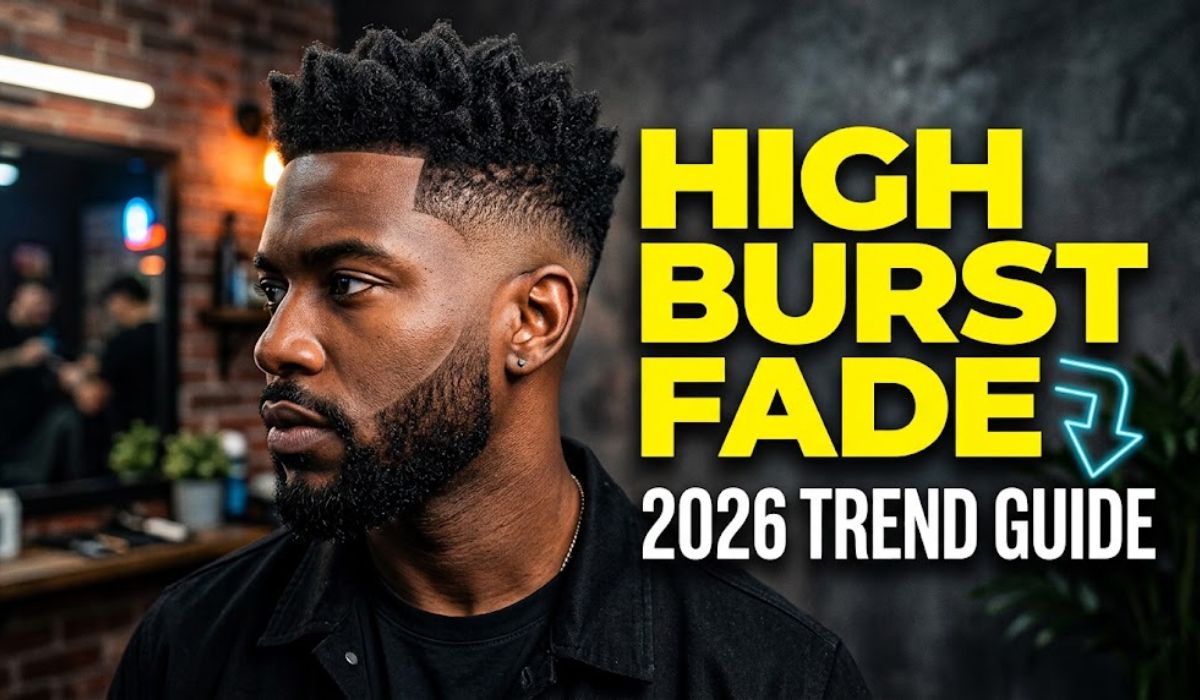
- A high burst fade curves around the ear rather than fading broadly around the entire side of the head.
- The word high describes the higher placement of the curved fade, not a fixed measurement.
- You can combine a high burst fade with curly hair, textured hair, a mullet, a mohawk, a fringe or a beard.
- A skin burst has a shorter finish than a shadow burst, so choose the finish separately from the burst shape.
- When talking to your barber, specify the burst height, shortest finish, top length and how much hair you want to keep at the back.
- For the clearest result, bring reference photos that show the side and back as well as the front.
What Is a High Burst Fade Haircut?
A high burst fade is a variation of the burst fade in which the fade is positioned higher on the side of the head. The defining feature is the curved fade around the ear, while the higher placement gives the haircut a stronger and more noticeable contrast.
That shape is what separates a burst fade from a conventional high fade. Instead of simply taking the fade higher across the sides, the burst fade concentrates the fading around the ear and can preserve more length toward the center back of the head. Current hairstyle sources consistently describe the burst fade through this curved relationship with the ear.
The word high should not be treated as a universal measurement. Barber terminology can vary, so it is more useful to think of a high burst as a burst arc that sits higher on the side than a mid or low version.
It is also important not to confuse the shape with the finish. A high burst fade can be a skin fade or a shadow fade. The burst describes the shape and placement, while skin or shadow describes how short the faded area becomes.
What Does a High Burst Fade Look Like?
The easiest way to understand the haircut is to look at three areas: the side, the ear area and the back.
The Side Profile
From the side, the fade forms a curved arc around the ear. Because the fade is high, that arc rises farther up the side of the head than a lower burst fade. The result is a more dramatic transition between the short sides and the longer hair above.
The Area Around the Ear
The area around the ear is the visual center of the haircut. Rather than creating one broad fading zone across the entire side, the burst shape follows the natural area surrounding the ear.
The Back
The back deserves special attention because it can change the entire silhouette. A burst fade can leave more length through the center back, which is one reason the style works particularly well with longer back shapes such as mullets and mohawks.
If you want to keep substantial length at the back, tell your barber clearly. Do not assume that saying only “high burst fade” communicates exactly how much hair you want preserved.
High Burst Fade vs Other Fades
Haircut terminology can be confusing because several fade names describe different parts of the same overall haircut. The simplest way to understand the difference is to separate shape from placement.
| Haircut | Main characteristic | Typical visual effect |
|---|---|---|
| High burst fade | High curved fade around the ear | Strong contrast with a distinctive rounded shape |
| Mid burst fade | Curved fade positioned lower than a high burst | More moderate contrast |
| Low burst fade | Curved fade positioned lower around the ear | Softer and less aggressive appearance |
| High fade | Fade rises high across the sides | Broader fading rather than the distinctive burst arc |
| Drop fade | Fade drops toward the back of the head | Creates a different rear contour |
| Taper | Shortening is concentrated around the edges | More conservative and less extensive than a full fade |
The key distinction is simple: a high fade describes how high the fading travels, while a high burst fade combines high placement with the curved burst shape around the ear. Current research on fade terminology supports treating burst, high and drop as distinct concepts rather than interchangeable names.
High Burst vs Mid Burst

The main difference is placement. A high burst sits higher and generally creates more visible contrast, while a mid burst keeps the curved fade lower and can produce a softer transition.
High Burst vs Low Burst
A low burst keeps the fade closer to the lower ear and side area. A high burst moves the curved transition higher, making the haircut more pronounced.
High Burst vs Drop Fade

A drop fade is defined by the way the fade falls toward the back of the head. A burst fade instead emphasizes the curved area around the ear. These shapes can produce very different rear silhouettes even when the top hair is similar.
Best High Burst Fade Styles
The best way to compare styles is by looking at meaningful differences in finish, texture and the amount of hair preserved. There is no need to treat every minor styling change as a separate haircut.
High Skin Burst Fade
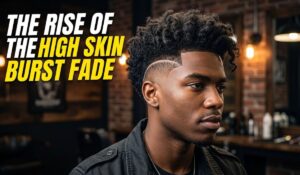
A high skin burst takes the shortest part of the fade down to the skin. This produces a sharp contrast between the faded area and the longer hair above it.
Choose this option if you want a particularly clean and noticeable finish. Keep in mind that regrowth can become visible sooner with a very short finish.
High Shadow Burst Fade
A shadow burst leaves the shortest section visibly short instead of taking it completely down to the skin. The result is generally softer than a skin finish.
This can be a useful choice if you like the burst shape but want a less severe contrast or a more gradual appearance as the haircut grows out.
High Burst Fade With Curly Hair

Curly and coily hair can create strong visual texture above the curved fade. The contrast between the textured top and shorter sides makes the burst shape particularly noticeable.
The amount of length retained on top should depend on the curl pattern, density and the look you want. A barber should work with the natural texture instead of treating curly hair like straight hair.
High Burst Fade With a Textured Top
A textured top keeps attention on the contrast between the longer hair and the high burst around the sides. This works especially well when the top has natural movement rather than a completely flat finish.
High Burst Fade Mullet
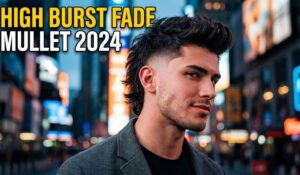
A burst fade and a mullet can work together because the burst keeps the sides controlled while the back retains more length. The back length is therefore especially important in this version.
If you want a burst fade mullet, say so explicitly. Asking only for a high burst may not communicate that you want the back preserved.
High Burst Fade Mohawk
A burst fade can also support a mohawk or faux hawk shape by keeping more length through the center while the sides are faded around the ears. The result is more dramatic than a conventional fade because the central strip of hair becomes part of the silhouette.
High Burst Fade With Fringe
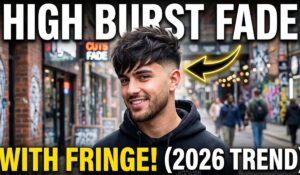
A fringe changes the balance of the haircut by bringing some of the visual weight forward. The burst fade keeps the sides clean while the fringe gives the top a more distinctive shape.
High Burst Fade With a Beard
A beard can extend the visual transition from the haircut into the lower face. The exact beard connection should be discussed with the barber because the sideburn area needs to work with both the fade and the beard shape.
Is a High Burst Fade Good for Your Hair Type?
A high burst fade can be adapted to different hair textures, but the finished appearance will not be identical across every hair type. The important question is not simply whether the haircut is possible. It is how your natural texture changes the shape and contrast.
Curly and Coily Hair
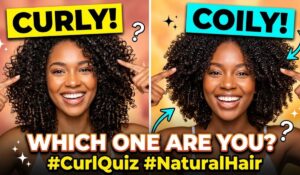
Curly and coily textures can create a strong contrast between the textured top and the closely faded area around the ear. Keeping enough length on top allows the natural texture to remain part of the haircut rather than removing the feature that gives it character.
Wavy Hair
Wavy hair can soften the appearance of the transition because the top naturally has movement. A high burst can give that texture a defined frame without requiring an extremely short top.
Straight Hair
Straight hair can make the geometry of the burst more obvious. Because there is often less natural movement than with curls or waves, the placement of the fade and the shape of the top become especially important.
Thick Hair
Thick hair provides plenty of density for creating contrast between the top and the faded sides. The barber can shape the top according to whether you want a textured, controlled or more voluminous result.
Fine or Thin Hair
A high burst can still work with fine hair, but removing too much density from the sides or top can make the overall haircut appear thinner. The desired contrast should therefore be balanced against the amount of hair you have.
Which Face Shapes Suit a High Burst Fade?
Face shape can be useful when choosing a haircut, but it should not be treated as a strict rule. Hair density, texture, head shape and personal preference can matter just as much.
Round Face
Adding height through the top can create a more elongated visual impression. A high burst can therefore work well when the top is styled to add some vertical structure.
Oval Face
Oval faces generally provide flexibility because many proportions can work without requiring a major correction through the haircut.
Square Face
A square face already has strong angular structure. A high burst can emphasize that defined appearance, particularly when paired with a structured top.
Long or Oblong Face
If your face is already long, adding excessive height to the top may emphasize that length. A balanced top with controlled volume can create a more proportionate result.
These are styling considerations rather than universal rules. Your barber can account for your actual head and face proportions before deciding exactly how high to take the fade.
How to Ask Your Barber for a High Burst Fade
Saying “high burst fade” gives your barber a useful starting point, but it does not describe every detail of the haircut. The clearest request covers four things.
- State the shape: Tell the barber that you want a high burst fade around the ear.
- State the finish: Say whether you want a skin finish or a shadow finish.
- Explain the top: Tell the barber how much length you want to keep and whether you want texture, curls, a fringe or another style.
- Explain the back: If you want a longer back, especially for a mullet or mohawk, say so clearly.
A useful request could be:
“I want a high burst fade that curves around the ear. Keep the top at the length I need for my style, use a shadow finish rather than taking it to skin, and keep the back long.”
Adjust that request to match your preferred finish and length. Most importantly, bring reference photos that show the side and back. A photo communicates the intended shape more precisely than a haircut name alone.
What to Show Your Barber
- A side view showing the height of the burst
- A back view showing how much length you want to keep
- A front or top view showing the desired top style
- A reference showing the shortest finish if you want skin or shadow
Skin Burst or Shadow Burst: Which Should You Choose?
The choice between skin and shadow should be made separately from the decision to get a high burst.
| Choice | Appearance | Best suited to |
|---|---|---|
| Skin burst | Very short finish that reaches the skin | A sharper, higher contrast appearance |
| Shadow burst | Short but visibly shaded finish | A softer appearance and less severe contrast |
If you are unsure, show your barber a reference photo. The words skin and shadow can be interpreted differently by people who are unfamiliar with barber terminology.
How Often Should You Maintain a High Burst Fade?
There is no single maintenance schedule that applies to everyone. Current hairstyle guides commonly suggest touch ups around every two to three weeks for people who want the fade to remain particularly sharp, but the ideal timing depends on hair growth, fade length and personal preference.
A skin fade will often show regrowth more noticeably than a shadow finish. If you prefer a softer grow out, a shadow burst may require less frequent attention than a very sharp skin finish.
The practical rule is simple: book a touch up when the contrast and shape no longer look the way you want them to.
Common High Burst Fade Mistakes
Taking the Fade Too High
The word high does not mean that the fade should be pushed as far upward as possible. The correct height depends on your head shape, hair density and desired silhouette.
Removing Too Much From the Back
If you want a mullet or mohawk influence, excessive fading or shortening at the back can completely change the intended shape. Tell your barber how much length you want preserved.
Assuming Burst Means Skin
Burst describes the curved fade shape. It does not automatically specify whether the shortest point reaches skin.
Using Only One Reference Photo
A side photo can show the burst clearly but may hide the back length. Use several angles when the back is an important part of your desired haircut.
Ignoring Hair Texture
The same fade height can look different on straight, wavy, curly and coily hair. Your barber should account for the way your natural texture sits after the cut.
Is a High Burst Fade the Same as a South of France?
These terms are closely related, but they should not automatically be treated as exact synonyms. Some barber sources use South of France as another name for a burst fade or associate it closely with a gentleman’s mohawk, while other sources distinguish the South of France as a specific mohawk style that uses a burst fade technique.
If you want a particular result, describing the shape and showing a photo is safer than relying on the name alone.
People Also Ask
What is a high burst fade haircut?
A high burst fade is a fade that curves around the ear and sits higher on the side of the head. It creates strong contrast while allowing more length to remain through the top and back.
What is the difference between a high burst fade and a high fade?
A high burst fade uses a curved shape around the ear, while a conventional high fade generally fades more broadly across the sides. The defining difference is the shape of the fade.
Does a high burst fade leave the back long?
It can. A burst fade can preserve more length through the center back, but the amount of hair left at the back depends on the chosen style.
Is a high burst fade good for curly hair?
Yes. Curly and coily textures can create strong contrast with the faded area, although the top length should be chosen around the natural curl pattern and density.
Can a high burst fade be a skin fade?
Yes. Skin describes how short the faded area becomes, while burst describes the curved shape around the ear.
What is the difference between high, mid and low burst fades?
The main difference is the placement of the curved fade. A high burst sits higher, a mid burst sits lower than the high version, and a low burst keeps the curve closer to the lower ear and side area.
Does a high burst fade work with a mullet?
Yes. The burst shape works particularly well with longer back styles because the sides can be faded while length is preserved through the back.
Does a high burst fade work with a mohawk?
Yes. A burst fade can support a mohawk or faux hawk by keeping more hair through the center while the sides are faded around the ears.
How often should you get a high burst fade?
Maintenance varies by hair growth and preferred sharpness. Some current guides suggest around two to three weeks for a consistently sharp appearance, but there is no universal schedule.
What should I tell my barber for a high burst fade?
Specify the burst height, shortest finish, top length and back length. A side and back reference photo can remove ambiguity.
Key Takeaways
- The defining feature is the curved fade around the ear.
- High refers to the placement of that curve, not a universal measurement.
- A high burst is not automatically a skin fade. Skin and shadow describe the finish separately.
- The back matters. Keeping more length can create a mullet, mohawk or other longer silhouette.
- Hair texture changes the result. Curly, coily, wavy, straight, thick and fine hair can all produce different visual effects.
- The safest barber request combines terminology with photos. Show the side, back and top so the intended shape is clear.
If you are choosing between several versions, focus on the result you want rather than the name alone: decide how high you want the burst, how short you want the fade, how much length you want on top and whether you want to preserve the back.

Hi, I’m Tomy Parker, a tattoo enthusiast and content writer at Tattosyle.com. I love exploring tattoo styles, meanings, placement ideas, aftercare tips, and the latest trends in body art. My goal is to create easy-to-understand, helpful, and accurate guides that inspire both first-time tattoo lovers and experienced collectors. Through Tattosyle, I aim to help you make informed decisions and discover tattoo designs that reflect your unique personality and story.

Leave a Reply