
Quick Answer
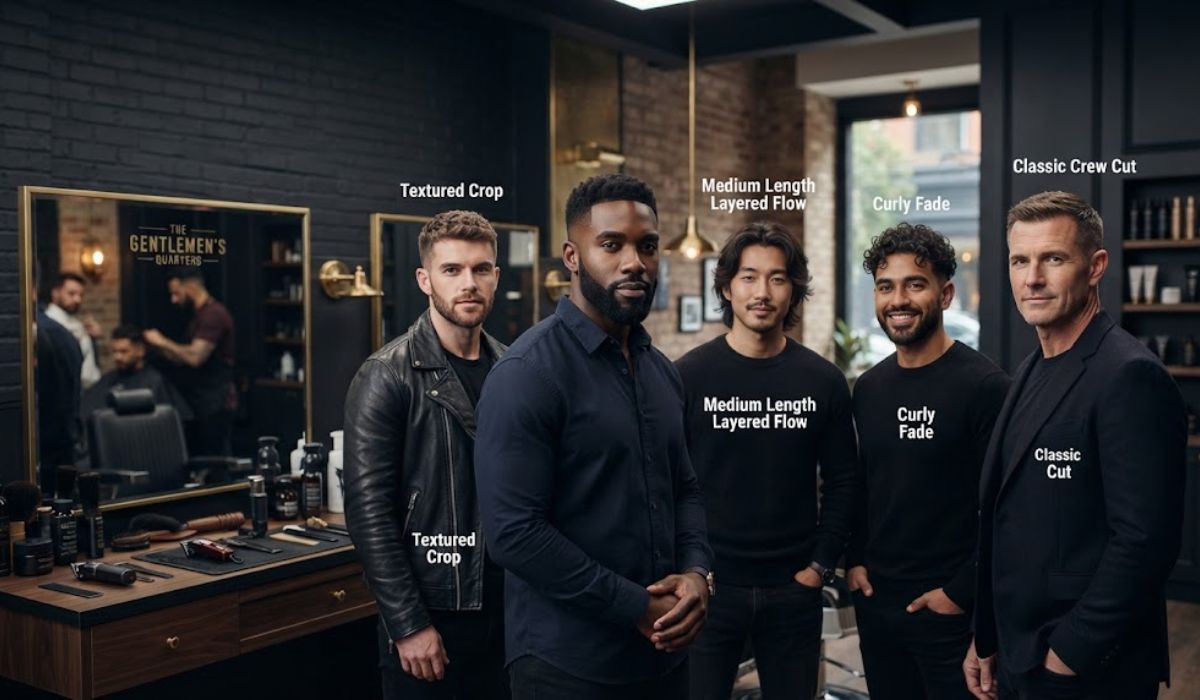
There is no single best men’s haircut for everyone. The right choice depends on your hair type, hair density, face proportions, preferred length, styling time, and how often you want to visit the barber. Popular choices in 2026 include low tapers, fades, textured crops, crew cuts, buzz cuts, quiffs, side parts, curtains, and longer layered styles.
The easiest way to choose is to start with the length you want, then match the haircut to your hair texture and density, consider your face proportions, and finally decide how much daily styling and maintenance you are willing to do.
TL;DR
- Short cuts: Buzz cuts, crew cuts, French crops, textured crops, and Caesar cuts are practical choices when you want less length.
- Tapers and fades: These create a gradual reduction in hair length around the sides and back, with different levels creating different amounts of contrast.
- Medium styles: Quiffs, side parts, curtains, slick backs, and layered flow styles provide more room for styling.
- Hair type matters: Straight, wavy, curly, thick, and fine hair can change how the same haircut looks and behaves.
- Maintenance matters: A haircut that looks great in a photograph may require more styling and regular barber visits than you want.
- Best starting point: Take a clear reference photo to your barber and explain the length, sides, top, and maintenance level you want.
Jump to the best mens haircuts | Choose by hair type | Choose by face shape | Tell your barber what you want | FAQ
Best Mens Haircuts at a Glance
The best haircut depends on what you want from it. Some men want almost no daily styling, while others prefer volume, texture, length, or a distinctive shape. The table below gives you a practical starting point.
| Haircut | General length | Styling effort | Good starting point for |
|---|---|---|---|
| Buzz cut | Very short | Very low | Men who want a simple, clean cut |
| Crew cut | Short | Low | Classic short styling |
| Textured crop | Short | Low to medium | Men who want visible texture |
| French crop | Short | Low to medium | Short hair with a defined front |
| Low taper | Short sides with more length above | Low to medium | Men wanting a versatile modern shape |
| Fade | Short sides with graduated length | Low to medium | Men who like stronger side contrast |
| Quiff | Medium on top | Medium | Men who want height and volume |
| Side part | Short to medium | Medium | Classic and polished styling |
| Curtains | Medium | Medium | Men who want a softer, longer shape |
| Layered flow | Medium to long | Medium | Men who prefer movement and length |
This is a starting guide rather than a universal ranking. Hair growth patterns, texture, density, and personal preference can change how a haircut performs on an individual person.
Short Mens Haircuts

Buzz Cut
A buzz cut keeps the hair very short and creates a straightforward appearance with minimal styling. It is useful when you want a haircut that requires little daily attention.
Because there is very little length to manipulate, the shape of the head and natural hairline become more visible. A barber can adjust the length and shape according to the result you want.
Crew Cut
A crew cut keeps the overall style short while allowing more length on top than a very short buzz cut. It offers a classic option for someone who wants short hair without taking the sides and top down to the same length.
The main advantage is flexibility. The top can remain neat and structured without requiring a complicated styling routine.
French Crop
A French crop combines relatively short sides with a short top and a defined front. It can work particularly well when you want a compact haircut with a clear shape.
Ask your barber to adjust the amount of texture and the front length according to your natural hair movement rather than copying a photograph without modification.
Textured Crop
A textured crop uses visible texture through the top instead of relying on a completely smooth finish. The style can create a modern appearance while keeping the overall length manageable.
Texture can look different on straight, wavy, and curly hair, so the reference photo should show the type of finish you actually want.
Caesar Cut
A Caesar cut keeps the hair relatively short and usually features a short forward styled front. It is another practical option for someone who prefers a compact haircut rather than substantial length.
Taper and Fade Haircuts

Taper and fade are related terms, but they are not interchangeable in every barber conversation. Both involve gradually reducing hair length, while a fade commonly creates a stronger transition that can extend higher up the sides and back.
Low Taper
A low taper gradually reduces length around areas such as the sideburns and neckline while leaving more of the surrounding hair intact. This creates a controlled transition without necessarily making the entire side very short.
A low taper can be a useful choice when you want a clean outline but still want substantial length through the sides and top.
Low Fade
A low fade begins its shortest section relatively low on the sides. The transition can create more visible contrast than a traditional taper while keeping the effect concentrated near the lower part of the haircut.
Mid Fade
A mid fade places the transition higher than a low fade. It provides a noticeable change between the shorter sides and the longer hair above.
High Fade
A high fade carries the short transition higher on the sides. This creates a stronger contrast and can make the remaining hair on top appear more prominent.
Taper vs Fade
| Feature | Taper | Fade |
|---|---|---|
| Transition | Gradual reduction in selected areas | Graduated reduction that can extend farther up the sides |
| Overall effect | Usually more subtle | Can create stronger contrast |
| Useful when | You want a cleaner outline while retaining more surrounding length | You want more visible separation between short sides and longer hair |
| Barber discussion | Specify where you want the taper | Specify whether you want a low, mid, or high fade |
When talking to a barber, do not simply say “fade” if the exact position matters to you. Tell the barber whether you want the transition low, medium, or high and show a reference photo when possible.
Medium Length Mens Haircuts

Quiff
A quiff keeps more length toward the top and uses styling to create height or forward movement. It generally requires more daily attention than a very short cut.
The amount of volume can be adjusted. You do not need to copy the tallest version of a quiff shown in a photograph.
Side Part
A side part creates a visible separation through the top and can produce a classic, structured appearance. It can be adapted to different lengths and levels of formality.
The key is to work with your natural growth pattern. A barber can help determine where the part works most naturally.
Curtains
Curtains use longer hair around the front and create a central or slightly offset opening. The style works particularly well when you want more length and movement around the face.
The final appearance depends heavily on natural texture, so straight, wavy, and curly hair can produce noticeably different versions of the same basic cut.
Slick Back
A slick back uses enough top length to direct the hair backward. It can create a clean and deliberate shape but generally requires more styling than a short crop or crew cut.
Layered Flow
A medium or longer flow style allows the hair to move naturally rather than forcing it into a tightly controlled shape. Layers can help manage longer hair while preserving movement.
Mens Haircuts by Hair Type
A haircut should work with the hair you actually have. Two people can request the same cut and receive noticeably different results because strand thickness, density, curl pattern, and natural growth direction are different.
Straight Hair
Straight hair gives you broad flexibility because the hair generally follows a more predictable direction. Crops, side parts, quiffs, slick backs, tapers, and many short cuts can be adapted to straight hair.
The main question is usually how much texture, volume, and length you want.
Wavy Hair
Wavy hair naturally provides movement and texture. Medium length cuts can allow the natural wave to become part of the hairstyle, while shorter textured cuts can make the wave more controlled.
Curly Hair
Curly hair needs a haircut that accounts for the curl pattern rather than treating curls like straight strands. Keeping appropriate length can help preserve the natural shape, while the sides can be shaped separately.
Show your barber a reference that has a similar curl pattern to yours whenever possible.
Thick Hair
Thick hair can create substantial volume and bulk. A suitable haircut may use texture, layering, or controlled reduction to prevent the style from becoming heavier than intended.
Fine Hair
Fine hair describes the characteristics of the individual strands and does not automatically mean hair loss. A haircut can use shape, texture, and suitable length to create a fuller looking result without relying on excessive product.
Very short sides with controlled length on top can be one approach, while textured crops and other structured styles may provide another. The best choice depends on density, growth pattern, and the finish you want.
Fine Hair vs Hair Thinning
Fine hair and thinning hair are not the same thing. Fine hair concerns strand characteristics, while thinning can involve reduced density or hair loss. The American Academy of Dermatology distinguishes normal shedding from hair loss and recommends professional evaluation when hair loss is a concern.
Mens Haircuts by Face Shape

Face shape can be useful when comparing haircut proportions, but it should not be treated as a strict rulebook. Hairline, hair texture, density, head shape, and personal preference also affect the result.
Oval Face
An oval face generally gives you considerable flexibility. Short, medium, textured, and longer styles can all be considered depending on your hair characteristics and preferred appearance.
Round Face
If you want to create more visual height or definition, styles with controlled volume on top and cleaner sides can be considered. The goal is proportion rather than following a rigid formula.
Square Face
Square faces often have naturally defined angles. Short cuts can emphasize that structure, while textured or medium styles can soften the overall appearance if that is the effect you prefer.
Oblong or Long Face
For a longer face shape, consider how much height you create on top. Excessive vertical volume can visually lengthen the face, while balanced sides and moderate top volume can create a different proportion.
Heart or Diamond Face
These face shapes can benefit from considering balance between the forehead, cheekbones, and jaw area. Haircuts with controlled texture and appropriate length can be adjusted to create the proportions you prefer.
Mens Haircut Trends in 2026

As of September 16, 2026, current men’s haircut coverage features a broad mix of short textured cuts, tapers, fades, classic shapes, medium length styles, and more natural looking texture. Current editorial coverage does not point to one universal haircut that works for every man.
Low tapers, textured crops, modern versions of classic short cuts, medium length styles, and longer textured looks are all represented in current 2026 coverage. Trends are useful for inspiration, but a haircut should still match the wearer’s hair characteristics and maintenance preferences.
A practical way to use trends is to ask two questions:
- Do I actually like the shape when it is shown on hair similar to mine?
- Am I willing to maintain and style it at the level the haircut requires?
If the answer to either question is no, a less trend focused version of the same general haircut may be a better practical choice.
How to Tell Your Barber What Haircut You Want

A haircut name alone may not communicate everything you want. Two people can ask for a crop, taper, fade, or quiff and still have different expectations about length and shape.
1. Bring a clear reference photo
Choose a photo that shows the haircut clearly. Ideally, the person in the photo should have hair texture and density reasonably similar to yours.
2. Explain the sides
Tell the barber whether you want a taper, low fade, mid fade, high fade, or another side treatment. If you do not know the terminology, show the photograph and describe how short you want the sides.
3. Explain the top
Say how much length you want to keep and whether you want the top textured, smooth, layered, or able to create volume.
4. Explain your styling routine
If you do not want to spend time styling your hair every morning, say so. A barber can adjust the shape toward a more manageable version.
5. Mention your natural hair behavior
Tell the barber if your hair is very thick, fine, curly, wavy, difficult to control, or grows in a particular direction. These details can affect the finished haircut.
Useful barber request: Instead of saying only “I want this haircut,” describe the four essentials: the sides, the top, the front, and the amount of maintenance you want.
How Much Maintenance Does Each Haircut Need?
Maintenance is often overlooked when people choose a haircut from a photograph. A style that looks simple may still need regular shaping or daily styling to keep the same appearance.
| Maintenance level | Typical characteristics | Examples |
|---|---|---|
| Very low | Little daily styling and minimal shaping | Buzz cut |
| Low | Simple styling with a compact shape | Crew cut, short crop |
| Low to medium | Some styling or regular side maintenance | Low taper, textured crop |
| Medium | Regular styling and more attention to shape | Quiff, side part, curtains |
| Medium to high | More length, styling, or shaping required | Longer layered styles |
These categories are practical guidance rather than fixed measurements. Hair growth speed, texture, styling habits, and the exact haircut all affect maintenance.
How to Choose Your Haircut in Five Steps
- Choose your preferred length. Decide whether you want very short, short, medium, or longer hair.
- Identify your hair characteristics. Consider whether your hair is straight, wavy, curly, thick, fine, or showing reduced density.
- Consider your face proportions. Use face shape as guidance rather than as a strict rule.
- Decide how much work you want. Think about daily styling and how often you want to maintain the haircut.
- Show your barber a reference. Explain the sides, top, front, and finish you want.
This process is more reliable than choosing a haircut simply because it is currently popular.
Common Haircut Selection Mistakes
Choosing a photo without considering hair type
A photograph can show the desired shape, but your own hair texture and density determine how closely that shape can be reproduced.
Asking for a fade without specifying the level
“Fade” can describe several different placements. If you have a specific preference, discuss whether you want the transition low, medium, or high.
Ignoring maintenance
A haircut should fit your actual routine. If you rarely style your hair, a high effort style may become frustrating even if you like the photograph.
Copying the haircut exactly
A reference photo should communicate the idea rather than function as a rigid template. Your barber may need to change the length, shape, or transition to work with your hair.
Assuming a trend is automatically suitable
A current style is simply an option. Personal suitability still depends on hair, proportions, desired appearance, and maintenance preferences.
People Also Ask
What haircut should I get as a man?
Start with the length and maintenance level you want, then consider your hair type, density, face proportions, and styling routine. A reference photo can help your barber adapt the shape to your hair.
What are the best short haircuts for men?
Popular short options include buzz cuts, crew cuts, French crops, textured crops, Caesar cuts, tapers, and fades. The right option depends on the amount of length and styling you prefer.
What is the difference between a taper and a fade?
A taper gradually reduces hair length in selected areas such as the sideburns and neckline, while a fade generally creates a more pronounced graduated transition that can extend higher on the sides.
What haircut works best for fine hair?
Fine hair can work with several short and medium styles, including textured crops and structured cuts. The important factors are your hair density, natural growth pattern, preferred length, and desired finish.
What haircut works best for curly hair?
Curly hair usually benefits from a cut that works with its natural curl pattern rather than forcing it into a straight hair shape. The appropriate length and side structure depend on the curl pattern and density.
Frequently Asked Questions
What are the best haircuts for men?
There is no universal best haircut. Buzz cuts, crew cuts, crops, tapers, fades, quiffs, side parts, curtains, and longer layered styles can all be useful depending on hair characteristics, face proportions, preferred length, and maintenance needs.
What men’s haircuts are trending in 2026?
As of September 16, 2026, current men’s haircut coverage includes textured crops, low tapers, fades, modern classic short cuts, medium length styles, and natural looking longer styles. Trends vary by region and editorial source.
How do I choose the right men’s haircut?
Choose your preferred length first, then consider hair texture, density, face proportions, styling time, and maintenance. Finish by showing your barber a reference photo and explaining what you want changed.
What are the easiest men’s haircuts to maintain?
Very short styles such as buzz cuts generally require less daily styling than longer styles. Crew cuts and compact short crops can also be practical choices when you want a relatively simple routine.
How often should men get a haircut?
There is no single schedule that works for every haircut. Shorter styles and tightly defined fades can require more frequent shaping to maintain their intended appearance, while longer styles can often tolerate more growth.
What haircut suits a round face?
Consider styles that create the proportions you prefer, including controlled volume on top and cleaner sides. Face shape should be treated as guidance rather than a strict rule because hair texture and personal preference also matter.
What haircut suits an oval face?
An oval face can work with a broad range of short, medium, and longer styles. Hair texture, density, and the amount of styling you want are usually more useful for narrowing the choice.
What should I tell my barber when getting a haircut?
Explain the sides, top, front, desired length, and styling preference. A clear reference photo is especially useful when the haircut has a specific taper, fade, texture, or shape.
Can a reference photo help my barber?
Yes. A reference photo can communicate the overall shape and finish more clearly than a haircut name alone. Choose a photo with hair characteristics reasonably similar to yours and allow the barber to adapt the cut to your hair.
Key Takeaways
- Mens haircuts are not a one size fits all decision. Hair type, density, face proportions, length, styling habits, and maintenance all matter.
- Short cuts such as buzz cuts, crew cuts, French crops, and textured crops are practical starting points for men who prefer less length.
- Tapers and fades provide different ways to transition from shorter sides to longer hair, so specify the placement you want.
- Medium and longer cuts such as quiffs, side parts, curtains, and layered flow styles provide more styling possibilities but can require more effort.
- Fine hair is not automatically the same as thinning hair. If actual hair loss is a concern, haircut advice should not replace appropriate medical guidance.
- Current trends can provide inspiration, but suitability matters more than popularity.
- The most useful barber conversation includes four things: the sides, the top, the front, and your preferred maintenance level.

Hi, I’m Tomy Parker, a tattoo enthusiast and content writer at Tattosyle.com. I love exploring tattoo styles, meanings, placement ideas, aftercare tips, and the latest trends in body art. My goal is to create easy-to-understand, helpful, and accurate guides that inspire both first-time tattoo lovers and experienced collectors. Through Tattosyle, I aim to help you make informed decisions and discover tattoo designs that reflect your unique personality and story.
Leave a Reply