
TL;DR
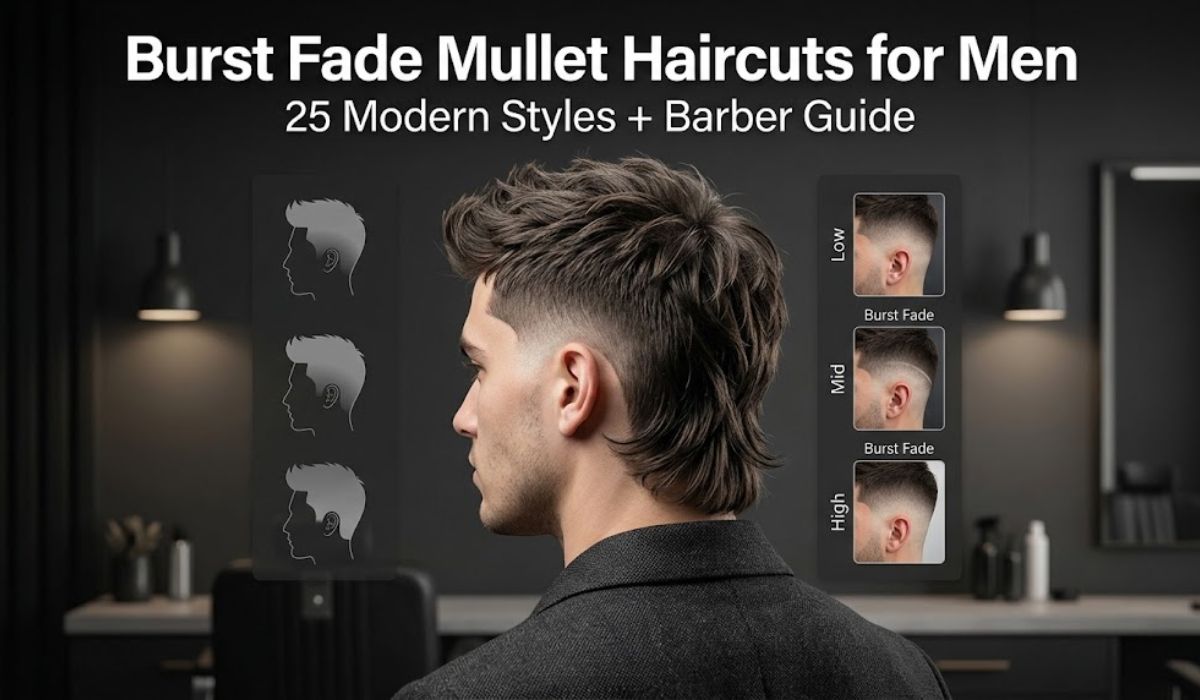
- A burst fade curves around the ears while the mullet keeps more length toward the back.
- A low burst gives a subtler result, a mid burst creates balanced contrast, and a high burst produces a bolder appearance.
- The haircut can work with straight, wavy, curly and coily hair when the shape is adapted to the natural texture.
- Back length has a major effect on the final look, from a short modern mullet to a more noticeable longer silhouette.
- When visiting a barber, specify the burst height, fade finish, top texture, back length and neckline instead of simply asking for a mullet.
Looking for a burst fade mullet usually means you want more than a single haircut definition. You want to see different versions and figure out which one actually suits your hair and the amount of contrast you want.
The best way to choose is to separate the haircut into its main components: the burst fade around the ears, the length at the back, the texture on top and the neckline. Once those elements are clear, it becomes much easier to communicate the cut to a barber.
What Is a Burst Fade Mullet?
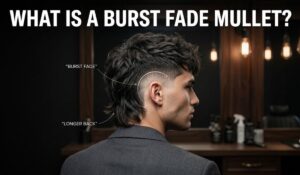
A burst fade mullet combines two haircut features. The burst fade curves around the ear, while the mullet keeps noticeably more length toward the back of the head.
The fade can be subtle or dramatic depending on how high and how short it is cut. The back can also range from relatively short to considerably longer, so there is no single appearance that defines every burst fade mullet.
Burst Fade vs Mullet
| Feature | Burst Fade | Mullet |
|---|---|---|
| Main purpose | Creates a curved faded area around the ear | Keeps more length toward the back |
| Where you notice it | Primarily around the sides and ears | Primarily at the rear of the haircut |
| Customization | Can be low, mid, high, shadow or skin | Can have a short, medium or long back |
| Role in the combined haircut | Creates the side silhouette | Creates the rear silhouette |
This distinction matters because a burst fade is not itself a mullet. The finished haircut comes from combining the curved fade with the longer rear shape.
Best Burst Fade Mullet Haircuts for Men
These styles are best viewed as variations of the same basic concept. The biggest differences come from fade height, back length, texture and how much contrast you want.
1. Classic Burst Fade Mullet
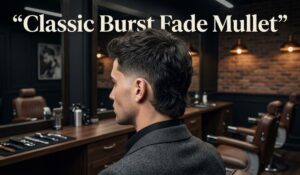
The classic version keeps a recognizable mullet shape while using a controlled burst fade around the ears. It is a useful starting point if you want the defining features without adding too many extra elements.
2. Low Burst Fade Mullet
A low burst fade keeps the faded area closer to the ear. The result is generally more subtle than a higher burst, making it a practical option for someone who wants the mullet shape without maximum contrast.
3. Mid Burst Fade Mullet
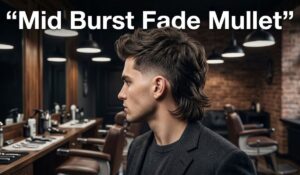
A mid burst sits higher around the ear and gives the sides more visible contrast. It offers a balanced option between a restrained low burst and a more dramatic high burst.
4. High Burst Fade Mullet
A high burst creates a stronger transition between the shorter sides and the remaining hair. This choice gives the haircut a more pronounced silhouette and works well when you want the fade to be a major part of the look.
5. Short Burst Fade Mullet
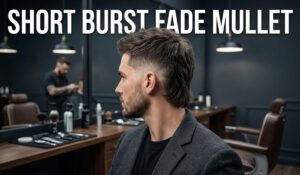
A short mullet keeps the rear length controlled instead of allowing a long tail. This can give you the recognizable shape while keeping the overall haircut more compact.
6. Textured Burst Fade Mullet
Adding texture on top creates separation between individual sections of hair. The top can be styled with a messy or natural finish while the burst fade keeps the sides clean.
7. Curly Burst Fade Mullet
Curly hair can create a strong contrast between the tight sides and fuller back. The curls also add natural volume, so the barber should shape the back according to the curl pattern rather than treating it like straight hair.
8. Wavy Burst Fade Mullet
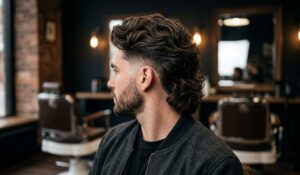
Wavy hair gives the back a softer and more relaxed appearance. Keeping the natural wave visible can make the transition from the shorter sides to the longer back look less rigid.
9. Straight Hair Burst Fade Mullet
Straight hair makes the change in length especially easy to see. A textured top or carefully shaped back can prevent the haircut from looking too flat.
10. Coily Burst Fade Mullet
Coily hair can produce a distinctive silhouette because of its natural density and texture. The fade can provide clean separation around the ears while the longer rear section retains texture and volume.
11. Thick Hair Burst Fade Mullet
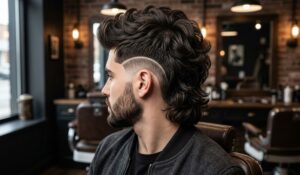
Thick hair gives the barber plenty of material to shape at the top and back. Removing or controlling excess bulk can help maintain a defined silhouette instead of allowing the longer sections to become overly heavy.
12. Fine Hair Burst Fade Mullet
Fine hair can still work with a burst fade mullet, but the shape needs to account for available density. Keeping useful texture and avoiding excessive removal from the back can help preserve the appearance of fullness.
13. Skin Burst Fade Mullet
A skin burst takes the shortest section down to the skin around the faded area. This creates more contrast than a shadow or longer fade and therefore gives the haircut a noticeably sharper appearance.
14. Burst Fade Mullet With Fringe
A fringe changes the front silhouette while the burst fade and longer back retain the main identity of the haircut. The fringe can be kept short, textured or allowed to fall more naturally depending on the overall style.
15. Messy Burst Fade Mullet
A messy version relies on texture rather than a highly polished finish. It works particularly well when the natural hair texture already creates movement through the top and back.
16. Burst Fade Mullet With Beard
A beard can add another strong visual element to the haircut. The key is balance because a very dramatic fade, long back and heavy beard can create a much stronger overall appearance.
17. Burst Fade Mullet With Tapered Neckline
A tapered neckline gives the rear of the haircut a cleaner transition. The neckline should complement the length of the mullet instead of removing so much hair that the longer back loses its shape.
18. Natural Neckline Burst Fade Mullet
A more natural neckline can preserve the authentic appearance of a longer mullet. This option can work well when the goal is to keep the rear section looking fuller and less sharply outlined.
19. Layered Burst Fade Mullet
Layers can help distribute weight through a longer back. This is particularly useful when the hair is thick or when you want movement instead of one heavy block of length.
20. Disconnected Burst Fade Mullet
A stronger disconnection makes the difference between the short sides and longer sections more obvious. This creates a more dramatic haircut and requires a barber who understands the desired silhouette.
21. Subtle Burst Fade Mullet
A subtle version keeps the burst less aggressive and the rear length relatively controlled. It is a useful choice when you want the shape to be noticeable without making every part of the haircut highly contrasting.
22. Bold Burst Fade Mullet
A bold version combines stronger fading with more obvious length or texture at the back. It is best chosen when you are comfortable with a haircut that has a clearly defined silhouette.
23. Curly Textured Burst Fade Mullet
This variation combines a burst fade with natural curls and additional texture. The final proportions should account for curl shrinkage, density and the way the curls naturally sit when dry.
24. Wavy Long Back Burst Fade Mullet
Keeping more length at the back allows natural waves to become a major part of the silhouette. The contrast between the clean area around the ears and the longer wavy back creates a relaxed but distinctive look.
25. Clean Modern Burst Fade Mullet
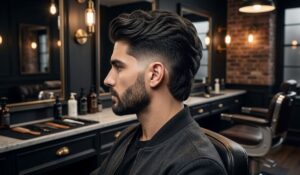
A clean modern version keeps the main mullet shape while controlling the top, sides and neckline carefully. It is a good option if you want a more polished interpretation rather than an intentionally messy finish.
Low vs Mid vs High Burst Fade Mullet
The burst height is one of the easiest ways to change the personality of the haircut. There is no universally best option because the right choice depends on how much contrast you want and how you want the sides to frame the head.
| Style | General position | Visual effect | Best starting point for |
|---|---|---|---|
| Low burst | Closer to the ear | More subtle | Someone wanting less contrast |
| Mid burst | Higher around the ear | Balanced contrast | Someone wanting a versatile middle ground |
| High burst | Higher on the sides | More dramatic | Someone wanting a stronger silhouette |
If you are unsure, a mid burst is a reasonable starting point to discuss with your barber because it sits between the more restrained and more dramatic options. The final decision should still consider your hair density, natural texture and preferred appearance.
Choosing a Burst Fade Mullet by Hair Type
Straight Hair
Straight hair shows changes in length and shape clearly. Texture, layers or a controlled amount of product can help add movement to the top and back.
Wavy Hair
Wavy hair naturally adds movement to the mullet. Keeping the wave visible can produce a softer transition between the shorter sides and longer rear section.
Curly Hair
Curly hair can create substantial volume in the back. The haircut should account for the natural curl pattern and the difference between wet and dry length.
Coily Hair
Coily hair can create strong texture and density. A barber should shape the haircut around the natural growth pattern instead of relying on proportions designed for straight hair.
Thick Hair
Thick hair may need weight control through the top and back. Too much bulk can obscure the intended shape, while controlled layering can help maintain movement.
Fine or Thin Hair
Fine hair benefits from preserving useful length and texture. The goal is to create a clear silhouette without unnecessarily removing density from areas that need to appear fuller.
Does a Burst Fade Mullet Suit Your Face Shape?
Face shape can help guide the choice, but it should not be treated as a strict rule. Hair texture, density, hairline, head shape and personal preference can be equally important.
| Face shape | Useful starting consideration |
|---|---|
| Round | Consider height and texture on top to add visual structure |
| Oval | Many variations can work, so focus on preferred proportions |
| Square | A controlled burst and textured top can complement strong facial angles |
| Heart | Balance the narrower lower face with suitable top and back proportions |
| Diamond | Consider texture and volume that complement the cheekbone area |
| Long or oblong | Avoid relying only on extra height and consider overall width and back length |
These are starting points rather than universal prescriptions. A good barber can adjust the proportions after considering your actual hairline, density and natural growth pattern.
Burst Fade Mullet vs Similar Haircuts
Several hairstyles can look similar in photographs, especially when the hair is textured. Understanding where the fade travels and where the length is preserved makes the distinction easier.
| Haircut | Main defining feature | How it differs from a burst fade mullet |
|---|---|---|
| Burst fade mullet | Curved fade around the ears with longer back | Combines both features |
| Drop fade mullet | Fade drops lower toward the back of the head | The fade follows a different path |
| Taper mullet | More restrained tapering around selected areas | Usually creates less exposed contrast than a stronger burst |
| Traditional mullet | Longer back with shorter sides | Does not necessarily use a burst fade |
| Burst fade mohawk | Strong central strip with faded sides | The central shape is more mohawk focused rather than mullet focused |
The most important distinction is the direction and location of the shorter area. A burst fade wraps around the ear, while a drop fade follows a downward path toward the back.
How Long Should the Back of a Burst Fade Mullet Be?
There is no single required back length. The right amount depends on how obvious you want the mullet silhouette to be.
- Short back: Creates a compact and subtle interpretation.
- Medium back: Provides a recognizable mullet shape without an especially long tail.
- Long back: Creates a stronger and more traditional mullet silhouette.
Instead of asking a barber for an exact length you saw online, show a reference photo and explain how dramatic you want the rear section to look. Hair texture also changes how much visible length remains after styling.
What to Tell Your Barber
Saying “give me a burst fade mullet” identifies the general haircut but leaves several important details open. A better request explains the proportions you want.
- Choose the burst height. Tell the barber whether you want a low, mid or high burst.
- Explain the fade finish. Decide whether you want a softer shadow effect or a much shorter skin finish.
- Specify the back length. Tell the barber whether you want a short, medium or long mullet shape.
- Describe the top. Mention whether you want the top textured, layered, messy or relatively clean.
- Discuss the neckline. Decide whether you prefer a tapered or more natural finish.
- Show reference photos. Front, side and back views give the barber a much clearer idea of the complete silhouette.
A useful barber reference should show the side profile because the curved burst and rear length are important parts of the haircut that a front photo may not reveal.
How to Maintain a Burst Fade Mullet
The fade and the longer back do not require identical maintenance. As the shorter sides grow, the burst shape gradually becomes less defined even though the mullet length can remain useful.
Keep the Burst Defined
Refresh the fade when the sides become less sharp than you prefer. The ideal timing depends on hair growth and how crisp you want the fade to remain.
Control the Back
The longer back should be shaped rather than automatically shortened every time. If you want to grow the mullet, tell your barber to preserve the length while cleaning the surrounding areas.
Maintain the Neckline
The neckline can strongly influence the appearance of the rear silhouette. A tapered finish creates a cleaner transition, while a natural finish can preserve a more substantial mullet appearance.
Style According to Texture
Straight hair may benefit from texture and movement, while curly and coily hair often benefit from products and techniques that preserve their natural pattern. Wavy hair can usually emphasize its natural movement rather than being forced into a rigid shape.
Common Burst Fade Mullet Mistakes
Choosing the Fade Height Without Considering the Overall Shape
A high burst can create substantial contrast. If you want a subtle haircut, choosing a high fade simply because it looks striking in a reference image may produce a result that feels more dramatic than expected.
Showing Only a Front Photo
The front does not fully communicate the burst shape or the amount of length at the back. Side and rear reference photos are much more useful for this haircut.
Not Explaining the Desired Back Length
The word “mullet” can mean different things to different people. Tell your barber whether you want a short, medium or long rear section.
Ignoring Natural Hair Texture
A style photographed on straight hair may look completely different on curls or waves. The final shape should be adapted to how your hair naturally behaves.
Expecting a Universal Face Shape Rule
Face shape guidance is useful, but it should not override your hair density, texture, hairline and preferred style.
Making the Request Too Vague
“Burst fade mullet” is a starting point, not a complete specification. Clarify the fade height, fade finish, back length, texture and neckline.
How to Choose the Right Burst Fade Mullet
If you are choosing between several styles, focus on five decisions rather than trying to compare dozens of haircut names.
- Decide how bold you want the fade. Choose low, mid or high.
- Decide how much length you want at the back. Choose short, medium or long.
- Work with your natural texture. Straight, wavy, curly and coily hair require different shaping.
- Choose your finish. Consider texture, fringe, beard and neckline options.
- Take multiple reference views to your barber. This reduces ambiguity about the finished shape.
If you want the safest starting point, choose a moderate burst with a controlled back length and show your barber several reference angles. If you want a stronger statement, increase the fade contrast or retain more length at the back.
People Also Ask
What Is a Burst Fade Mullet?
A burst fade mullet combines a curved fade around the ears with longer hair at the back. The two elements create the haircut’s defining side and rear silhouette.
What Is the Difference Between a Burst Fade and a Mullet?
A burst fade describes the fading technique around the ear, while a mullet describes the overall haircut shape with greater length toward the back. A burst fade mullet combines both.
Is a Burst Fade Mullet Good for Curly Hair?
Yes, curly hair can work well with a burst fade mullet. The haircut should be shaped around the natural curl pattern, density and the amount of shrinkage.
What Should I Ask My Barber for a Burst Fade Mullet?
Specify the burst height, shortest fade level, back length, top texture and neckline. Reference photos showing the front, side and back are especially useful.
What Is a Low Burst Fade Mullet?
A low burst fade mullet keeps the curved fade closer to the ear. It generally creates a subtler appearance than a mid or high burst.
What Is a Mid Burst Fade Mullet?
A mid burst fade sits higher around the ear and provides a balanced amount of contrast. It is a useful middle option between a low and high burst.
What Is a High Burst Fade Mullet?
A high burst places the fade higher on the sides and creates stronger contrast. It is suited to someone who wants the fade to be a prominent part of the haircut.
How Long Should the Back of a Mullet Be?
There is no universal required length. A short back creates a subtle modern shape, while medium and long lengths produce increasingly noticeable mullet silhouettes.
FAQ
Does a Burst Fade Mullet Work With Straight Hair?
Yes. Straight hair can show the fade and changes in length clearly, while texture or layering can add movement through the top and back.
What Face Shape Is Best for a Burst Fade Mullet?
There is no single face shape that is universally best. Face shape can guide proportions, but hair texture, density, hairline and personal preference also matter.
Is a Burst Fade Mullet High Maintenance?
The maintenance level depends mainly on how sharply you want the fade to look and how quickly your hair grows. The longer back can usually be maintained separately from the faded areas.
How Often Should a Burst Fade Mullet Be Trimmed?
There is no universal schedule. A fade may need refreshing when the sides lose the level of definition you prefer, while the back can be preserved longer if you are growing the mullet.
Can Thin Hair Have a Burst Fade Mullet?
Yes, but the cut should preserve useful density and avoid removing unnecessary weight from the longer sections. Texture and layering can also affect how full the final shape appears.
Can a Burst Fade Mullet Work With a Beard?
Yes. A beard can complement the haircut, but the overall proportions should be balanced so the fade, mullet and facial hair do not compete excessively for attention.
Should a Burst Fade Mullet Have a Tapered Neckline?
Not necessarily. A tapered neckline gives a cleaner transition, while a natural neckline can preserve more of the traditional mullet silhouette.
Is a Skin Fade Necessary for a Burst Fade Mullet?
No. A burst fade can be created with different levels of shortening. A skin finish produces more contrast, while a softer fade creates a less exposed appearance.
Key Takeaways
- A burst fade mullet is a combination haircut: the burst fade curves around the ears while the mullet keeps more length toward the back.
- Low, mid and high bursts create different levels of contrast. Choose based on the appearance you want rather than assuming one option is universally better.
- Hair texture matters. Straight, wavy, curly and coily hair can all be adapted to the style, but the proportions should match natural texture and density.
- Back length changes the entire silhouette. Short, medium and long options create noticeably different versions of the mullet.
- Face shape is a guide, not a rule. Hairline, density, texture and personal preference should also influence the choice.
- The best barber request is specific. Explain the burst height, fade finish, back length, top texture and neckline, then show front, side and back reference photos.

Hi, I’m Tomy Parker, a tattoo enthusiast and content writer at Tattosyle.com. I love exploring tattoo styles, meanings, placement ideas, aftercare tips, and the latest trends in body art. My goal is to create easy-to-understand, helpful, and accurate guides that inspire both first-time tattoo lovers and experienced collectors. Through Tattosyle, I aim to help you make informed decisions and discover tattoo designs that reflect your unique personality and story.
Leave a Reply