
Quick Answer
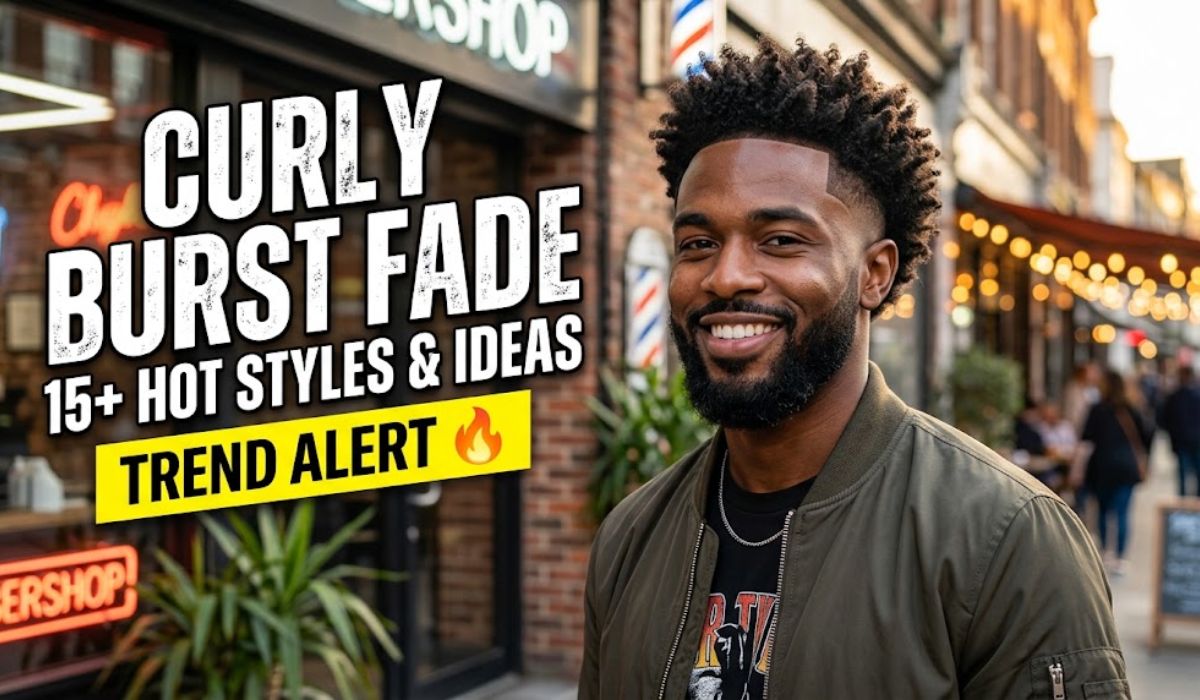
A curly burst fade haircut combines curly or coily hair on top with a fade that curves around the ear in a semicircular shape. The fade can be low, mid or high, while the shortest area can range from a subtle shadow finish to a skin finish. The right version depends on how much contrast you want, how much curl length you want to keep, and how you want the back and sides shaped.
TL;DR
- A curly burst fade keeps natural curl or coil volume on top while creating a curved fade around the ear.
- A low burst fade gives a softer result, a mid burst offers balanced contrast, and a high burst creates a more dramatic look.
- Low, mid and high describe the position of the fade, while skin and shadow describe how short the fade becomes.
- Your curl pattern, density, shrinkage and desired top length all affect how the finished haircut looks.
- Show your barber a reference photo and clearly explain the fade height, shortest finish, top length and back length you want.
- A burst fade needs regular touch ups if you want the faded area to remain crisp, while curl maintenance depends on your natural texture and styling routine.
What Is a Curly Burst Fade Haircut?
A curly burst fade is a haircut that combines curly hair on top with a curved fade around the ear. Instead of fading evenly across the entire side, the shorter area expands around the ear in a rounded shape while more hair remains above it and often behind it.
The defining feature is the placement of the fade. The word burst refers to the way the fade spreads outward from the area around the ear. The curly top then provides volume and texture, creating a strong contrast between the faded sides and the natural hair.
The haircut is flexible because the burst itself does not require one particular length. You can choose a low, mid or high placement and pair it with a shadow or skin finish. You can also keep the back relatively short or preserve more length for a mullet or mohawk inspired shape.
How the Curly Burst Fade Works With Your Hair
Curly hair changes the appearance of a haircut because curls do not always sit at their stretched length. Hair with stronger curl or coil patterns can appear considerably shorter when it dries and contracts.
For that reason, the best reference for your desired result is usually your normal dry curl pattern. A barber can then judge how much length and weight should remain on top.
Density matters too. Thick curls can create substantial volume above the fade, while finer curls may produce a softer silhouette. Neither is automatically better. The goal is to make the fade and the natural texture work together.
Low vs Mid vs High Curly Burst Fade
The most useful decision is often the height of the burst. Choosing the correct height determines how much side weight remains and how noticeable the contrast becomes.
| Version | Appearance | Good starting point |
|---|---|---|
| Low burst fade | Subtle contrast with more hair remaining around the sides | Someone who wants a cleaner look without an aggressive fade |
| Mid burst fade | Balanced contrast between the curly top and faded sides | Someone who wants a noticeable but versatile result |
| High burst fade | Stronger contrast with more of the side area removed | Someone who prefers a bold and highly visible fade |
Low Burst Fade With Curls
A low burst fade keeps the transition closer to the lower area around the ear. More side weight remains, so the overall result can look softer and less dramatic.
This can be a useful starting point if you like your curls to remain the main feature and do not want the fade to dominate the shape.
Mid Burst Fade With Curls
A mid burst fade sits higher than a low version and creates more visible contrast. It is a practical choice when you want the curved fade to be obvious while still keeping a substantial amount of curly volume.
If you are unsure which height to choose, a mid version can be discussed with your barber as a balanced option rather than assuming that a higher fade will automatically look better.
High Burst Fade With Curls

A high burst fade removes more of the side area and produces a stronger visual separation between the curls and the faded section. It suits people who deliberately want a more dramatic haircut.
Because a high fade changes the silhouette more noticeably, it is especially important to show your barber a reference image and discuss how much hair you want left around the sides and back.
Skin vs Shadow Burst Fade
Do not confuse fade height with fade finish. They describe different things.
| Term | What it describes |
|---|---|
| Low, mid or high | Where the burst fade is positioned |
| Skin | A very short finish that reaches the skin |
| Shadow | A softer finish that leaves a small amount of visible hair |
This distinction makes it easier to explain what you want. For example, you could ask for a mid burst fade with a shadow finish or a low burst fade with a skin finish. The height and finish are separate choices.
Which Curly Hair Types Work With a Burst Fade?
A burst fade can be adapted to different textures, including wavy hair, defined curls and tighter coils. The important issue is not finding one curl type that is supposedly best. It is understanding how your natural texture affects volume, length and shape.
Wavy and Loose Curly Hair
Wavy or loose curly hair can create a softer transition between the faded area and the longer top. Keeping enough length can help the natural texture remain visible rather than making the top appear flat.
Defined Curly Hair
Defined curls can create a clear contrast with the faded area. A medium amount of top length gives the curls room to form their natural shape while the burst provides a cleaner outline around the ears.
Tight Curls and Coils
Tight curls and coils can create substantial texture and volume even when the hair is not very long. Shrinkage becomes particularly relevant, so your barber should consider how the hair behaves when it is dry rather than judging only its stretched length.
Popular Curly Burst Fade Styles
Instead of choosing from dozens of nearly identical pictures, think about the silhouette you want. The following variations create noticeably different results.
Curly Top Burst Fade

This is the straightforward version, with natural curls kept longer on top and a curved fade around the ears. It puts most of the visual emphasis on the curl texture.
Curly Fringe Burst Fade
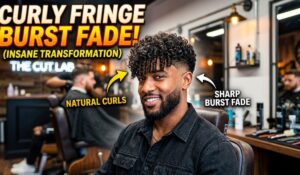
A curly fringe keeps some curls falling toward the forehead while the burst fade cleans up the sides. This works best when the front length is deliberately preserved and shaped rather than randomly left long.
Curly Burst Fade Mullet
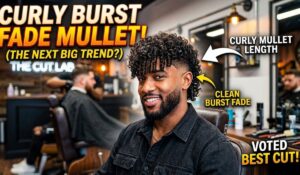
A curly burst fade can be combined with a longer back to create a mullet inspired silhouette. The key decision is how much length remains behind the ears and at the nape.
If you want this version, do not simply ask for a burst fade. Tell your barber that you want to preserve length in the back as well.
Curly Burst Fade Mohawk
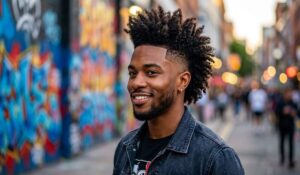
A mohawk inspired version keeps more length through the central section while the sides receive stronger fading. The result is more dramatic than a conventional curly burst fade.
Skin Burst Fade With Curls
A skin burst fade creates a sharp contrast between the scalp around the faded section and the longer curly hair above it. This is a more noticeable finish than a shadow fade.
Shadow Burst Fade With Curls
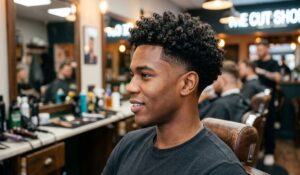
A shadow finish leaves a small amount of visible hair in the faded area. It creates a softer transition and can be preferable if you want definition without the strongest possible contrast.
Burst Fade vs Taper vs Drop Fade
These terms can become confusing because they all describe ways of reducing hair around the sides and back. The easiest way to separate them is to focus on where and how the hair is reduced.
| Haircut | Main characteristic | What to consider with curls |
|---|---|---|
| Burst fade | A curved fade concentrated around the ear | Creates a strong frame for curly volume on top |
| Taper | Usually keeps more surrounding hair while reducing selected areas such as the temples and neckline | Useful when you want a more conservative reduction of side and neck hair |
| Drop fade | The fade drops lower toward the back of the head | Changes the overall rear silhouette differently from a burst fade |
A burst fade is therefore not simply another name for a taper. Its defining feature is the curved fade around the ear. A drop fade also follows a different path because the fade drops toward the back.
How to Ask Your Barber for a Curly Burst Fade
Saying only “give me a curly burst fade” leaves several important choices unanswered. A clearer request helps your barber understand the shape you actually want.
- Show a reference photo. A photo communicates the overall shape much faster than a haircut name alone.
- Choose the fade height. Say whether you want a low, mid or high burst.
- Explain the shortest finish. Decide whether you want a skin finish or a softer shadow finish.
- Describe the top. Tell your barber how much curly length and volume you want to preserve.
- Discuss the back. Say whether you want the back kept short, left natural or grown longer for a mullet or mohawk shape.
- Explain the overall contrast. Tell the barber whether you want a subtle, balanced or bold appearance.
A useful reference photo should ideally show the haircut from more than one angle. The side view helps communicate the burst around the ear, while the rear view can clarify what should happen at the back and nape.
How to Style a Curly Burst Fade
The haircut creates the shape, but your curl routine determines how the top actually looks from day to day.
Keep the Curls Defined
Use a curl routine that works with your natural texture. Curl cream or a suitable leave in conditioner can help with definition, while excessive handling can disturb the curl pattern.
Air Drying vs Diffusing
Air drying can allow curls to settle naturally. A diffuser can help dry the hair while maintaining more of its natural curl structure when used appropriately.
The best method depends on your hair’s texture, density and personal routine. There is no single styling method that works identically for every curly head of hair.
How Often Does a Curly Burst Fade Need Maintenance?
The fade generally needs more frequent attention than the curly top if you want the curved area to remain sharp. Current haircut guidance commonly discusses touch ups around the two to three week range, but the ideal timing varies with growth rate, fade length and how crisp you want the haircut to look.
Your curls may require a different schedule. Someone who prefers natural growth can allow more time between appointments, while someone who wants very clean faded edges may return sooner.
Think of maintenance as two separate jobs: keeping the fade defined and keeping the curls healthy and shaped.
Common Mistakes to Avoid
Taking the Fade Too High
A high burst creates strong contrast. If you actually want a softer look, asking for a high fade can remove more side weight than you expected.
Ignoring Curl Shrinkage
Curly hair can look considerably shorter after it dries. Judge your desired top shape using your normal dry texture and tell your barber how your hair behaves.
Using a Reference Photo With Different Hair
A reference image is useful for communicating shape, but your result will not necessarily look identical if the person in the photo has a different curl pattern, density or length.
Forgetting the Back and Nape
The area behind the ear and at the nape can significantly change the final silhouette. This becomes especially important if you want a curly mullet or mohawk inspired version.
Confusing Height With Finish
Remember that low, mid and high describe placement, while skin and shadow describe how short the fade becomes. Decide both rather than treating them as interchangeable terms.
Is a Curly Burst Fade Right for You?
A curly burst fade is worth considering if you want to keep natural texture on top while creating a cleaner, more defined area around the ears.
Before choosing one, ask yourself:
- Do I want my curls to remain the main feature?
- How much side contrast do I actually want?
- Would a low, mid or high fade better match that preference?
- Do I want a skin finish or a softer shadow finish?
- How much length do I want on top?
- Do I want the back short or longer?
- Am I comfortable maintaining the fade regularly?
If your answers point toward natural texture with a defined curved fade around the ears, this haircut is a strong option to discuss with your barber.
People Also Ask
What is the difference between a low and high curly burst fade?
A low burst fade keeps the faded area lower and preserves more side weight. A high burst fade removes more of the side area and creates stronger contrast with the curls.
Is a burst fade good for thick curly hair?
Yes. Thick curly hair can work well with a burst fade because the natural volume on top contrasts clearly with the shorter area around the ears. The final shape should account for your hair density and curl behavior.
Can you get a burst fade with short curly hair?
Yes. Short curls can still be combined with a burst fade, although the amount of visible curl texture and the overall silhouette will depend on the available top length.
Can you combine a curly burst fade with a mullet?
Yes. A longer back can be retained to create a curly burst fade with a mullet inspired shape. Tell your barber explicitly that you want length preserved at the back.
Can you get a curly burst fade with a mohawk?
Yes. A mohawk inspired version keeps more length through the central area while the sides are faded more aggressively. It creates a bolder silhouette than a standard curly burst fade.
FAQ
How long should curly hair be for a burst fade?
There is no single required length. The amount of top length should be based on the curl shape, shrinkage, density and silhouette you want.
Does a curly burst fade require a lot of maintenance?
The fade itself needs regular touch ups if you want it to remain crisp. Curl maintenance is separate and depends on your natural texture and styling routine.
Does a burst fade work with tight coils?
Yes. Tight coils can create strong texture above the faded area. Because shrinkage can significantly change apparent length, the dry curl pattern should be considered when planning the cut.
What is the difference between a burst fade and a taper?
A burst fade is defined by its curved shape around the ear, while a taper generally reduces hair more selectively around areas such as the temples and neckline while retaining more surrounding density.
What is the difference between a burst fade and a drop fade?
A burst fade focuses its curved shape around the ear. A drop fade follows a path that drops toward the back of the head, creating a different rear silhouette.
Should a curly burst fade be skin or shadow?
Choose skin if you want stronger contrast and a very short finish. Choose shadow if you prefer a softer transition with some visible hair remaining.
How do I choose between a low, mid and high burst fade?
Choose low for a subtler result, mid for balanced contrast, and high for a more dramatic appearance. Your barber can also help account for your hair density, head shape and desired top length.
Key Takeaways
- A curly burst fade is defined by the curved fade around the ear combined with longer curly or coily hair.
- Low, mid and high describe fade placement, not the shortest cutting length.
- Skin and shadow describe the finish, so they are separate choices from fade height.
- Curl pattern, density and shrinkage can change the final appearance, so your dry hair should be considered.
- The clearest barber request includes the fade height, finish, top length and instructions for the back and nape.
- The best haircut choice is the one that matches your preferred level of contrast and the amount of natural curl volume you want to keep.

Hi, I’m Tomy Parker, a tattoo enthusiast and content writer at Tattosyle.com. I love exploring tattoo styles, meanings, placement ideas, aftercare tips, and the latest trends in body art. My goal is to create easy-to-understand, helpful, and accurate guides that inspire both first-time tattoo lovers and experienced collectors. Through Tattosyle, I aim to help you make informed decisions and discover tattoo designs that reflect your unique personality and story.
Leave a Reply