
A tattoo is never just ink under skin. It is a decision that survives arguments, breakups, career changes, and decades of mirrors. Before you commit to a symbol for life, you deserve to know what that symbol has meant across cultures, what it means today, and what it might quietly say about you to a stranger reading your arm at a coffee shop.
This guide breaks down tattoo meanings by symbol, by gender leaning, by culture, and by the mistakes people regret five years in. No filler, no vague spiritual talk that means nothing. Just what the ink actually says.
Why Tattoo Meanings Matter More Than You Think?
Most people research tattoo designs for hours and spend ten minutes on what the design actually communicates. That order is backward. A tattoo functions like a sentence you wear in public every single day. Strangers, coworkers, and future partners will read it whether you intended a message or not.
Meaning also affects how the tattoo ages emotionally, not just visually. A design chosen purely for looks can start to feel empty within a year, while a design tied to a real story tends to hold its value the way a good investment does. People rarely regret meaningful tattoos. They regret trendy ones that had no anchor.
There is also a practical layer. Certain symbols carry loaded histories, and wearing them without knowing the backstory can lead to awkward conversations at best and real offense at worst. Understanding meaning protects you from that.
Where Do Meanings Actually Come From?
Tattoo symbolism is rarely invented from nothing. It is usually inherited from three sources layered on top of each other: ancient cultural or religious use, historical subcultures that adopted the symbol for their own purposes, and modern pop culture that reshapes it again for a new generation.
Take the anchor. Sailors used it centuries ago as a literal marker of their trade and a symbol of stability during long voyages. Later it became shorthand for loyalty and steadfastness in general. Today it shows up on people who have never seen open water, simply because the stability meaning survived the journey.
This layering is why the same symbol can mean different things depending on who you ask. A lotus flower can be a Buddhist symbol of enlightenment to one person and simply a pretty flower to another. Both readings are valid, but knowing the deeper layer gives you control over which meaning you are actually broadcasting.
How Men and Women Approach Meaning Differently (And Why It’s Changing)?
Historically, tattoo culture split fairly cleanly along gender lines. Men leaned toward symbols of strength, protection, and status such as lions, skulls, and tribal patterns. Women were steered toward smaller, delicate designs like flowers, birds, and script quotes, often placed in less visible spots.
That split is dissolving fast. Bold blackwork on women and delicate fine line tattoos on men are now common rather than exceptions. What has not changed is the underlying human need the tattoo satisfies. Men still gravitate toward symbols of resilience and legacy. Women still gravitate toward symbols of growth and connection. The difference now is style and placement, not meaning itself.
Tattoo Meanings List: The Symbols Everyone Searches For
Before going deep into categories, here is a fast reference table for the most searched tattoo symbols and their core meanings.
| Symbol | Common Meaning |
| Anchor | Stability, loyalty, being grounded |
| Compass | Guidance, life direction, staying true to purpose |
| Semicolon | Continuing a story that could have ended |
| Lotus | Rising above struggle, enlightenment |
| Infinity | Eternal love, endless possibility |
| Feather | Freedom, spiritual connection |
| Skull | Mortality, resilience, facing fear |
| Arrow | Moving forward, overcoming obstacles |
Symbol Tattoos With Secret Meanings
Some tattoos look purely decorative but carry meanings most people never learn. Three dots in a triangle formation quietly represent “mi vida loca,” a phrase tied to a life lived on one’s own terms. Bird cages with the door open symbolize freedom recently gained, often after leaving a relationship or difficult chapter. A single line drawn to look imperfect on purpose can represent embracing flaws instead of hiding them.
These hidden layer tattoos appeal to people who want personal meaning without turning their body into an open book. The design reads as art to strangers and as a private message to the wearer.
Tattoo Meanings For Females
Search data consistently shows women gravitating toward symbols of growth, softness paired with strength, and connection to other people. Fine line florals, mother and child linked symbols, and moon phase tattoos rank among the most requested. The moon phase design in particular has grown fast because it visually represents personal transformation over time without needing any text.
Butterfly tattoos remain popular among women specifically because the transformation story, caterpillar to cocoon to flight, maps so directly onto life changes like recovery, new motherhood, or leaving an old identity behind.
Tattoo Meanings For Men
Men’s searches skew toward legacy, protection, and quiet strength. Lion tattoos, family crest designs, and compass tattoos dominate the list. There is also a steady rise in minimalist single word tattoos representing a value the wearer refuses to compromise on, such as loyalty or discipline.
Father and son linked tattoos have become one of the fastest growing categories among men, often chosen to mark a specific milestone like a birth or a reconciliation rather than an abstract idea.
Semicolon Tattoo Meaning
The semicolon tattoo has become one of the most emotionally loaded designs in modern tattoo culture. In grammar, a semicolon marks a pause where a sentence could have ended but continues instead. As a tattoo, it represents a person’s own story continuing after a period of mental health struggle, self harm, or suicidal thoughts, rather than ending there.
Because of this weight, the semicolon tattoo carries a built in community. People who wear it often recognize the meaning in strangers immediately, creating a quiet form of solidarity that few other symbols offer.
Animal Ink: When Nature Becomes Your Narrator

Animals are among the oldest tattoo subjects because they let humans borrow traits they admire without claiming to be perfect themselves. A lion tattoo does not claim the wearer is fearless. It claims they are working toward that ideal.
The Power Squad: Lions, Eagles, and Dragons
Lions represent courage, leadership, and protecting one’s own, which is why they remain a top choice for people marking a new role as a parent, business owner, or head of family. Eagles carry a similar weight but lean more toward vision and freedom, often chosen by people who value independence over group belonging.
Dragons occupy a slightly different space depending on cultural origin. In Western tattoo tradition they often symbolize raw power and chaos tamed into strength. In East Asian tradition, particularly Chinese symbolism, the dragon represents wisdom, good fortune, and benevolent authority rather than destruction.
The Thinkers: Wolves, Owls, and Foxes
Wolves are chosen almost exclusively for their pack loyalty symbolism, representing family bonds and protection of a chosen circle rather than pure aggression. Owls lean intellectual, tied to wisdom and the ability to see clearly in situations others find confusing.
Foxes have gained popularity recently as a symbol of adaptability and quick thinking, appealing to people navigating career pivots or major life reinvention. Unlike the lion or eagle, the fox meaning centers on cleverness over raw strength.
Transformation Royalty: Butterflies, Moths, and Phoenixes
Butterflies dominate this category for their obvious metamorphosis symbolism, but moths have quietly become the more nuanced choice. Moths represent being drawn toward light even through darkness, a metaphor many choose specifically because it acknowledges struggle rather than glossing over it.
The phoenix remains the most dramatic transformation symbol available, representing total rebirth from destruction. It tends to appear after major life events such as surviving illness, divorce, or addiction recovery, precisely because no smaller symbol feels adequate for that scale of change.
Flowers Aren’t Just Pretty: Decoding Petal Politics
Flower tattoos are frequently dismissed as purely decorative, but flower symbolism is one of the oldest and most specific systems in tattoo culture, inherited largely from Victorian era flower language.
Roses: More Than Romance
A red rose signals romantic love, but color changes everything. A black rose often represents loss or the end of something significant rather than death itself. A white rose can represent purity or new beginnings, while a rose with a broken stem specifically marks lost love or grief.
Thorns matter too. A rose shown with visible thorns tends to represent beauty that came with real difficulty, while a thornless rose leans toward uncomplicated affection.
Lotus: The Mud to Miracle Metaphor
The lotus grows through muddy water yet emerges clean and beautiful, which is precisely why it symbolizes rising above hardship without being defined by it. This meaning is consistent across Hindu, Buddhist, and Egyptian traditions, making it one of the few symbols with near universal agreement on core meaning.
Lotus color still shifts nuance slightly. A closed lotus bud can represent potential not yet realized, while a fully open lotus represents transformation already achieved.
Sunflowers and Daisies: Underrated Optimism
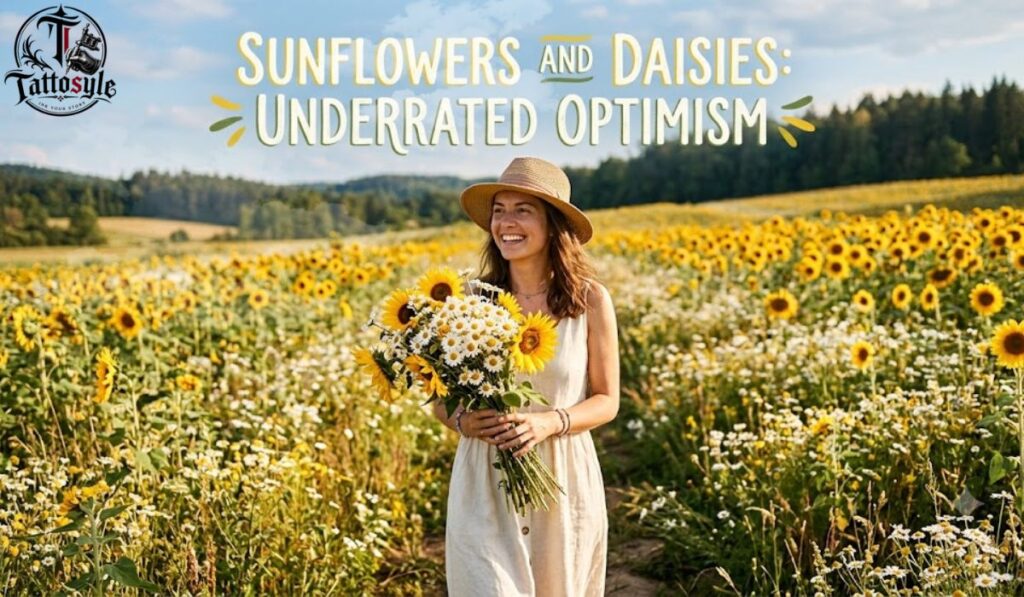
Sunflowers turn to follow the sun, which is why they symbolize loyalty, positivity, and staying oriented toward light even during hard seasons. They have become popular among people marking recovery from depression specifically because the flower’s behavior mirrors the intention behind the tattoo.
Daisies carry a gentler meaning tied to innocence and simple joy, often chosen for tattoos commemorating childhood memories or a grandparent.
Geometry and Symbols: When Math Meets Mysticism
Geometric tattoos appeal to people who want meaning without a literal picture attached to it. Shapes let the symbolism stay abstract while still communicating something specific to those who understand it.
The Infinity Loop: Eternal Everything
The infinity symbol represents anything without an end, most commonly love, friendship, or a life philosophy. Its flexibility is both its strength and its weakness. Because it can mean almost anything, it works best combined with another element, such as a name or date, that narrows the meaning down.
Mandalas: Meditation in Ink Form
Mandalas originate in Hindu and Buddhist spiritual practice, representing the universe and the balance within it. As tattoos, they are chosen by people drawn to meditation, mindfulness, or a general sense of order restored after chaos.
The symmetry itself carries meaning. A perfectly balanced mandala represents harmony achieved, while some wearers intentionally choose slightly asymmetrical designs to represent ongoing rather than finished balance.
Compasses and Arrows: Direction Matters
Compass tattoos represent guidance, purpose, and staying oriented toward a goal even when circumstances shift. They are frequently chosen by travelers, but the deeper meaning applies just as well to someone navigating a career change or personal reinvention.
Arrow tattoos work similarly but with more forward momentum implied. A single arrow suggests moving ahead despite obstacles, while a bundle of arrows historically represents strength found in unity, a meaning borrowed from Native American symbolism around family and tribe.
Celtic Knots: Infinite Connection
Celtic knots use continuous, unbroken lines to represent eternal bonds, most often love, family, or friendship that cannot be undone. Because the knot has no beginning or end, it carries similar symbolism to the infinity loop but with a heavier, more historic weight tied to Irish and Scottish heritage.
Words and Numbers: When Language Becomes Skin
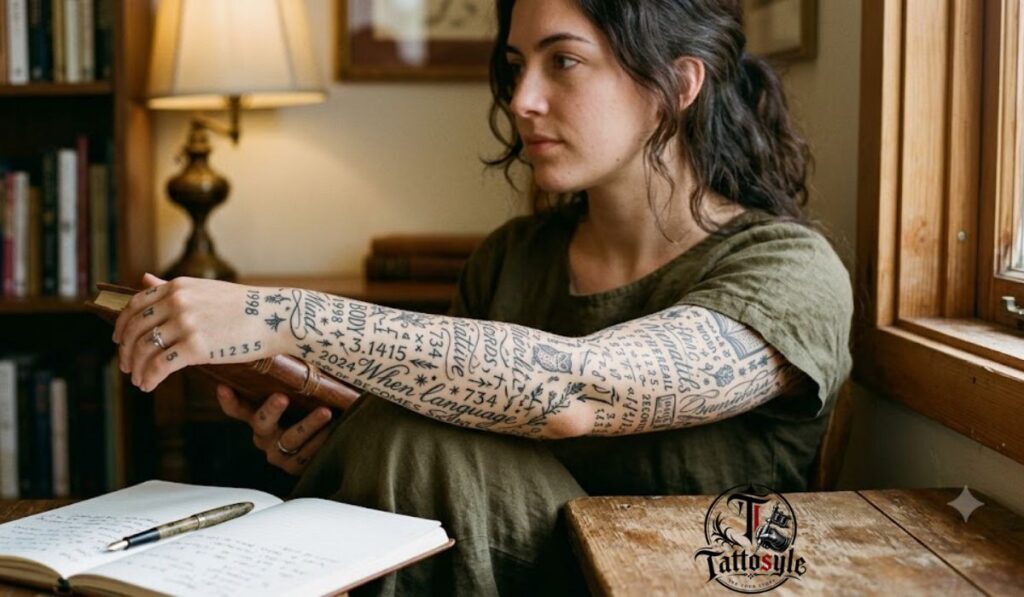
Text based tattoos let the wearer control meaning with total precision, which is exactly why they remain popular despite being harder to design well.
Latin, Sanskrit, and Chinese: The Multilingual Gamble
Foreign language tattoos carry real risk alongside their appeal. A phrase that looks elegant can be mistranslated by a tattoo artist unfamiliar with the language, resulting in a permanent error. Latin phrases remain popular for their historic, almost legal document weight. Sanskrit is chosen for spiritual resonance tied to Hindu and Buddhist texts. Chinese characters are frequently requested but also frequently misused, since a single character can shift meaning entirely based on context that a casual translation tool will not catch.
Anyone considering a foreign language tattoo should have the exact phrase verified by a fluent native speaker before it becomes permanent.
Dates and Coordinates: Numerical Anchors
Dates mark a specific, unambiguous moment, whether a birth, a death, or a personal turning point. Coordinates function similarly but anchor the meaning to a place rather than a time, often chosen for a hometown, a place someone passed away, or where a major life event happened.
The appeal of numerical tattoos is precision. Unlike a symbol open to interpretation, a date cannot be misread once the wearer explains it.
Sacred Symbols: Spirituality in Permanent Form
Religious and spiritual tattoos remain some of the most requested designs globally, carrying weight that goes beyond aesthetic choice.
Christian Imagery: Crosses, Angels, and Verses
The cross represents faith and sacrifice at its core, though specific cross styles carry additional nuance. A Celtic cross ties Christian faith to Irish heritage specifically. Angel tattoos often represent protection, frequently chosen to honor a deceased loved one believed to be watching over the wearer. Scripture verse tattoos let wearers carry a specific guiding principle rather than a general symbol.
Eastern Traditions: Buddha, Om, and Hamsa
Buddha tattoos represent peace, enlightenment, and detachment from suffering, drawing directly from Buddhist teaching. The Om symbol represents the sound of the universe in Hindu tradition, often chosen by people committed to meditation or yoga practice. The Hamsa hand, used across Middle Eastern and North African cultures, represents protection against negative energy and is one of the few symbols shared meaningfully across Jewish, Muslim, and Hindu traditions simultaneously.
Indigenous and Pagan Symbols: Dreamcatchers and Runes
Dreamcatchers originate specifically in Ojibwe culture, intended to filter bad dreams while letting good ones through. Because of this specific cultural origin, dreamcatcher tattoos sit closer to the cultural appropriation risk zone discussed later in this guide. Runes, drawn from Norse tradition, each carry individual meanings tied to protection, strength, or fate, making them appealing to people who want a compact symbol with a deep, specific backstory.
Modern Symbols: Celestial Bodies and Nature
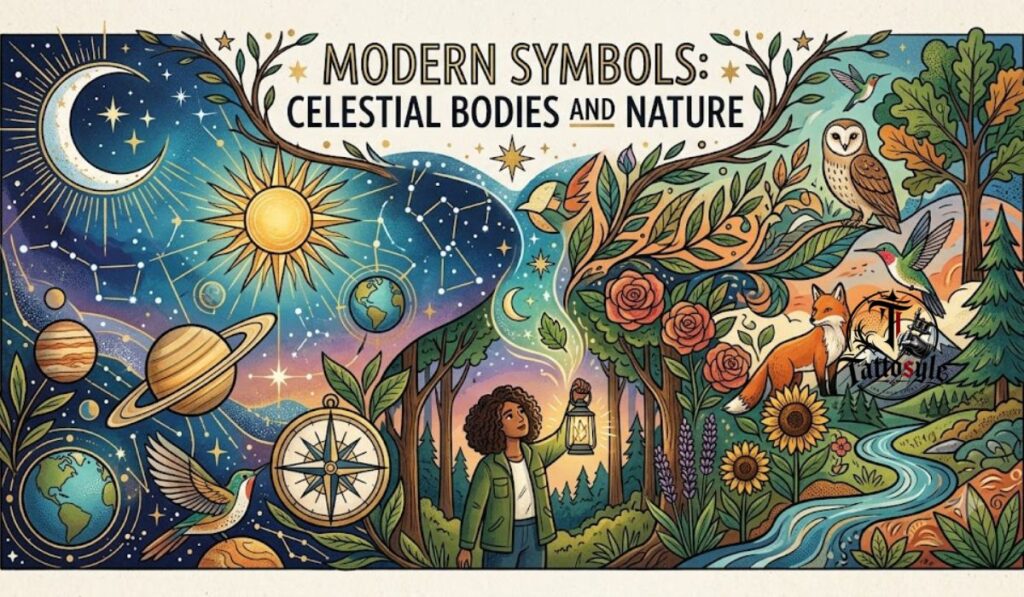
Not every meaningful tattoo needs ancient roots. Some of the most requested modern symbols draw meaning simply from natural phenomena everyone can relate to.
Sun, Moon, and Stars: Cosmic Balance
The sun represents energy, life, and clarity, often chosen as a counterbalance to a moon tattoo representing intuition and change. Together, sun and moon tattoos, frequently split between two people or two sides of one body, represent balance between opposing forces. Star tattoos generally represent guidance or hope, historically tied to navigation, echoing the same directional meaning found in compass tattoos.
Trees and Mountains: Grounded Metaphors
Tree tattoos, particularly the tree of life design, represent growth, family roots, and interconnection between generations. Mountain tattoos represent obstacles overcome or goals still being climbed, frequently chosen after a major personal achievement or during recovery from a difficult period.
Gender and Meaning: How Preferences Diverge and Converge
While style differences between genders are shrinking, some meaning preferences remain measurably different based on tattoo industry search and booking data.
| Theme | More Common Among Men | More Common Among Women |
| Core motivation | Strength, legacy, protection | Growth, connection, transformation |
| Popular symbols | Lions, compasses, crests | Flowers, moons, butterflies |
| Text preference | Single word values | Short meaningful phrases |
| Placement trend | Forearm, chest, back | Wrist, ribs, behind ear |
Meaningful Tattoos Men Favor
Men consistently favor tattoos that represent something they must live up to rather than something they already are. A lion tattoo is aspirational as much as descriptive. Family related tattoos, including children’s names or father and son designs, rank especially high because they double as a public commitment device.
What Draws Women to Certain Meanings
Women more often choose tattoos representing a process already lived through rather than an aspiration ahead. Butterfly and moon phase tattoos both represent transformation completed or currently underway, which explains their consistent popularity across recovery, motherhood, and major life transition contexts.
The Gender Neutral Shift: Meaningful Little Tattoos for Everyone
Small tattoos, once considered a beginner or female leaning choice, are now requested equally across genders because they allow meaningful symbolism without the commitment or visibility of a larger piece. A single small symbol, a semicolon, an arrow, a tiny date, now carries the same emotional weight a much larger tattoo once required to communicate.
The Mistakes You’ll Want to Avoid
Meaning only matters if it is accurate, respectful, and durable. These are the three most common ways people get it wrong.
Cultural Appropriation vs Appreciation: Know the Line
The difference between appreciation and appropriation usually comes down to two questions. Does the wearer understand the actual cultural or religious significance, and are they honoring it or simply borrowing its aesthetic. A Hamsa hand worn with understanding of its protective meaning across multiple cultures reads differently than the same symbol chosen purely because it looked interesting on Pinterest.
Sacred symbols tied to closed practices, meaning traditions that specifically restrict outside use, deserve extra caution. When in doubt, research the symbol’s origin thoroughly or choose a different design that carries similar meaning without the same cultural sensitivity.
When Meanings Change: The Symbol Hijack Problem
Some symbols shift meaning over time due to misuse by specific groups, and wearers need to stay aware of this. A symbol that meant one thing for centuries can become associated with something entirely different within a decade due to a subculture co opting it. Researching a symbol’s current associations, not just its historic ones, protects wearers from unintentionally signaling something they never meant.
The “It Sounded Deep at 2 AM” Trap
Tattoos chosen during emotional extremes, heartbreak, grief, celebration, or intoxication carry the highest regret rate in the industry. The design that feels profound in a single emotional moment often loses that weight once the moment passes. A simple rule helps here. If the meaning still feels true after two weeks of normal daily life, it is more likely to hold up permanently.
Your Roadmap to Choosing Meaningful Ink
Choosing meaning does not have to be complicated, but it does benefit from structure rather than impulse.
Step 1: Mine Your Own Story
Start with real events, not symbols. List the two or three moments that actually shaped who you are now. The right symbol usually reveals itself once the story is clear, rather than the other way around.
Step 2: Match Symbols to Themes
Once the story is clear, match it to a theme, resilience, transformation, connection, or legacy, then browse symbols within that theme rather than symbols in general. This keeps the search focused instead of overwhelming.
Step 3: Consult the Pros
A skilled tattoo artist has seen thousands of meaningful requests and can flag symbols with hidden negative associations, translation risks, or design issues before they become permanent. This step catches mistakes no amount of solo research will.
Step 4: Test Drive the Design
Temporary tattoos or henna versions of the intended design let the wearer live with the placement and size for a week or two before committing. This single step prevents the majority of regret related to size and placement, separate from meaning itself.
The Truth About Personal Meaning
Here is the part most guides skip. Meaning is not entirely fixed by history or culture. Once a symbol is on someone’s skin permanently, personal experience layers on top of the traditional meaning and often becomes the dominant one over time. A rose chosen for a grandmother will always mean that specific relationship to the wearer first, and general romance second.
This does not make researching traditional meaning pointless. It makes it a starting point rather than a final answer. Knowing the traditional weight of a symbol ensures the tattoo communicates correctly to people who do not know the personal backstory, while the personal layer gives it weight to the one person who matters most, the wearer.
Your Ink, Your Story, Now What?
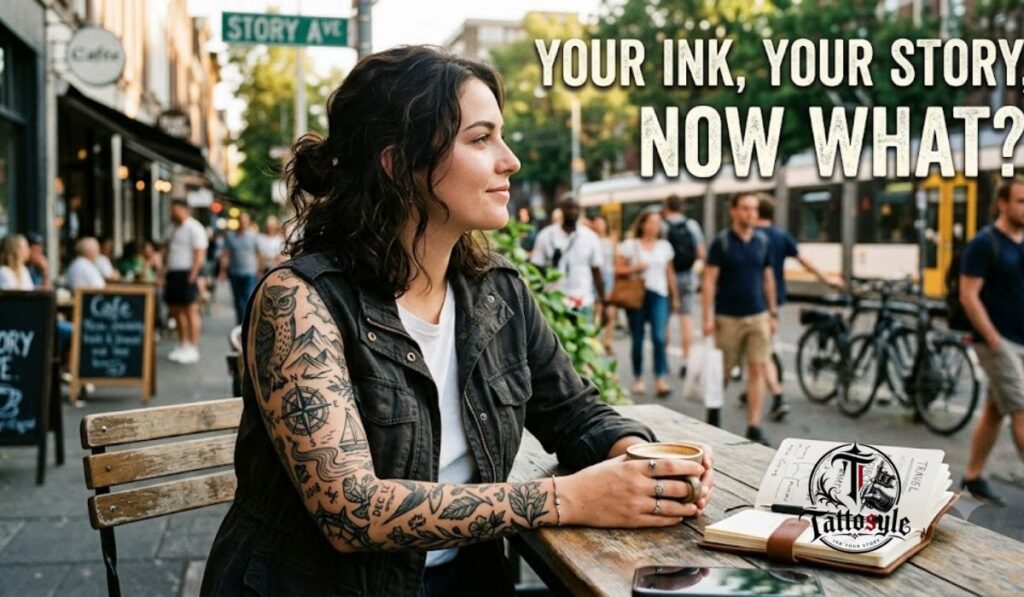
A tattoo is one of the few decisions in life that is both deeply personal and permanently public. Getting the meaning right before the needle touches skin protects against the two outcomes nobody wants, a design that means nothing or a design that means the wrong thing.
The research done here is not about finding the single correct symbol. It is about entering the tattoo studio with full control over what your body will say for the rest of your life. Whether the final choice is a small semicolon on the wrist or a full sleeve of animal symbolism, the meaning should be something the wearer chose deliberately, not something discovered by accident years later.
Frequently Asked Questions
What tattoo symbolizes strength and resilience?
Lions, mountains, and phoenix tattoos are the most common symbols chosen specifically to represent strength and resilience. Each represents a different type of strength, natural power, obstacles overcome, and rebirth after destruction.
Lions work best for people representing ongoing strength or leadership, while phoenix tattoos suit people marking a specific moment of recovery or rebirth. Mountains fit best for goals still being actively pursued rather than already achieved.
What does a semicolon tattoo mean exactly?
A semicolon tattoo represents a sentence, and a life, that could have ended but continued instead. It is most commonly associated with mental health struggles, self harm recovery, or suicide prevention awareness.
The symbol carries a built in support community, since wearers often recognize the meaning in each other instantly without needing explanation, making it one of the more socially significant modern tattoo symbols.
Are tattoo meanings different for men and women?
Core motivations differ statistically but the meanings themselves are not gender restricted. Men more often choose symbols tied to legacy and protection, while women more often choose symbols tied to transformation and connection, though this gap is narrowing quickly.
Any symbol on this list can be worn meaningfully by any gender. The trend toward gender neutral tattoo choices reflects a broader shift away from strict style rules in the industry.
What is the most meaningful small tattoo?
Small tattoos with the most consistent meaning include the semicolon, a single arrow, and a small compass. Each communicates a complete idea, mental health resilience, forward movement, or life direction, without needing a large canvas.
Small meaningful tattoos have grown in popularity specifically because they allow real symbolism in discreet, professional friendly placements like the wrist or behind the ear.
How do I know if a tattoo symbol is culturally sensitive?
Research the symbol’s origin and current cultural status before choosing it. Symbols tied to closed spiritual practices or specific indigenous traditions deserve particular caution, since wearing them without understanding can read as appropriation rather than appreciation.
When uncertain, consulting the tradition’s own community resources or choosing a symbol with open, widely shared meaning avoids the risk entirely while still allowing meaningful ink.
What tattoo represents new beginnings?
The lotus flower and the sunrise are the two most requested symbols for new beginnings. The lotus represents rising clean from difficult circumstances, while a sunrise represents a fresh start after a defined ending.
Both symbols pair well with a specific date, letting the wearer anchor the general meaning of new beginnings to an exact personal moment.
Do tattoo meanings actually matter if no one else knows the story?
Yes, because meaning affects the wearer’s own relationship with the tattoo over time, independent of whether anyone else understands it. Tattoos chosen for real personal reasons consistently show lower regret rates than tattoos chosen purely for appearance.

Hi, I’m Tomy Parker, a tattoo enthusiast and content writer at Tattosyle.com. I love exploring tattoo styles, meanings, placement ideas, aftercare tips, and the latest trends in body art. My goal is to create easy-to-understand, helpful, and accurate guides that inspire both first-time tattoo lovers and experienced collectors. Through Tattosyle, I aim to help you make informed decisions and discover tattoo designs that reflect your unique personality and story.

Leave a Reply